How to Get Rid of Blackheads: Effective Treatments & Prevention
Blackheads can be frustrating because they often seem to come back even after you remove them.
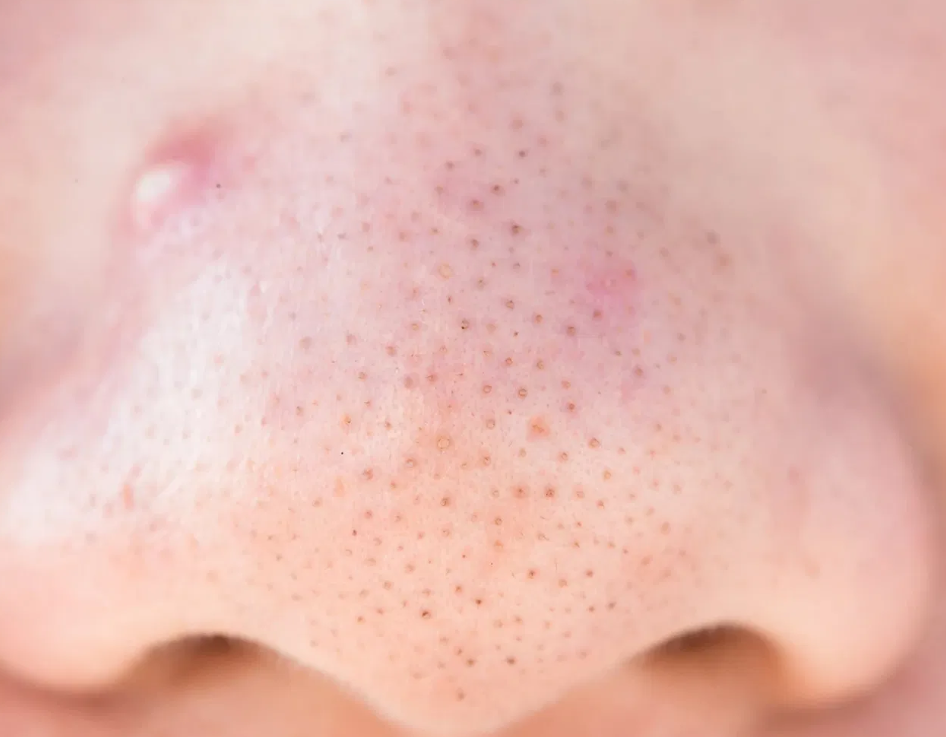
These small dark spots form when sebum and dead skin cells build up inside a hair follicle. Because the follicle opening remains exposed to the surface, the material near the opening can darken when exposed to air.
That means blackheads are not simply dirt trapped inside your pores—and scrubbing harder will not necessarily make them disappear.
If you want to know how to get rid of blackheads, the most effective approach is usually to focus on reducing pore buildup, keeping excess oil under control, and preventing new comedones from forming.
A consistent routine using appropriate cleansing and pore-focused ingredients can help manage blackheads without repeatedly irritating your skin.
What Causes Blackheads?
Blackheads are a type of open comedone. They develop when sebum and dead skin cells accumulate inside a hair follicle while the opening remains exposed to the skin's surface.
Several factors can contribute to repeated blackheads, including:
- Excess sebum production
- Buildup of dead skin cells
- Changes in skin cell shedding
- Hormonal changes
- Products that do not work well with your skin
- Sweat and occlusion
- Repeated friction
- Individual skin type and genetics
The combination of oil and cellular buildup is more important than simply how "clean" your skin is.
If you frequently develop blackheads despite cleansing regularly, the problem may be ongoing pore congestion rather than poor hygiene.
For a deeper explanation of how blackheads form, read our guide to [What Are Blackheads? Causes, Treatment & Prevention].
Can You Get Rid of Blackheads Permanently?
Not usually.
Blackheads can be removed or significantly reduced, but the pores themselves continue to produce sebum and shed skin cells.
This means that even after an existing blackhead is cleared, the same follicle can become congested again.
The goal of blackhead treatment is therefore not to permanently empty every pore. Instead, it is to:
- Reduce excess oil and buildup
- Keep pores from becoming repeatedly clogged
- Remove existing congestion gradually
- Prevent new blackheads from forming
- Maintain a healthy skin barrier
This is why a consistent routine is generally more useful than repeatedly extracting blackheads whenever they become visible.
How to Get Rid of Blackheads
There are several approaches that can help manage blackheads. The best routine depends on your skin type, the severity of your congestion, and how well your skin tolerates different ingredients.
1. Cleanse Your Skin Consistently
Regular cleansing helps remove excess oil, sunscreen, makeup, sweat, and surface buildup.
However, cleansing more aggressively does not necessarily mean cleaner pores.
Avoid using very harsh cleansers or repeatedly washing your face in an attempt to "scrub out" blackheads. Excessive cleansing can leave the skin dry and irritated, making it harder to maintain a consistent routine.
A gentle cleanser can be used as the foundation of your routine, particularly if you are also using exfoliating ingredients.
For more information about cleansing blackhead-prone skin, see our guide to [How to Clean Blackheads Without Damaging Your Skin].
2. Use Salicylic Acid to Help Unclog Pores
Salicylic acid is one of the most commonly used ingredients for blackhead-prone skin.
As a beta hydroxy acid (BHA), salicylic acid is oil-soluble and can work within the pore environment. It helps exfoliate dead skin cells and reduce the buildup of sebum and cellular debris that contributes to clogged pores.
With consistent use, salicylic acid may help improve the appearance of existing blackheads and reduce the formation of new comedones.
However, stronger or more frequent use is not necessarily better.
If you have sensitive skin, introduce salicylic acid gradually and avoid using several exfoliating products at the same time.
[Learn more about how salicylic acid works for blackheads →]
3. Consider a Salicylic Acid Cleanser
If you want to introduce salicylic acid into your routine while keeping your routine relatively simple, a salicylic acid cleanser can be one option.
Because the product is rinsed off, it can provide a way to incorporate BHA into a cleansing step rather than adding another leave-on treatment.
A cleanser containing salicylic acid may be particularly convenient for people with oily or congestion-prone skin who prefer a wash-off treatment.
The right frequency depends on your skin's tolerance. If your skin becomes excessively dry, tight, or irritated, reduce the frequency rather than adding more products.
Internal link → Dr.Leo Salicylic Acid Cleanser
4. Use Clay to Help Manage Excess Oil
Clay-based masks can also be useful as part of a routine for oily or congestion-prone skin.
Clay can absorb excess surface oil and help remove buildup from the skin. However, a clay mask should not be viewed as a permanent solution for blackheads.
It works best as a complementary step rather than a replacement for consistent cleansing or pore-focused ingredients.
If you are interested in how clay masks work for blackhead-prone skin, see [Do Clay Masks Help With Blackheads?].
5. Keep Your Skin Hydrated
It may seem counterintuitive to moisturize oily or blackhead-prone skin, but hydration is still important.
Using an appropriate lightweight, non-comedogenic moisturizer can help maintain the skin barrier and make it easier to tolerate active ingredients such as salicylic acid.
Skipping moisturizer because your skin feels oily can sometimes make your routine harder to maintain.
The goal is not to eliminate all oil from the skin. It is to keep excess congestion under control while maintaining comfortable, balanced skin.
What About Blackhead Extraction?
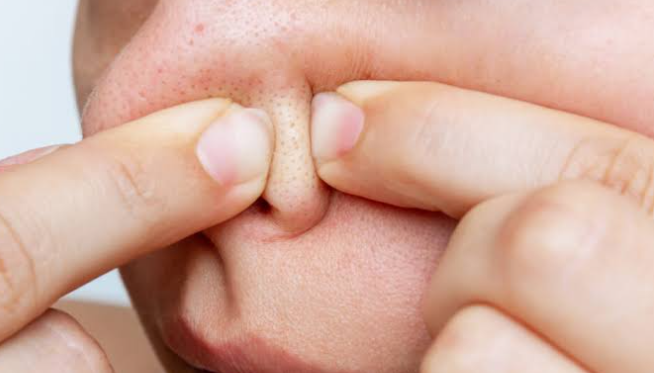
Professional extraction can remove the contents of individual blackheads, but manually squeezing blackheads at home is generally not the best long-term strategy.
Repeated squeezing can:
- Irritate the surrounding skin
- Increase redness and inflammation
- Cause temporary swelling
- Leave post-inflammatory marks
- Make you more likely to pick at the same area repeatedly
Extraction also does not stop the follicle from producing sebum.
This is why a blackhead may appear again after it has been removed.
For stubborn individual blackheads, professional extraction performed appropriately may be an option. But for recurring congestion, ongoing skincare is usually more important than repeatedly removing individual plugs.
Do Pore Strips Get Rid of Blackheads?
Pore strips can temporarily remove some material from the surface of pores, which may make the skin look smoother immediately afterward.
However, they do not address the underlying process that causes blackheads.
Your skin continues to produce sebum and shed skin cells after the strip is removed, so the pores can become congested again.
Frequent use may also irritate sensitive skin.
If your goal is long-term blackhead management, pore strips are generally better viewed as a temporary cosmetic method rather than a complete treatment strategy.
Can Scrubbing Remove Blackheads?
Aggressive physical scrubbing is not an effective way to permanently remove blackheads.
Blackheads form inside hair follicles, so repeatedly rubbing the skin's surface cannot address all of the buildup inside the pore.
Harsh scrubbing can also increase irritation and make the skin feel rougher or more sensitive.
Instead, consider combining gentle cleansing with ingredients that are designed to help manage pore buildup.
How Long Does It Take to Get Rid of Blackheads?
Blackheads usually do not disappear overnight.
The time required to see improvement depends on factors such as:
- How severe the congestion is
- How frequently new blackheads form
- Your skin type
- The ingredients you use
- How consistently you follow your routine
- How well your skin tolerates the treatment
A consistent routine is more important than trying to remove every blackhead immediately.
If your skin becomes irritated, using more products or increasing treatment frequency may make the situation worse rather than better.
How to Prevent Blackheads From Coming Back
Once you have reduced existing blackheads, prevention becomes an important part of long-term management.
Cleanse Regularly
Cleanse consistently to remove excess oil, sunscreen, makeup, sweat, and surface buildup.
Avoid repeatedly washing or scrubbing your skin simply because you can see blackheads.
Use Pore-Focused Ingredients Consistently
Ingredients such as salicylic acid can help manage oil and dead skin cell buildup inside pores.
Introduce active ingredients gradually and give your routine enough time to work.
Choose Products That Suit Your Skin
If your skin is prone to clogged pores, pay attention to how skincare and makeup products affect your skin.
Look for formulas that feel comfortable and do not consistently leave your skin feeling excessively greasy or congested.
Avoid Constant Picking
Trying to remove every visible blackhead can create a cycle of picking, irritation, and more noticeable redness.
Instead, focus on managing the underlying congestion.
Do Not Over-Exfoliate
Using several exfoliating acids, scrubs, and active treatments at the same time can irritate your skin.
More exfoliation does not necessarily mean fewer blackheads.
A simple routine that you can maintain consistently is often easier to tolerate.
What If Your Blackheads Are Mainly on Your Nose?
The nose is one of the most common areas for blackheads because it contains a high concentration of sebaceous glands.
However, not every dark dot on the nose is a blackhead.
Some may actually be sebaceous filaments, which are normal structures within the pores that help transport sebum to the skin's surface.
If the dots are small, relatively uniform, grayish or yellowish, and quickly return after removal, they may be sebaceous filaments rather than true blackheads.
Read [Blackheads vs. Sebaceous Filaments: How to Tell the Difference] to learn more.
If you have confirmed blackheads concentrated around your nose, see our guide to [How to Get Rid of Stubborn Blackheads on Your Nose & Prevent Re-clogging].
What If You Have Blackheads on Other Parts of Your Body?
Blackheads are not limited to the face.
They can also develop on areas such as:
- Back
- Chest
- Shoulders
- Thighs
- Outer ear
Body blackheads can be influenced by oil production, sweat, friction, occlusion, and product buildup.
If your congestion is mainly on your body, our [Full-Body Blackhead Map] explains where body blackheads commonly occur and how to manage them.
A Simple Blackhead Routine
You do not need a complicated routine to start managing blackheads.
A simple approach could look like this:
Morning
-
Gentle cleanser
-
Lightweight moisturizer
-
Sunscreen
Evening
-
Gentle cleanser
-
Salicylic acid treatment or cleanser, depending on your routine
-
Lightweight moisturizer
Occasionally
Use a clay mask if your skin tolerates it and you want additional oil management.
The exact routine should be adjusted based on your skin type and tolerance.
If your skin becomes persistently dry, burning, or irritated, reduce active treatments rather than adding more.
When Should You See a Dermatologist?
Consider seeing a dermatologist if:
- Your breakouts are painful or severely inflamed
- You develop widespread acne
- Blackheads are leaving significant marks or scars
- Over-the-counter products are not helping
- You are unsure whether the bumps are actually blackheads
- Your skin becomes persistently irritated from treatment
Not every dark spot or bump is a blackhead. Conditions such as acne, folliculitis, keratosis pilaris, and other skin lesions can sometimes look similar.
A dermatologist can help identify the underlying cause and recommend an appropriate treatment.
The Bottom Line
The best way to manage blackheads is not to repeatedly squeeze or scrub them away.
Blackheads form because sebum and dead skin cells accumulate inside hair follicles, so long-term management focuses on reducing this buildup and preventing new congestion.
A practical routine can include:
- Gentle cleansing
- Salicylic acid for pore exfoliation
- Appropriate hydration
- Occasional clay-based oil management
- Avoiding aggressive extraction and over-scrubbing
- Consistent skincare
Blackheads can naturally return because your skin continues to produce sebum and shed skin cells. The goal is therefore not permanently empty pores, but long-term control of pore congestion while keeping your skin barrier healthy.