How to Get Rid of Sebaceous Filaments on Your Nose and Chin
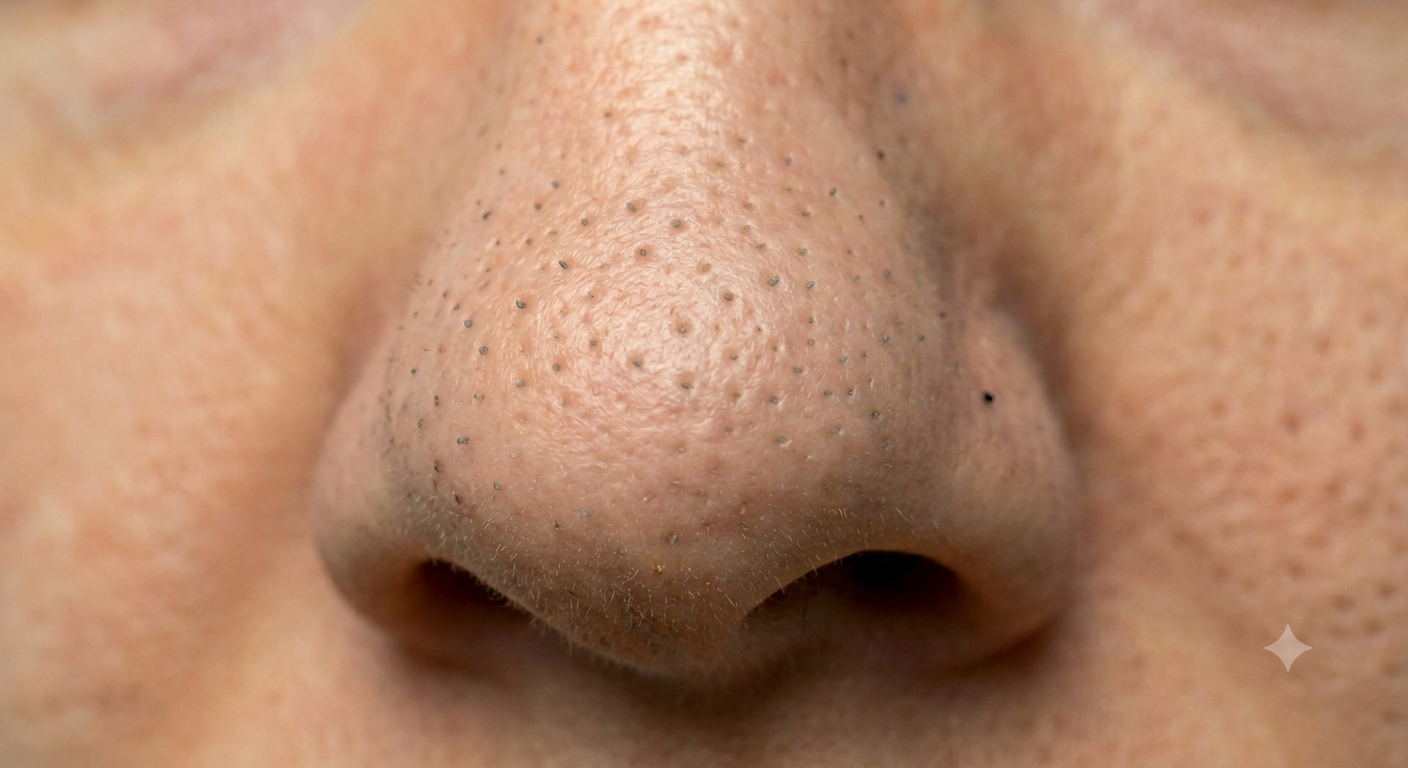
If you take a close look at your face in a bathroom mirror under direct lighting, you will notice that those tiny gray or yellowish dots on your skin are not spread out evenly. Instead, they form dense, noticeable clusters right in the center of your face—specifically across the bridge and folds of your nose and along the crease of your chin.
Because your nose and chin dominate your facial profile, high-density filaments can ruin smooth makeup application and leave your T-zone looking rough or greasy.
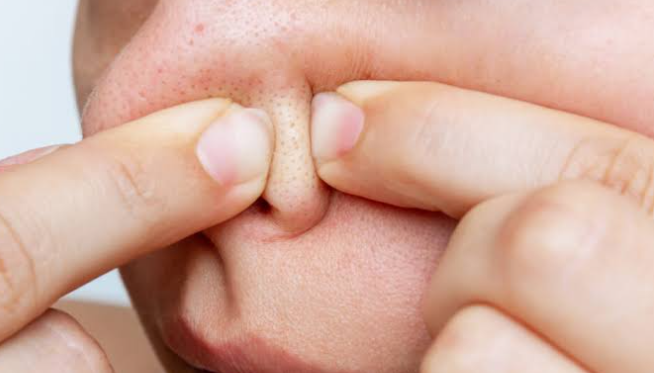
While squeezing these spots or ripping them with nose strips might offer quick gratification, doing so only tears your pore structure. To understand the foundational biology of these natural oil pipelines, read our master index guide: The Ultimate Guide to Sebaceous Filaments: What They Are & How to Keep Them Clear.
Here is why sebaceous filaments concentrate heavily on your nose and chin, and how to safely manage them with a targeted, area-specific routine.
Why the Nose and Chin Are Ground Zero for Filaments
Your facial skin is not uniform. The T-zone (forehead, nose, and chin) contains up to five times more sebaceous (oil) glands per square centimeter than your cheeks.
T-Zone: Nose &Chin ➡️High Oil Gland Density (Up to 800 glands/cm²) ➡️Highly Visible Filaments
Cheeks & Outer Face ➡️Low Oil Gland Density (100–200 glands/cm²) ➡️ Barely Visible Filaments
However, the nose and chin present slightly different structural challenges:
1.The Nose: Thick Oil & Rigid Structure
The skin over your nasal cartilage is thick and firmly anchored. Glands here produce larger volumes of dense, lipid-rich sebum. When this thick oil flows upward and hits the air, oxidation turns the tops of the filaments a noticeable gray or tan.
2.The Chin & Labiomental Crease: Texture & Fine Trapping
The area directly under your lower lip has a natural crease. Skin here folds constantly during talking and eating, easily trapping dead cells alongside fine oil strands. This often creates a bumpy, "strawberry chin" texture.
Tailored Treatment Strategy: Nose vs. Chin
Because the skin structure differs between these two areas, a single harsh scrubbing motion will not give you clean results. You need targeted techniques for each zone.
1. The Nasal Protocol: Dissolve & Flush
For the firm skin of the nose, physical extraction tools or adhesive nose strips tear the surrounding micro-capillaries without solving the underlying oil production. Instead, combine chemical flushing with physical-free clay suction:
- Step 1: Massage the Dr.Leo Salicylic Acid Cleanser across your nasal bridge and nostril folds for 60 seconds daily. As a lipid-soluble BHA, it penetrates deep into the follicle canal to dissolve hardened oil pipelines.
- Step 2: Glide the Dr.Leo Volcanic Clay Cleanser Stick 2–3 times a week over your nose. Natural volcanic clay magnetically draws out oxidized surface shine without stretching pore walls.
2. The Chin Protocol: De-Gunk & Smooth Texture
For the delicate, flexible skin of the chin and lower lip crease, aggressive rubbing causes redness and flaking. Focus on exposing buried pores cleanly:
- The "Pout Technique" during Cleansing: Push your tongue firmly under your lower lip to stretch the skin of your chin completely flat. This exposes the micro-pores buried inside the fold so your BHA cleanser can reach every hidden filament.
- Crease Spot Vacuum: While keeping your chin taut, glide the Dr.Leo Volcanic Clay Cleanser Stick directly inside the labiomental crease. Let it sit for 3 minutes to absorb trapped sebum before rinsing cleanly with lukewarm water.
3 Critical Rules for T-Zone Care
To keep your pores looking clear long-term without triggering breakouts, follow these core rules:
Rule 1: Ditch Pore Strips ➡️ Rule 2: Avoid Heavy Creams on T-Zone ➡️ Rule 3: Daily Sunscreen
- Ditch Adhesive Nose Strips: Pore strips act like heavy-duty tape, ripping off the top layer of skin cells (stratum corneum) along with the filament. As explained in our guide on Why Squeezing Sebaceous Filaments Makes Them Worse, this triggers inflammation, forcing your oil glands to produce even more oil to repair the damage.
- Zone Your Moisturizers (Multi-Moisturizing): Do not slather heavy, rich night creams over your nose and chin. While rich creams belong on dry outer cheeks, apply a weightless, oil-free moisturizer like the Dr.Leo CICA Panthenol Hydro-Gel Soothing Moisturizer on your T-zone. Its water-gel texture hydrates without adding pore-clogging lipids.
- Wear Daily Lightweight Sunscreen: UV radiation breaks down the collagen and elastin supporting your pore walls. When structural support degrades, pore entrances sag open, making normal filaments look significantly larger.
Summary Routine for Clear Nose & Chin Pores
| Application Time | Action Focus | Dr.Leo Product Execution |
| Nightly (PM) Cleanse | Deep Interior Oil Flushing | Massaging with Dr.Leo Salicylic Acid Cleanser (using the Pout Technique on the chin). |
| 2–3x Weekly (PM) | Surface Clay Suction | Spot-applying Dr.Leo Volcanic Clay Cleanser Stick on nose folds & chin crease. |
| Daily (AM/PM) | Weightless T-Zone Barrier Care | Sealing T-zone hydration with oil-free Dr.Leo CICA Hydro-Gel Moisturizer. |
By treating your nose and chin with gentle, lipid-dissolving ingredients rather than aggressive physical pulling, you can keep your pores refined and free of oxidized buildup.
Now that you know how to treat high-oil zones safely, make sure you aren't confusing these normal oil pipelines with true acne blackheads.
Explore Our Complete Sebaceous Filaments Playbook Series:
- To learn how to diagnose whether you have filaments or blackheads under bright light, read our next comparison: Sebaceous Filaments vs. Blackheads: How to Tell the Difference.
- To review complete product combinations and daily application schedules, explore The Best Skincare Products for Sebaceous Filaments & Routine.
- To review why physical extraction causes permanent pore damage, revisit Why Squeezing Sebaceous Filaments Makes Them Worse.