Sebaceous Filaments vs. Blackheads: How to Tell the Difference
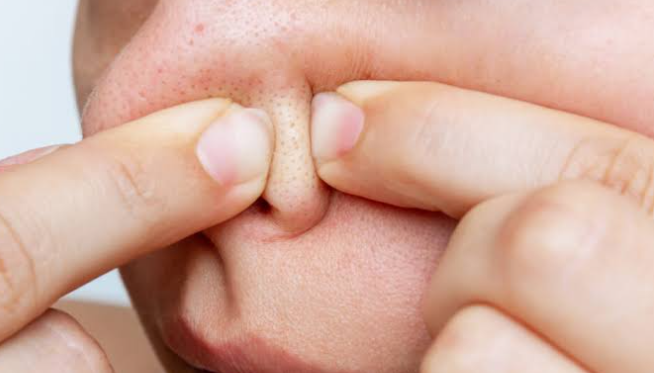
Have you ever squeezed a tiny shadow on your nose expecting a solid, dark plug to pop out, only to get a squishy, pale strand of oil instead?
If so, you’ve experienced the ultimate skincare identity crisis: confusing sebaceous filaments with blackheads.
It is one of the most common mistakes in skincare. Because both present as tiny, visible dots across oil-prone areas like your nose and chin, most people treat them identically—grabbing harsh peel-off masks, extraction loops, or scrub brushes.
However, treating a healthy oil pipeline like a clogged pore lesion strips your moisture barrier, stretches your pore openings, and leaves you with persistent redness. To review foundational pore biology, start with our master index guide: The Ultimate Guide to Sebaceous Filaments: What They Are & How to Keep Them Clear.
Here is how to accurately tell the difference between sebaceous filaments and blackheads so you can care for both safely.
The Biological Difference: Rivers vs. Dams
To understand why these two pore conditions require totally different care, look at what is actually happening inside your hair follicle:
[ SEBACEOUS FILAMENT: THE FLOWING RIVER ]
Healthy Pore Canal➡️Sebum + Dead Cells Flow Free➡️Light Gray/Yellow Top (Sebaceous Filament)
[ BLACKHEAD: THE CLOGGED DAM ]
Trapped Debris ➡️ Forms Hard Plug ➡️ Oxidizes at Surface➡️ Dark Black Plug (Blackhead)
1. Sebaceous Filaments (The Flowing River)
A sebaceous filament is a functional lining inside the pore. Its primary job is to act as a straw, transporting sebum from your oil glands up to the skin surface to maintain your moisture barrier.
Because oil naturally mixes with dead skin cells as it flows upward, the top of the filament oxidizes slightly when exposed to air, turning gray, tan, or light yellow. It is an open, working pipeline.
2. Blackheads / Open Comedones (The Clogged Dam)
A blackhead, scientifically known as an open comedone, is an acne lesion. It forms when excess oil, dead skin cells, and debris mix together to form a hard, solid plug that physically blocks the pore opening.
When this plug gets trapped at the surface, exposure to oxygen causes the melanin and lipids inside to turn dark black. It is a blocked, trapped plug.
3 Easy Ways to Spot the Difference
If you are looking in the mirror right now, use these three diagnostic criteria to figure out what you are seeing:
| Diagnostic Feature | Sebaceous Filaments | Blackheads (Open Comedones) |
| Color & Appearance | Flat, smooth light gray, tan, yellowish, or skin-toned spots. | Raised or recessed dark black or deep brown dots. |
| Pattern & Clustering | Evenly distributed across T-zone (nose, chin, forehead) in neat rows. | Isolated, random single spots anywhere on the face or body. |
| Touch Texture | Completely flat and smooth when you run a fingertip over the skin. | Slightly rough, bumpy, or raised plug under your fingertip. |
| Extraction Result | Soft, hair-like waxy strand that refills in 24–72 hours. | Hard, solid seed-like plug with a distinct dark head and dense base. |
Diagnostic Tip: Always run your fingertip gently over the area. Sebaceous filaments are completely smooth to the touch, whereas blackheads produce a distinct tactile bump.
Why Treating Filaments Like Blackheads Backfires
When people search online for photos of enlarged pores, they are usually looking at magnified extraction videos. Seeing an extracted strand makes it tempting to keep squeezing, but extracting filaments is a losing battle.
Forcible Squeezing➡️Elastic Tissue Tears ➡️ Permanent Pore Stretching ➡️ Refills in 24-72 Hours
As detailed in our guide on Why Squeezing Sebaceous Filaments Makes Them Worse, manual extraction causes severe structural damage:
- They Always Refill: Because your skin relies on filaments to transport oil, your body will completely refill the emptied canal within 24 to 72 hours.
- Permanent Pore Stretching: Squeezing tears the delicate collagen and elastin fibers wrapping your pore entrance. Once those fibers stretch out, your pores remain permanently enlarged.
- Capillary Rupture: Pressing hard on delicate nasal folds causes micro-trauma, leaving behind permanent spider veins (telangiectasia).
How to Treat Each Condition Correctly
Because their underlying biology is completely different, your approach must match the specific issue:
How to Manage Sebaceous Filaments (Refine & Dissolve)
You cannot—and should not—destroy filaments entirely. The goal is to keep the oil fluid so it doesn't oxidize or turn dark:
- Daily Interior Flushing: Traditional oil cleansing balms carry a high risk of leaving behind waxy residues that clog pores. Wash daily with the Dr.Leo Salicylic Acid Cleanser. Its lipid-soluble BHA penetrates straight into the pore canal to break down excess oil and flush out oxidized grease pipelines.
- Weekly Surface Clay Suction: Glide the Dr.Leo Volcanic Clay Cleanser Stick 2–3 times a week across high-density zones like your nose and chin to magnetically absorb loose surface shine without tearing delicate skin fibers.
- Weightless Hydration: Lock in hydration with the Dr.Leo CICA Panthenol Hydro-Gel Soothing Moisturizer. Its 100% oil-free water-gel texture cools oil glands with Centella Asiatica and Panthenol, preventing defensive over-secretion.
How to Clear Blackheads (Unclog & Renew)
Blackheads are true acne lesions, meaning they require ingredients that actively break down hard keratin plugs and speed up cell turnover:
- BHA + Retinoid Blends: Use BHA to penetrate the plug and topical Retinoids to normalize skin cell shedding inside the pore canal.
- Professional Extraction: If a blackhead is persistent and hard, have a licensed aesthetician perform a sterile extraction without tearing surrounding tissue.
Summary Treatment Matrix
| Condition | Primary Goal | Recommended Dr.Leo Regimen |
| Sebaceous Filaments | Keep sebum fluid; absorb surface oxidation without pulling. | Daily Dr.Leo Salicylic Acid Cleanser + Weekly Dr.Leo Volcanic Clay Stick. |
| Localized Nose/Chin Filaments | Target high-density oil folds with non-stripping care. | Apply the "Pout Technique" with Dr.Leo Cleanser as shown in our Nose & Chin Guide. |
| True Blackheads | Break down hard keratin plugs & accelerate cell renewal. | Targeted BHA/Retinoid treatments + Professional extractions. |
Visible dots on your nose are rarely a sign of dirty skin. More often than not, they are simply sebaceous filaments doing their natural job to keep your skin hydrated and protected.
Now that you can accurately diagnose your skin texture, it's time to review our complete, step-by-step product regimen.
Explore Our Complete Sebaceous Filaments Playbook Series:
- To assemble your complete daily product combinations and application schedule, read our final guide: The Best Skincare Products for Sebaceous Filaments & Routine.
- To master localized T-zone targeting for your nose and chin, revisit How to Get Rid of Sebaceous Filaments on Your Nose and Chin.
- To review why physical extraction causes permanent pore damage, read Why Squeezing Sebaceous Filaments Makes Them Worse.
- To review foundational pore biology, revisit The Ultimate Guide to Sebaceous Filaments: What They Are & How to Keep Them Clear.