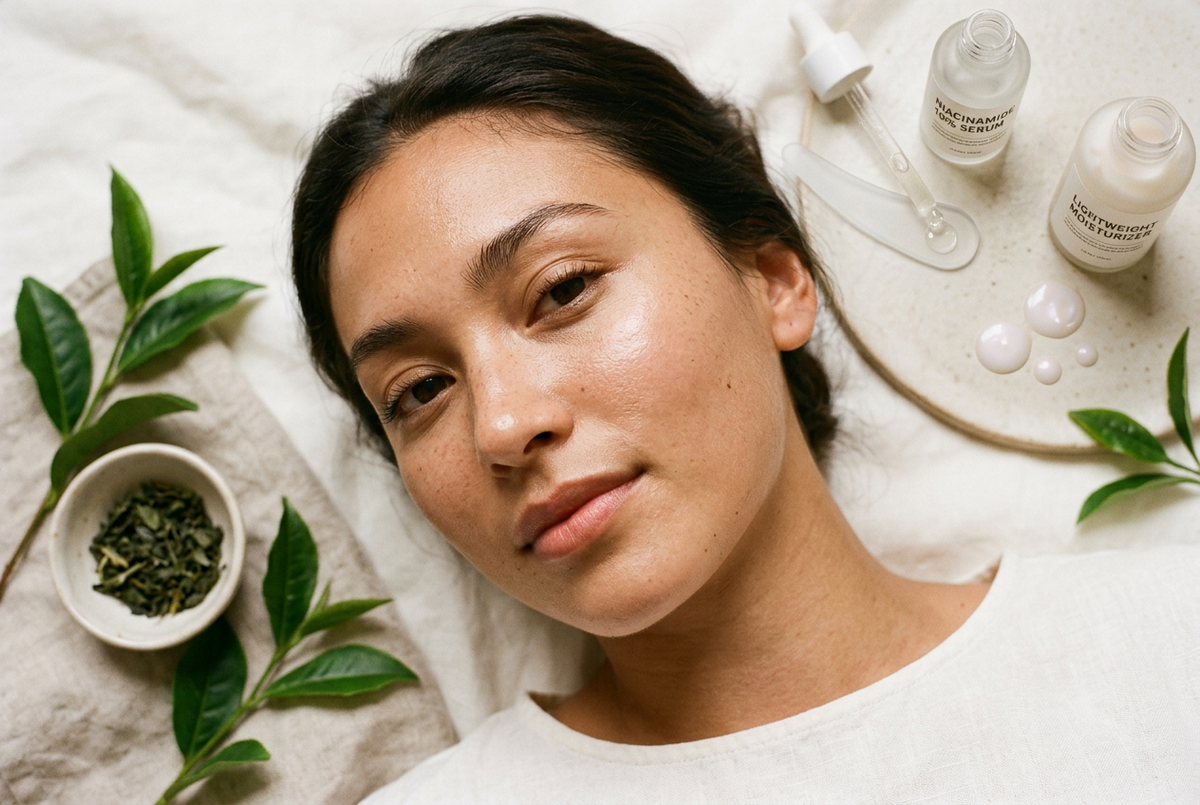
3-Step Acne Treatment for Sensitive Skin: Easy Daily Routine
Dealing with acne on sensitive skin can be frustrating. You want to treat breakouts, but many acne products contain strong active ingredients that may leave your skin feeling dry, tight, or irritated.
Using more products doesn't necessarily mean better results. Layering multiple exfoliants, harsh cleansers, and spot treatments can increase the risk of irritation, especially when your skin is already sensitive.
The key to a gentle acne skincare routine is to keep things simple: cleanse without stripping your skin, use targeted treatments for breakouts, and maintain hydration with a lightweight moisturizer.
In this guide, you'll learn how to build a simple 3-step acne treatment routine for sensitive skin, including what to use in the morning and evening and how to introduce active ingredients without overwhelming your skin.
Key Takeaways
- Keep your routine simple: Three essential steps can provide a practical foundation for managing acne-prone sensitive skin.
- Choose gentle cleansers: Avoid aggressive cleansing that leaves your skin feeling tight or uncomfortable.
- Use targeted acne treatments: Ingredients such as salicylic acid can help address clogged pores and blemishes, but should be introduced gradually.
- Prioritize hydration: Lightweight moisturizers help maintain skin comfort and support the skin barrier.
- Adjust according to skin tolerance: Sensitive skin may need less frequent use of active ingredients.
1. Why a 3-Step Acne Treatment Routine Works for Sensitive Skin
When you have both acne and sensitive skin, finding the right balance between treating breakouts and maintaining skin comfort is essential.
Using too many products or combining multiple active ingredients can increase the likelihood of irritation. This may make it harder to maintain a consistent skincare routine.
A simple three-step approach focuses on three essential needs:
Gentle Cleansing
The first step is removing excess oil, sweat, sunscreen, and everyday impurities without excessively stripping the skin.
A gentle cleanser helps keep your skin clean while reducing unnecessary friction and irritation.
Targeted Acne Treatment
Instead of applying multiple strong treatments across your entire face, focus on products and ingredients that address your specific acne concerns.
For example, salicylic acid is commonly used to help clear clogged pores and improve the appearance of blackheads and blemishes.
Barrier-Supporting Hydration
Acne-prone skin still needs moisture. Appropriate hydration helps maintain skin comfort and supports the natural protective barrier.
A lightweight moisturizer can be a comfortable option if you dislike the heavy feeling of traditional creams.
2. The Daily 3-Step Acne Routine for Sensitive Skin
A good sensitive skin acne routine doesn't need to be complicated. The following three steps provide a practical starting point for both morning and evening care.
Step 1: Gentle Cleansing
AM and PM
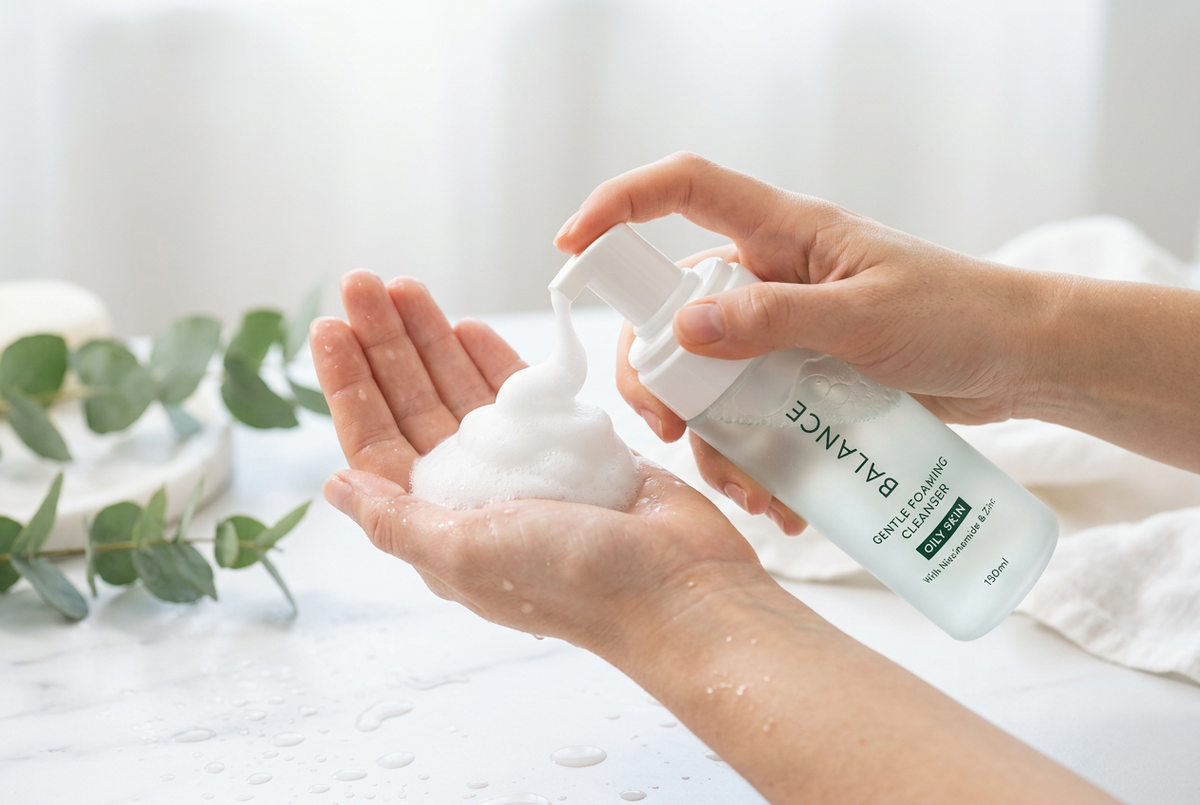
Start with a gentle facial cleanser that removes excess oil and impurities without leaving your skin feeling tight or excessively dry.
When choosing a cleanser for sensitive, acne-prone skin, consider:
- Gentle cleansing ingredients.
- A formula suitable for your skin's tolerance.
- A comfortable finish without excessive dryness.
- Minimal unnecessary friction during application.
How to Use:
- Wet your face with lukewarm water.
- Apply a small amount of facial cleanser.
- Gently massage over your face without scrubbing.
- Rinse thoroughly and pat dry with a clean towel.
For most people, cleansing twice daily is sufficient. If your skin feels particularly dry or sensitive, adjust your routine according to its needs.
Product Recommendation: Dr.Leo Polyamino Acid Purifying Facial Cleanser
If your skin is prone to breakouts but easily becomes uncomfortable after cleansing, a gentle daily cleanser is a good starting point.
Dr.Leo Polyamino Acid Purifying Facial Cleanser can be incorporated into your morning and evening routine as a daily cleansing step.
Explore Dr.Leo Polyamino Acid Purifying Facial Cleanser
Step 2: Targeted Acne Treatment
Use according to your skin's tolerance and product instructions.
After cleansing, consider adding a targeted acne treatment based on your specific concerns.
One commonly used ingredient for acne-prone skin is salicylic acid (BHA).
Salicylic Acid (BHA)
Salicylic acid is an oil-soluble exfoliating ingredient that helps remove accumulated dead skin cells and address clogged pores.
It is commonly used in skincare products designed for:
- Blackheads and clogged pores.
- Excess oil and pore congestion.
- Blemish-prone skin.
However, sensitive skin may be more prone to irritation when using exfoliating acids. Start with an appropriate frequency, follow the product directions, and avoid combining multiple exfoliating treatments at once.
Product Recommendation: Dr.Leo Encapsulated Salicylic Acid Drying Lotion Plus
For occasional inflamed blemishes, a targeted spot treatment may be more appropriate than applying strong acne treatments across your entire face.
Dr.Leo Encapsulated Salicylic Acid Drying Lotion Plus features a two-phase formula containing:
- 1.8% Salicylic Acid: An exfoliating ingredient commonly used in acne treatments.
- 4% Niacinamide: Helps support the skin barrier and improve the appearance of uneven skin texture.
- Zinc Oxide and Colloidal Sulfur: Additional ingredients in the powder phase of the formula.
This product is designed for targeted blemish care rather than full-face application.
To use it, follow the product instructions and apply the appropriate amount directly to individual blemishes with a clean cotton swab. Avoid rubbing the product across your face.
If you have sensitive skin, perform a small-area tolerance test first. Stop using it if significant irritation develops.
Important: You do not need to apply an exfoliating acne treatment every morning and evening. Introduce active treatments gradually and adjust their frequency according to your skin's response.
Step 3: Lightweight Moisturizing and Sun Protection
AM and PM
Moisturizing is an important part of acne care, even if your skin is naturally oily.
Acne treatments and frequent cleansing may leave your skin feeling dry or uncomfortable. A suitable moisturizer helps maintain hydration and supports your skin's natural protective barrier.
For sensitive, acne-prone skin, consider:
- Lightweight gel or jelly textures.
- Glycerin and other hydrating ingredients.
- Panthenol for moisturizing and soothing support.
- Barrier-supporting ingredients.
- Non-comedogenic formulations when supported by product testing.
Product Recommendation: Dr.Leo CICA Panthenol Jelly Moisturizer
If your skin is easily irritated but you dislike thick, greasy moisturizers, a lightweight jelly formula may be a more comfortable choice.
Dr.Leo CICA Panthenol Jelly Moisturizer features a lightweight jelly texture designed to provide hydration and help soothe the skin.
It can be incorporated into both morning and evening routines to help maintain moisture and support the skin barrier.
In the morning, finish your routine with a broad-spectrum SPF 30 or higher sunscreen. Choose a formula that feels comfortable on your skin and follow its reapplication instructions.
Explore Dr.Leo CICA Panthenol Jelly Moisturizer
3. AM vs. PM: How to Adjust Your Sensitive Skin Acne Routine
The basic three-step structure can remain the same in the morning and evening. However, the products and treatment frequency may vary depending on your skin's needs.
| Step | Morning (AM) | Evening (PM) |
|---|---|---|
| Step 1: Cleanse | Gently remove overnight oil and impurities. | Remove sunscreen, makeup, and daily buildup before cleansing. |
| Step 2: Treat | Use a suitable gentle treatment if needed. | Apply targeted acne treatment according to your skin's tolerance. |
| Step 3: Moisturize | Apply lightweight moisturizer and finish with sunscreen. | Apply lightweight moisturizer to maintain hydration overnight. |
If your skin becomes irritated, temporarily simplify your routine by focusing on gentle cleansing and moisturizing. You can reintroduce active treatments gradually once your skin feels comfortable.
4. Three Essential Rules for Sensitive, Acne-Prone Skin
Following the right product order is important, but application habits also influence how comfortable your skin feels.
Rule 1: Avoid Excessive Exfoliation
Using multiple exfoliating products does not necessarily improve acne outcomes.
Combining BHA, strong exfoliating acids, scrubs, and other active treatments may increase the risk of redness, dryness, and irritation.
Introduce one active treatment at a time and follow its recommended frequency.
Rule 2: Introduce New Products Gradually
Sensitive skin may react differently to new skincare ingredients and formulations.
Before adding a new product to your routine:
- Check its ingredient list.
- Perform a small-area tolerance test.
- Introduce one new product at a time.
- Monitor your skin for signs of irritation.
If a product causes persistent burning, significant redness, or discomfort, discontinue use.
Rule 3: Never Skip Moisturizer or Daily Sun Protection
Even acne-prone skin needs appropriate hydration.
Skipping moisturizer may leave your skin feeling dry and uncomfortable, particularly when using acne treatments.
Choose a lightweight moisturizer that suits your skin, and apply broad-spectrum sunscreen every morning to protect against UV exposure.
Final Thoughts: Keep Your Sensitive Skin Acne Routine Simple
Managing acne on sensitive skin doesn't require a complicated routine filled with strong active ingredients.
Start with three essential steps: gentle cleansing, targeted acne treatment, and lightweight hydration.
Choose products that match your skin's needs, introduce active ingredients gradually, and avoid overloading your routine with unnecessary treatments.
Consistency and skin tolerance are more important than using the highest number of products or the strongest formulas.
Want to learn more about acne care for sensitive skin? Explore these related guides:
- Best Acne Kits for Sensitive Skin: Safe Spot Treatments and Bundles That Work — Learn how to choose suitable acne treatments and product combinations for sensitive skin.
- The Best Acne Treatments for Sensitive Skin: How to Clear Breakouts Without Irritation — Explore common acne ingredients and how to approach breakouts while maintaining skin comfort.