Closed Comedones on Cheeks: Causes & How to Get Rid of Them
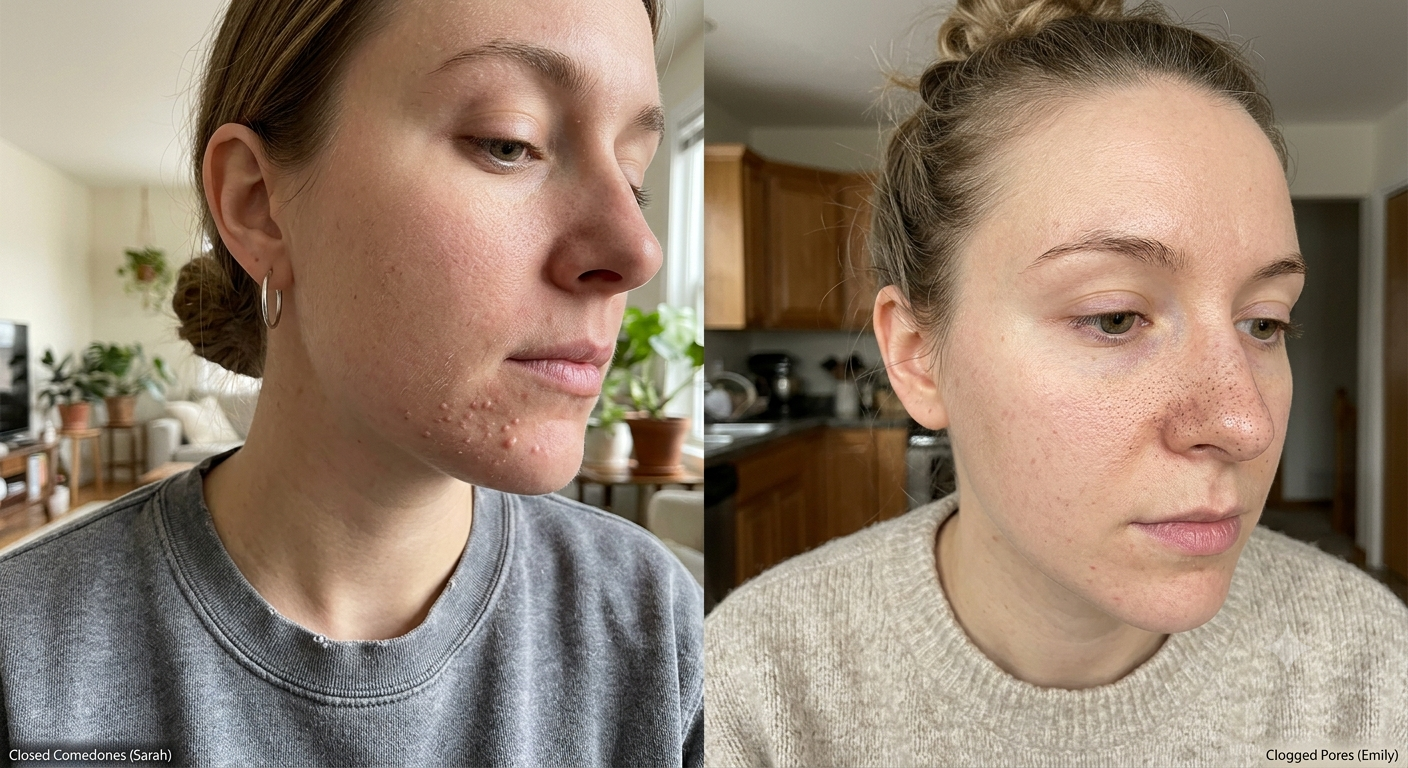
Running your fingers over your cheeks and feeling tiny, rough bumps? If they are small, flesh-colored or white, and usually not painful or inflamed, they may be closed comedones.
Closed comedones form when oil and dead skin cells become trapped inside a pore and remain covered by a thin layer of skin. They are common on the cheeks and can make your skin look uneven, especially under makeup or direct lighting.
The good news? You don't need to scrub or squeeze them away. A consistent routine focused on gentle cleansing, salicylic acid, hydration, and reducing pore-clogging triggers can help improve cheek congestion over time.
What Do Closed Comedones on Cheeks Look Like?
Closed comedones are usually easy to confuse with other types of cheek bumps.
Typical signs include:
- Small flesh-colored, white, or skin-toned bumps
- A rough or uneven skin texture
- Little to no redness
- Usually no pain or swelling
- No visible opening or black center
- More noticeable when light hits the skin from the side
If your bumps are intensely itchy, very red, painful, or appear as a highly uniform cluster, they may have a different cause.
For help identifying them, see our guide: What Do Closed Comedones Look Like? The Visual Guide to Clogged Pores.
What Causes Closed Comedones on Your Cheeks?
Closed comedones develop when a pore becomes blocked by a mixture of sebum and dead skin cells. Several everyday factors can make cheek congestion more likely.
1. Excess Oil and Dead Skin Cells
Your skin naturally produces sebum to maintain moisture. When excess oil combines with dead skin cells, the mixture can accumulate inside pores and form a closed comedone.
2. Heavy Skincare and Makeup
Foundation, primer, cream blush, sunscreen, and other leave-on products can contribute to clogged pores, particularly when multiple layers are applied regularly.
If you are prone to cheek congestion, look for products labeled non-comedogenic and pay attention to whether your skin becomes bumpier after introducing a new product.
3. Friction and Occlusion
Anything that repeatedly rubs against or covers your cheeks can contribute to congestion.
Common examples include:
Phone screens
Tight face masks
Dirty pillowcases
Frequent touching of your face
Hair repeatedly resting against your cheeks
These factors don't necessarily cause closed comedones on their own, but they can make an already congestion-prone area more difficult to clear.
4. Haircare Products
Hair oils, leave-in conditioners, styling products, and other rich formulas can transfer onto the cheeks while you sleep or throughout the day.
If your cheek congestion is concentrated near the hairline or sides of your face, consider whether your hair products are regularly contacting your skin.
5. Over-Cleansing or Drying Out Your Skin
Trying to remove every trace of oil can sometimes make your routine unnecessarily harsh.
Frequent washing, aggressive scrubbing, or combining too many acne treatments can leave your skin feeling dry and irritated. A simpler routine can be a better approach when your cheeks are both congested and sensitive.

How to Get Rid of Closed Comedones on Cheeks
The goal isn't to force the bumps out overnight. Instead, focus on gradually reducing pore congestion while keeping your skin comfortable and hydrated.
Step 1: Use a Gentle Cleanser
Start with a cleanser that can remove excess oil, sunscreen, makeup, and daily buildup without leaving your cheeks feeling tight or overly dry.
For congestion-prone skin, a cleanser containing salicylic acid can provide gentle exfoliation while cleansing.
The Dr.Leo Salicylic Acid Cleanser contains 1.8% encapsulated salicylic acid along with amino acids and botanical ingredients. Its jelly texture is designed to cleanse without the harsh, stripped feeling that can occur with more aggressive acne cleansers.
If you are new to salicylic acid, introduce it gradually rather than immediately combining it with several other exfoliating products.
Step 2: Use Salicylic Acid to Help Unclog Pores
Salicylic acid is a beta hydroxy acid (BHA) that can help exfoliate inside pore openings and reduce the buildup of sebum and dead skin cells that contributes to closed comedones.
If your cheeks are prone to congestion, start with a product your skin can tolerate consistently rather than using a stronger exfoliant more frequently. A salicylic acid cleanser can be a practical starting point because it combines cleansing with a short-contact BHA step. The Dr.Leo Salicylic Acid Cleanser provides a wash-off way to incorporate salicylic acid into a routine for congestion-prone skin.
If you are new to salicylic acid, introduce it gradually and avoid adding several other strong exfoliating actives at the same time.
Step 3: Reduce Friction and Pore-Clogging Triggers
Skincare alone may not solve recurring cheek congestion if the same triggers continue to affect your skin.
Try to:
Clean your phone screen regularly
Change your pillowcase frequently
Avoid constantly touching or rubbing your cheeks
Keep hair products away from your face when possible
Remove makeup thoroughly before bed
Choose non-comedogenic makeup and skincare when possible
If your cheeks are particularly oily, a clay-based cleanser can also be used occasionally as an additional cleansing step.
The Dr.Leo Volcanic Clay Cleanser Stick can help remove excess surface oil and buildup without requiring aggressive physical scrubbing.
Step 4: Keep Your Cheeks Hydrated
Don't skip moisturizer just because you have clogged pores.
A lightweight, non-comedogenic moisturizer can help maintain hydration while your acne-focused routine does its job. This is especially important if salicylic acid leaves your skin feeling dry or tight.
For a lightweight hydration step, Dr.Leo CICA Panthenol Hydro-Gel Soothing Moisturizer combines Centella asiatica and panthenol in a lightweight gel texture designed to soothe and hydrate the skin.
How Long Does It Take to Get Rid of Closed Comedones on the Cheeks?
Closed comedones rarely disappear overnight.
With a consistent and gentle routine, you may gradually notice smoother skin over several weeks. More persistent congestion can take longer, especially if new clogged pores continue to form.
The key is to avoid constantly switching products or increasing exfoliation when you don't see immediate results. Give your routine enough time to work while paying attention to signs of irritation.
What Should You Avoid When You Have Closed Comedones?
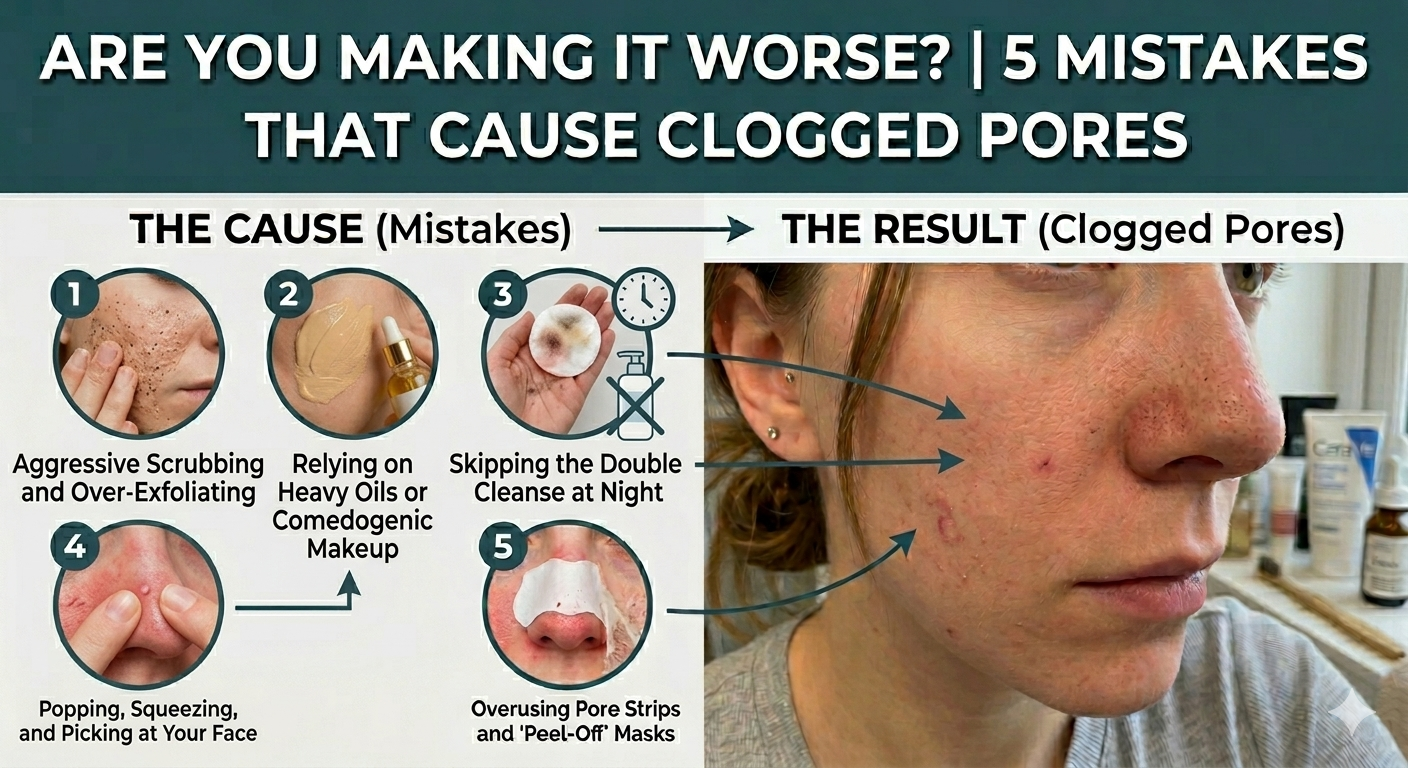
Trying to remove cheek bumps as quickly as possible can sometimes make the problem worse.
Don't Squeeze or Pick Them
Closed comedones don't have an exposed opening, so squeezing them can cause unnecessary irritation and potentially lead to inflammation or marks.
Don't Scrub Your Cheeks Aggressively
Physical scrubs won't necessarily remove the underlying pore blockage and can irritate already-sensitive cheek skin.
Don't Overuse Exfoliants
Using salicylic acid, glycolic acid, retinoids, and other exfoliating treatments all at once isn't necessarily more effective.
Start with a manageable routine and increase treatment gradually if your skin tolerates it.
Don't Skip Moisturizer
Dry, uncomfortable skin can make it harder to maintain an acne routine consistently. Hydration should remain part of your routine even when you're trying to clear clogged pores.
Closed Comedones vs. Other Cheek Bumps
Not every small bump on your cheeks is a closed comedone.
| Type | Common characteristics |
| Closed comedones | Small, flesh-colored or white bumps; usually not painful |
| Milia | Small, hard, pearl-like white bumps |
| Inflammatory acne | Red, swollen, or tender bumps |
| Fungal folliculitis | Often itchy and appears as relatively uniform bumps |
If your bumps are particularly itchy or don't respond to your usual acne routine, don't automatically assume they are closed comedones.
For more information, read: Closed Comedones vs. Fungal Acne: How to Tell the Difference.
When Should You See a Dermatologist?
Consider speaking with a dermatologist if your cheek bumps:
- Become painful, red, or significantly inflamed
- Continue to worsen despite a consistent routine
- Leave persistent dark marks or scars
- Are intensely itchy
- Don't improve after several weeks of appropriate skincare
A dermatologist can help determine whether you're dealing with closed comedones or another type of acne or skin condition.