Closed Comedones vs. Clogged Pores: How to Identify Skin Bumps
If you look closely at your reflection under a bright light and notice that your skin texture isn’t smooth, you are likely dealing with some form of skin congestion. However, when you start searching for solutions online, you will constantly run into two terms used almost interchangeably: clogged pores and closed comedones.
Are they the exact same thing? Not quite.
While they are driven by a very similar biological process, understanding the nuanced difference in Closed Comedones vs. Clogged Pores is the ultimate key to diagnosing your skin bumps accurately. Before diving into the details, you can read our foundational breakdown of skin congestion: What Are Clogged Pores? A Beginner’s Guide to Skin Congestion.
Let’s break down the science of how these two conditions differ, how to identify them on your own face, and how to safely clear them away for good.
The Umbrella Effect: Cause vs. Result
To truly understand Closed Comedones vs. Clogged Pores, it helps to think of them as two different evolutionary stages of skin congestion.
1.What Are Clogged Pores? (The Process)
Think of clogged pores as the broad, general umbrella term for any hair follicle that has become congested. It is a biological process. It happens when your sebaceous glands produce an excess amount of sticky oil (sebum), which then mixes with micro-debris like dead skin cells, daily pollution, sweat, and makeup. This sticky mixture forms a sludge that gets stuck inside the pore opening, creating a minor traffic jam.
2.What Are Closed Comedones? (The Final Result)
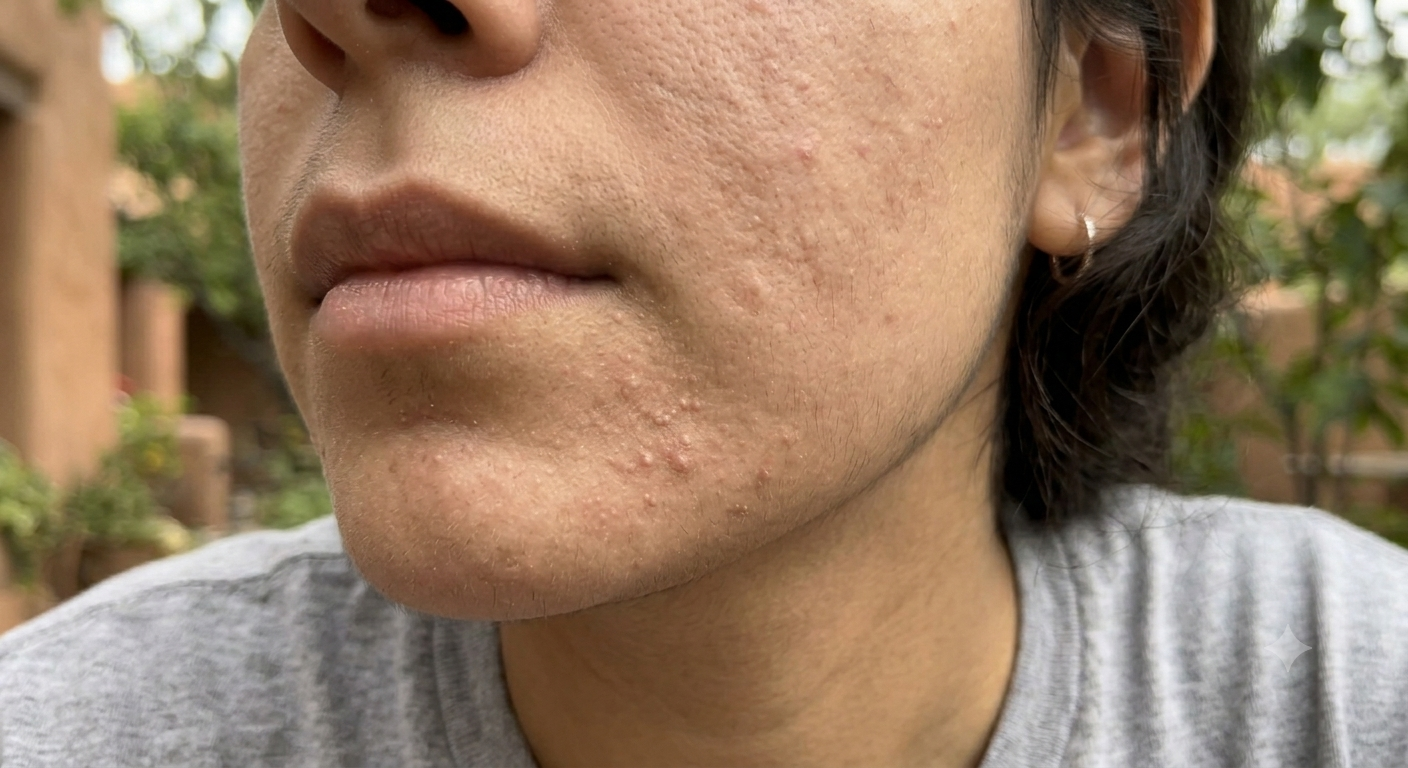
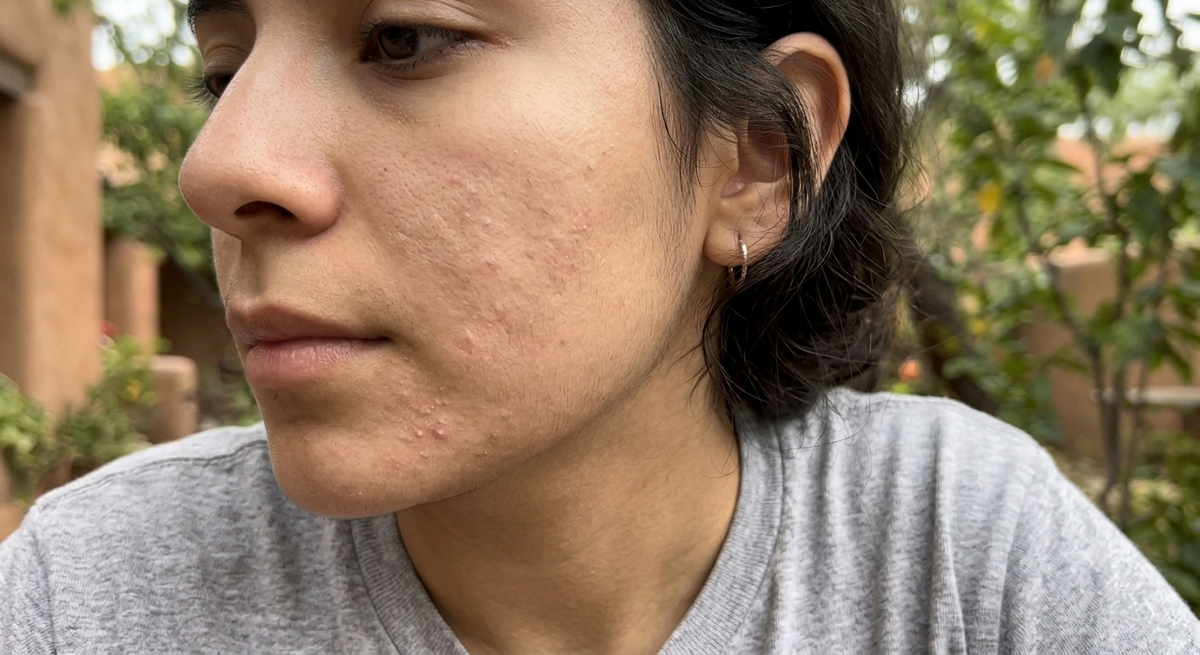
A closed comedone is a specific, advanced type of clogged pore. It is the architectural result of a traffic jam that has been completely sealed off. When that mixture of sebum and dead skin solidifies deep within the pore, a thin layer of skin cells grows entirely over the top opening. Because the clog has zero contact with the outside oxygen, it remains a flesh-colored or whitish bump under the skin—often referred to as a whitehead. To learn what this advanced stage looks like across different zones, explore our visual companion guide: What Do Closed Comedones Look Like? The Visual Guide to Clogged Pores.

How to Identify Your Bumps: The Visual Checklist
If you are trying to figure out which stage of skin congestion is currently sitting on your forehead, nose, or cheeks, use this simple visual and tactile guide:
| Feature | Clogged Pores (Early Stage) | Closed Comedones (Advanced Stage) |
| The Texture Test | Skin feels slightly uneven, looks oily, or features visible "black dots" (blackheads). | Skin feels distinctly rough like fine sandpaper and features dozens of tiny, hard, raised bumps. |
| The Visibility Test | Presents as stretched, enlarged, or shadowed openings on the skin surface. | Looks like tiny trapped pearls or seeds sitting just beneath a closed, translucent layer of skin. |
| The Location Test | Can happen anywhere oil is produced, heavily concentrating on the nose and chin. | Heavily favors clustering in tight groups across the forehead, cheeks, and along the jawline. |
The Ultimate 3-Step Routine to Clear Both Stages Safely
Whether you are dealing with early-stage pore congestion or stubborn, fully sealed closed comedones, the golden rule of treatment remains the same: Never try to forcefully squeeze or pop them. Squeezing will rupture the delicate follicle wall beneath the surface, turning a calm, non-inflammatory bump into an angry, swollen acne breakout.
Instead, utilize a coordinated chemical approach to dissolve the clogs from within, clear the surface debris, and maintain oil-water balance:
Step 1: Melt Trapped Sebum Daily with Dr.Leo Salicylic Acid Cleanser
Because both conditions are fueled by a buildup of thick, heavy oils, water-soluble acids struggle to get to the root of the issue. You need Salicylic Acid (BHA). Because Salicylic Acid is lipid-soluble, it has the unique biological ability to cut straight through surface moisture, glide down into the oily core of the clog, and break apart the hardened sebum glue. Washing daily with the Dr.Leo Salicylic Acid Cleanser utilizes a targeted salicylic acid formulation to deep-clean the follicles and melt away trapped congestion smoothly without drying out the skin barrier.
Step 2: Vacuum Surface Debris with Dr.Leo Volcanic Clay Cleanser Stick
To prevent excess grease, daily pollution, and makeup traces from turning into hardened plugs, your pores need a regular detox. Gliding the Dr.Leo Volcanic Clay Cleanser Stick 2-3 times a week across congested zones provides a magnetic, deep-cleansing effect. It lifts away daily micro-debris and mattifies runaway shine, preventing early-stage clogged pores from evolving into fully sealed closed comedones.
Step 3: Balance Moisture with Dr.Leo CICA Panthenol Hydro-Gel Soothing Moisturizer
When clearing pores with active clarifying ingredients, keeping the skin well-hydrated is crucial. Stripping the skin bare triggers defensive, compensatory oil production, which quickly re-plugs your empty pores.
Lock in oil-free hydration with the Dr.Leo CICA Panthenol Hydro-Gel Soothing Moisturizer. Its lightweight microcapsule texture transforms into water upon application to deliver deep hydration and maintain a healthy moisture-oil balance. Infused with high-purity centella asiatica, panthenol, and small-molecule hyaluronic acid, it instantly soothes the skin while ensuring your acne-prone skin stays perfectly balanced, calm, and breathable.
Reclaim Your Smooth Complexion
Recognizing the relationship between Closed Comedones vs. Clogged Pores changes how you view your skin. Clogged pores are a warning sign that your oil production and skin shedding are out of sync, while closed comedones mean those clogs have officially set up camp under a closed seal.
By upgrading your daily routine to a targeted chemical clarifying line, you can smoothly dissolve deep blockages and enjoy touchably soft, clear skin.
Explore Our Core Blueprints:
- To discover the daily habits that might be accidentally locking congestion into your skin, read Are You Making It Worse? 5 Mistakes That Cause Clogged Pores.
- To dive deep into the specific triggers behind facial oil imbalances, check out Why Are My Pores Clogged? Clogged Pores Causes & Signs.