Why Are My Pores Clogged? Clogged Pores Causes & Signs
Have you ever run your fingers across your face and felt a rough, uneven texture that just won’t go away? Or perhaps you’ve noticed that your makeup suddenly looks patchy and emphasizes tiny, un-poppable bumps under your studio lights.
Skin congestion can happen to anyone, regardless of age or skin type. However, trying to fix your texture without knowing why it is happening is like trying to clear a traffic jam without knowing where the accident occurred.
To achieve a truly clear, glowing complexion, you have to look beneath the surface. Let's break down the common biological clogged pores causes, how to read the hidden signs of congestion on your face, and the science-backed way to fix them.
What Are Clogged Pores? The Molecular View
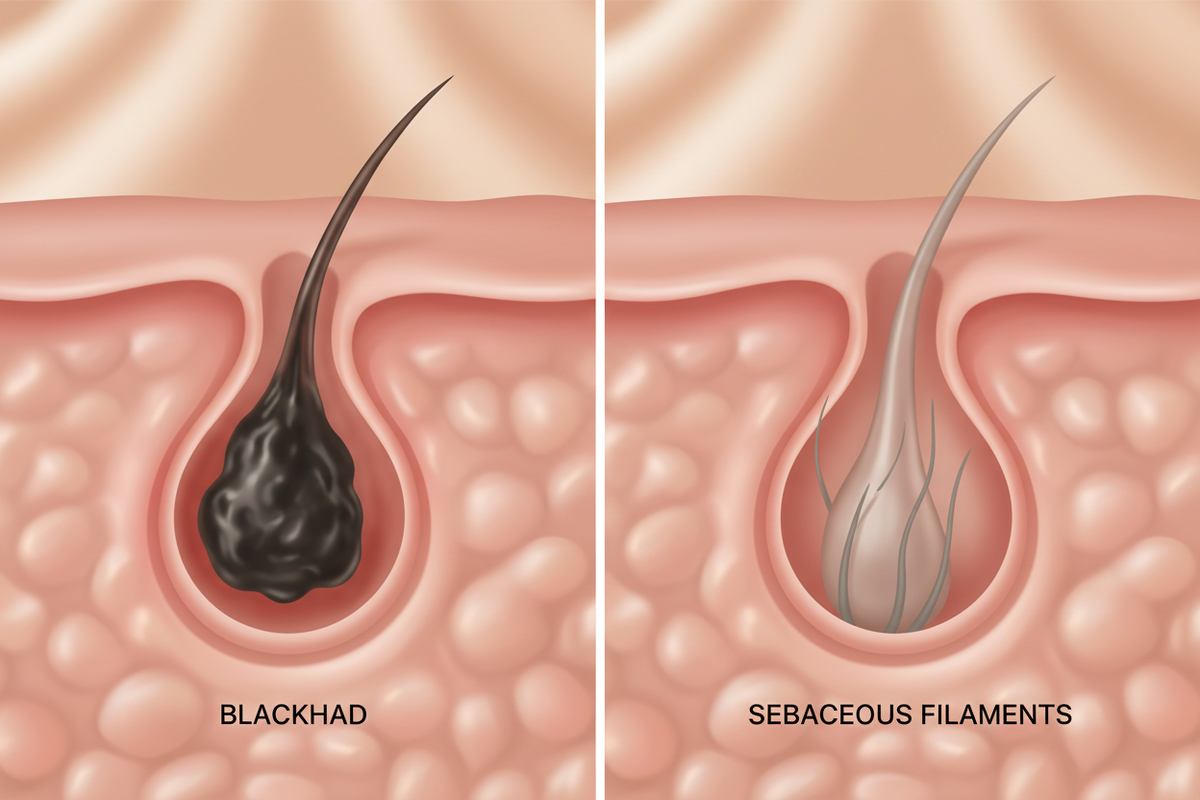
Before diving into the root causes, let’s look at the biology of a pore. Your skin is covered in millions of tiny openings that house a hair follicle and a sebaceous gland. This gland is responsible for secreting sebum—a natural oil meant to lubricate your skin barrier and keep it supple.
In a perfectly balanced ecosystem, sebum flows freely out of the opening and spreads across the skin. However, when the shedding process slows down, dead skin cells clump together with sticky oil, forming a dense plug that gets trapped inside the narrow pore lining. To understand how this traffic jam forms a baseline for broader skin congestion, read our foundational guide: What Are Clogged Pores? A Beginner’s Guide to Skin Congestion.
4 Major Clogged Pores Causes
If you are constantly battling uneven texture, your skin is likely reacting to a combination of internal biological shifts and external triggers. Here are the main factors driving pore congestion:
- Excess Sebum Production: When your sebaceous glands go into overdrive, they pump out more oil than your pore can naturally drain. This excess oil acts like a sticky glue, catching every passing dead skin cell and locking it inside the follicle channel.
- Hormonal Fluctuations: Have you noticed your skin flaring up during periods of high stress or right before your menstrual cycle? When stress levels rise, your body releases a hormone called cortisol, which binds to your oil glands and commands them to produce thick, heavy sebum that instantly creates clogs.
- Using Comedogenic Products: Many thick moisturizers, sunscreens, and liquid foundations are formulated with heavy synthetic waxes or occlusive oils. If these ingredients are "comedogenic" (pore-clogging), they act like a physical lid, trapping daily sweat, dead cells, and bacteria directly inside the pore.
- Poor Desquamation (Slow Cellular Turnover): Naturally, your skin drops millions of dead cells daily. However, if your cellular turnover is sluggish due to aging, environmental damage, or a lack of gentle exfoliation, those dry flakes remain on the surface, falling back into the pore openings to create dense plugs.

The Checklist: 3 Hidden Signs of Clogged Pores
Pore congestion doesn’t always look like a glaring, red pimple. In fact, early-stage congestion presents itself in quiet, non-inflammatory ways:
- The Sandpaper Texture: If your skin looks fine in dim lighting but feels rough, grainy, or bumpy when you wash your face, you are experiencing widespread pore clogs.
- Shadows Under Angle Lighting: Stand sideways next to a window or under an overhead light. If you see dozens of tiny, flesh-colored bumps casting minute shadows across your forehead or cheeks, your pores are sealed shut.
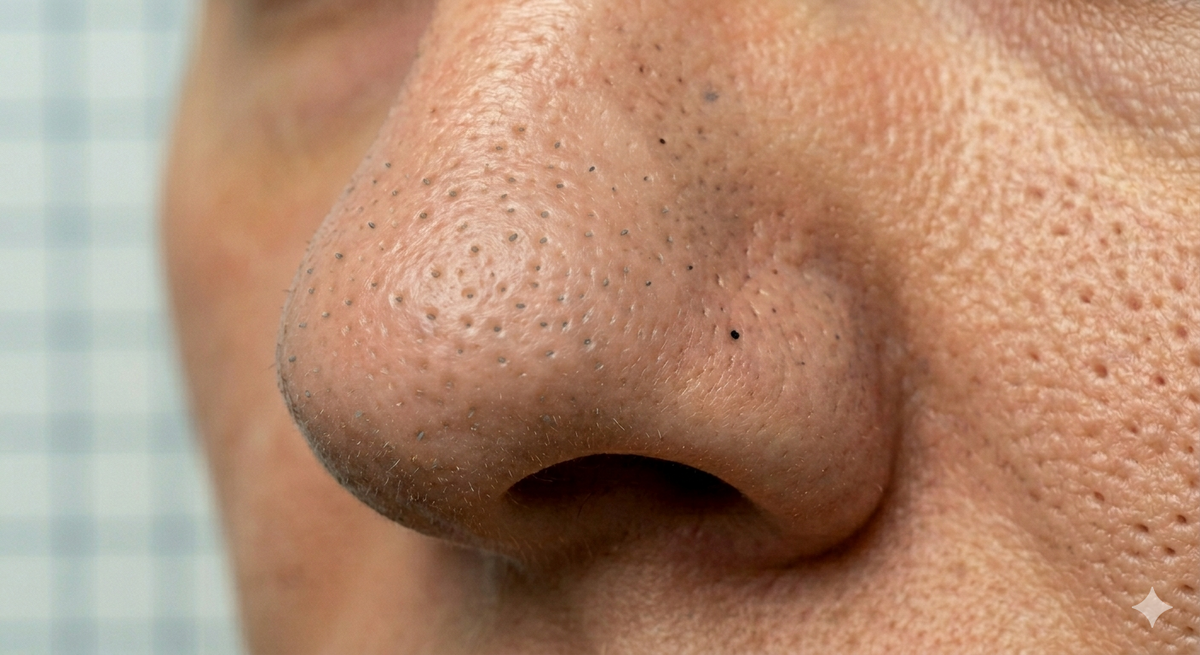
- Enlarged, Stretched Openings: When a sebum plug sits inside a pore for months, it physically stretches out the elasticity of the skin tissue, making the pore look much wider, darker, and more prominent than usual.
The Correct 3-Step Routine to Clear and Prevent Clogs
Because the root of a clogged pore is a dense mixture of hardened oil and dead skin, you cannot simply scrub it away with abrasive face scrubs. Rough physical scrubbing will only tear your moisture barrier, leading to redness and even more defensive oil production.
To melt the plugs safely, you need a daily, clinical routine that gently regulates oil production and purifies the follicles:
Step 1: Melt Deep-Set Core Plugs with Dr.Leo Salicylic Acid Cleanser
Unlike water-soluble acids that only work on the surface, Salicylic Acid (BHA) is lipid-soluble. It can glide deep down into the oily core of a clogged pore to break apart the trapped debris from within. Washing daily with the Dr.Leo Salicylic Acid Cleanser utilizes a targeted salicylic acid formulation to clear out heavy build-up and sweep away dead skin cells without causing drying, peeling, or irritation.
Step 2: Clear Away Weekly Runaway Grease with Dr.Leo Volcanic Clay Cleanser Stick
To prevent excess hormonal oil and daily cosmetics from settling into your follicles, incorporate a deep-cleansing detox 2-3 times a week. Gliding the Dr.Leo Volcanic Clay Cleanser Stick over your T-zone and congested areas acts as a magnetic vacuum, pulling out stubborn debris and mattifying surface shine before it can solidify into a hardened plug.
Step 3: Support Oil-Water Balance with Dr.Leo CICA Panthenol Hydro-Gel Soothing Moisturizer
When treating clogged pores, keeping the skin barrier hydrated is non-negotiable. Stripping the skin bare causes it to panic, leading to defensive sebum overproduction that immediately re-plugs your pores. Lock in breathable hydration with the Dr.Leo CICA Panthenol Hydro-Gel Soothing Moisturizer. Its lightweight microcapsule texture transforms into water upon application, delivering high-purity centella asiatica, panthenol, and hyaluronic acid to instantly soothe redness, regulate excess oil, and maintain a perfectly clear complexion.
Take Control of Your Skin Map
Identifying the true clogged pores causes and recognizing the early signs of congestion allows you to stop treating your face blindly. By abandoning harsh scrubs and incorporating oil-soluble chemical exfoliants paired with weightless hydration, you can gently dissolve deep-set blockages and enjoy touchably soft skin.
Explore Our Core Blueprints:
- If your pore congestion has already transitioned into rows of stubborn, non-inflammatory flesh-colored bumps, cross-check your symptoms with our diagnostic guide: Closed Comedones vs. Clogged Pores: How to Identify Skin Bumps.
- To discover the daily habits that might be accidentally worsening your skin congestion, read Are You Making It Worse? 5 Mistakes That Cause Clogged Pores.