What Do Closed Comedones Look Like?
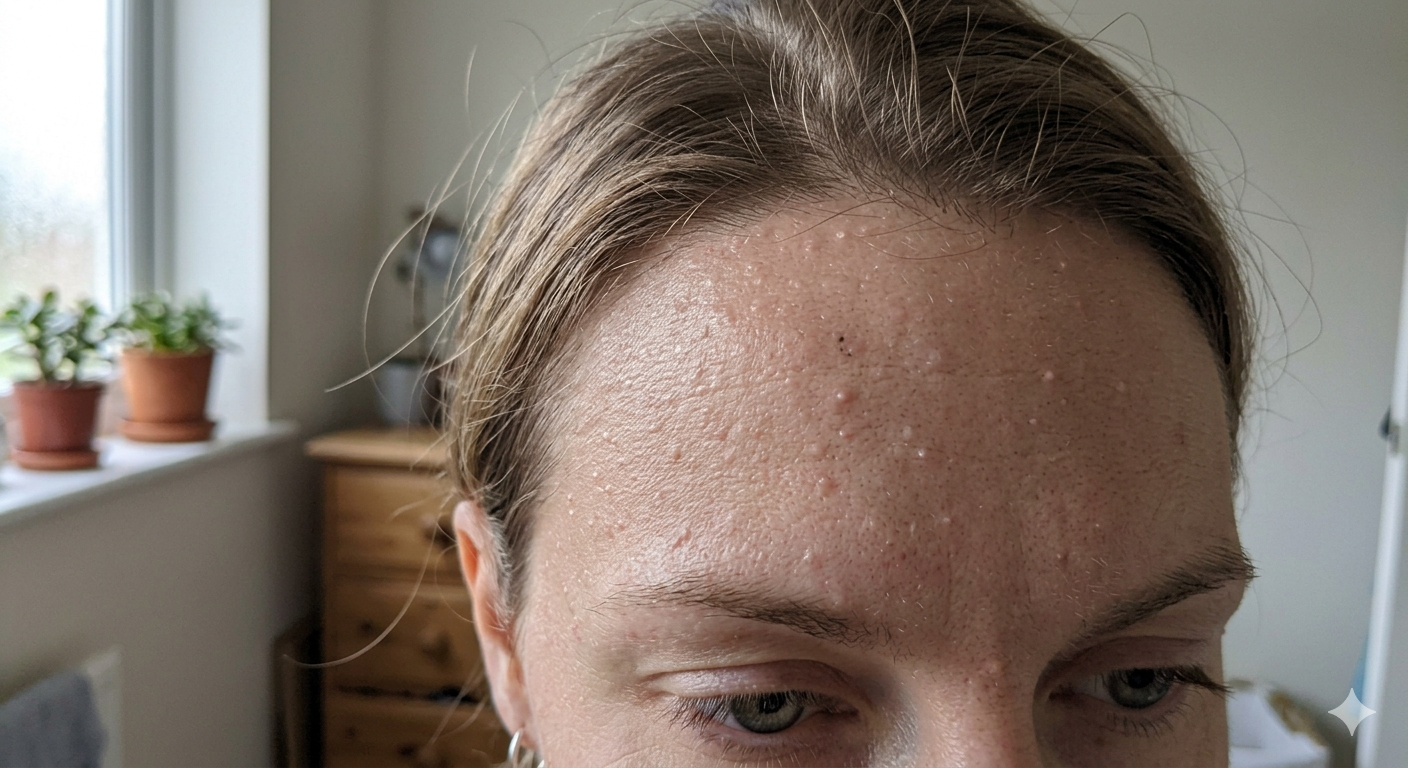
Have you ever looked at your skin under a bright light or a magnifying mirror and noticed dozens of tiny, flesh-colored bumps covering your forehead or cheeks? They don't have a glaring red ring of inflammation, they don't hurt to touch, and they never seem to come to a head. Instead, they just sit there, making your skin texture look uneven and rough.
If this description matches your skin right now, you are likely looking at a classic case of closed comedones.
But exactly what is closed comedones, and how can you be 100% sure that those little bumps on your face aren't something else? Let's break down exactly what do closed comedones look like, how they form, and how they differ from standard blackheads.
What Is Closed Comedones? The Biological Definition
Before we look at them on the surface, let’s understand what is happening underneath. In dermatology, what is closed comedones can be defined as a form of non-inflammatory acne.
They occur when your sebaceous glands produce an excess amount of oil (sebum). This sticky oil mixes with dead skin cells that your skin hasn't properly shed. Together, this mixture clumps together and forms a dense, solid plug that gets trapped inside the hair follicle. Unlike a regular pimple, there is no major bacterial infection yet, so the bump stays calm, small, and stubbornly locked under the skin.
What Do Closed Comedones Look Like? The Visual Checklist
To identify them on your own face, look for these specific visual and tactile characteristics:
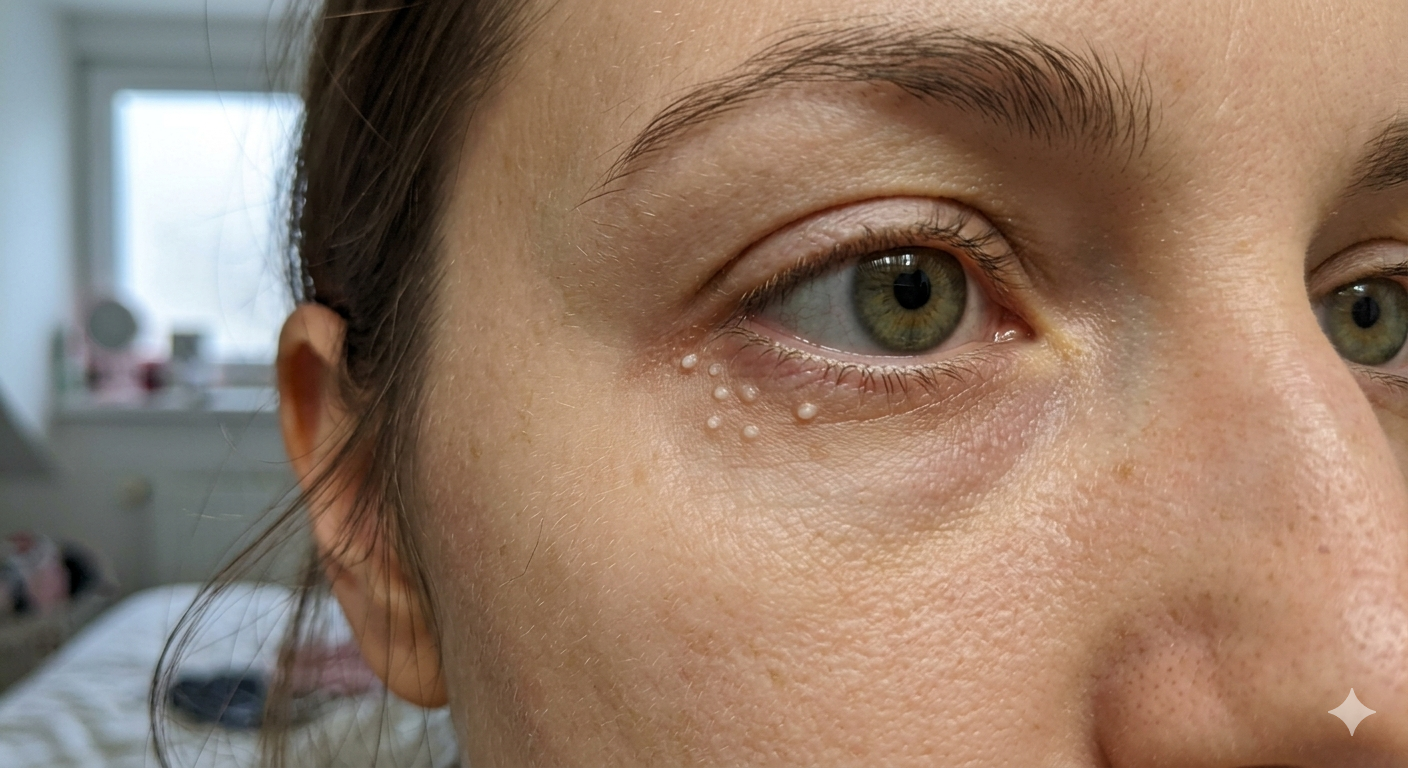
- Flesh-Colored or Whitish Bumps: They typically match your exact skin tone or look like tiny, pale white pearls sitting just beneath the skin barrier. They do not have a dark center.
- The "Sandpaper" Texture: You often feel them before you see them. When you run your fingers across your face, the skin will feel rough, bumpy, and distinctly like fine sandpaper.
- Worse Under Angle Lighting: They can be deceptive. In a dimly lit room, your skin might look completely smooth. However, if you stand under harsh overhead lighting or look at your skin from a side angle in daylight, every single tiny bump will cast a shadow.
- They Ruin Makeup Application: When you apply liquid foundation or concealer, it won't hide them. In fact, makeup often clings to the texture, making the bumps look even more prominent and flaky.
Location Matters: Where Are They Hiding?
Closed comedones can pop up anywhere you have oil glands, but they heavily favor three major zones on the face. Depending on where your bumps are clustered, the root cause might vary:
- If they are heavily concentrated on your upper face, explore our target guide on How to Get Rid of Stubborn Closed Comedones on Your Forehead.
- If they are spreading across your mid-face, check out Cheek Closed Comedones: Causes and Solutions.
- If they are wrapping around your lower face, read Closed Comedones Around Mouth, Chin, and Jawline.
The Diagnostics: Are You Sure It’s a Closed Comedone?
Because the human face is a crossroads for multiple skin issues, it is incredibly easy to misdiagnose these tiny texture bumps. Before you start treating them, you need to rule out two common lookalikes:
- Fungal Acne: If your bumps are small, uniform, and intensely itchy, you might be dealing with yeast rather than trapped sebum. Learn how to spot the difference in our guide: Closed Comedones vs. Fungal Acne: How to Tell the Difference.
- Milia: If the bumps look like tiny, hard, stubborn white seeds that won't budge even with exfoliation, they might be trapped keratin. Check out Milia or Closed Comedones? The Texture Guide.
Closed vs Open Comedones: What's the Difference?
A common point of confusion is understanding the difference between closed vs open comedones. The distinction is incredibly simple and depends entirely on whether the pore is open to the air:
1. Closed Comedones (The Clogged Door)
In a closed comedone, a layer of skin cells has completely grown over the trapped plug of oil and dead skin. Because the mixture is sealed away and has zero contact with oxygen, it remains white or flesh-colored. These are commonly referred to as whiteheads.
2.Open Comedones (The Open Windows)
An open comedone is what we commonly call a blackhead. In this scenario, the plug of sebum is trapped in a pore that remains wide open to the surface. When the trapped oil is exposed to the oxygen in the air, a chemical process called oxidation happens, turning the top of the plug a dark black or brown color.
How to Clear Closed Comedones for Smoother Skin
Because closed comedones are completely sealed off by a layer of skin cells, you cannot simply wash them away with a generic surface face wash, and you should never try to forcefully squeeze them out. To safely unlock the pore door, dissolve the hardened sebum glue from within, and prevent irritation, adopt this clinical three-step routine:
Step 1: Dissolve the Core with an Oil-Soluble BHA Cleanser
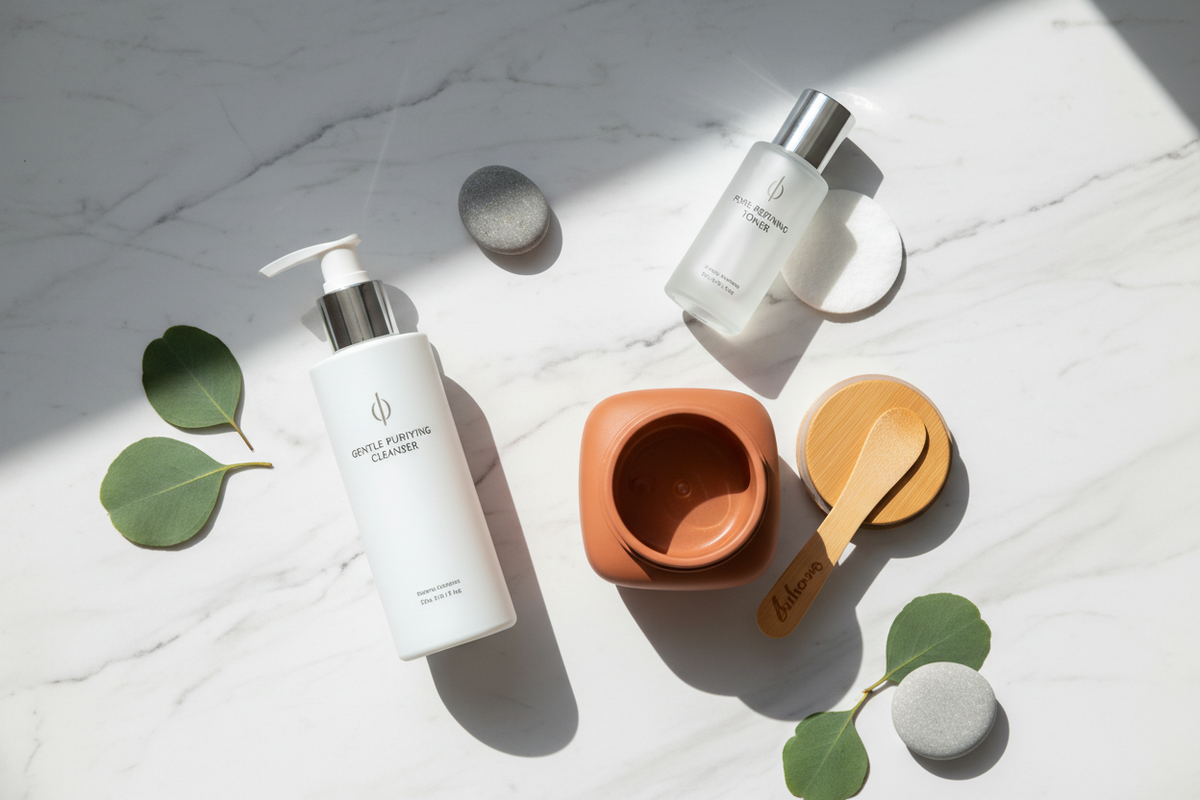
Regular exfoliants (like AHAs) only work on the very surface of the skin. To dissolve the core of a closed comedone, you need Salicylic Acid (BHA). Because Salicylic Acid is oil-soluble, it can seamlessly pass through the lipid barrier and dive deep into the pore. Washing daily with the Dr.Leo Salicylic Acid Cleanser ensures a steady, gentle release of pore-clearing power to break up the trapped oil plug right at the root.
Step 2: Draw Out Deep Impurities with a Target Clay Treatment
After clearing the pore pathways, use a specialized clay mask 2-3 times a week to vacuum up leftover debris and control runaway shine. The Dr.Leo Volcanic Clay Cleanser Stickis engineered to absorb stubborn surface sebum, mattify oily zones (like the forehead and nose), and cut off the oil supply that feeds new closed comedones—all without the messy cleanup of traditional mud masks.
Step 3: Rebuild the Barrier with 7X Centella Calming Care
Deep pore clearing can sometimes leave the skin temporarily vulnerable. To prevent compensatory oil production, flakiness, or redness, you must follow up with lightweight, non-comedogenic hydration. Infusing your routine with the Dr.Leo 7X Centella Calming Series—including our specialized toner, lotion, and Dr.Leo Centella Calming Cream—delivers immediate, anti-inflammatory relief. This clinical combination instantly deeply soothes the skin barrier, locks in weightless moisture, and ensures your texture transformation remains completely smooth and irritation-free.
Take Control of Your Skin Texture
Learning to recognize what closed comedones look like is a massive breakthrough for your skincare journey. By swapping aggressive scrubbing for targeted pore-clearing care, you can safely reclaim a smooth, glass-like complexion.
Keep your routine lightweight, avoid thick, heavy makeup primers, and let targeted BHA chemistry do the heavy lifting for your pores!