Closed Comedones on Chin, Mouth & Jawline: Causes and Solutions
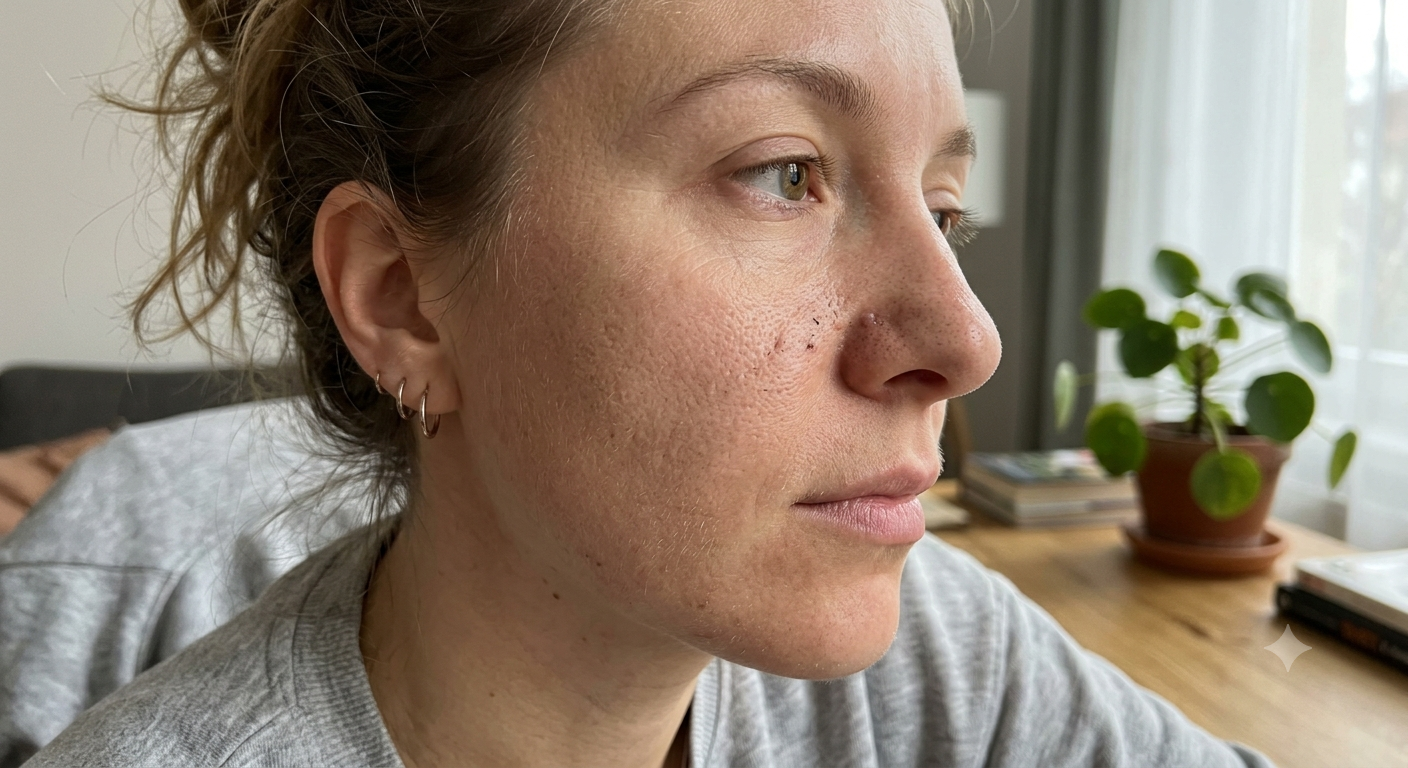
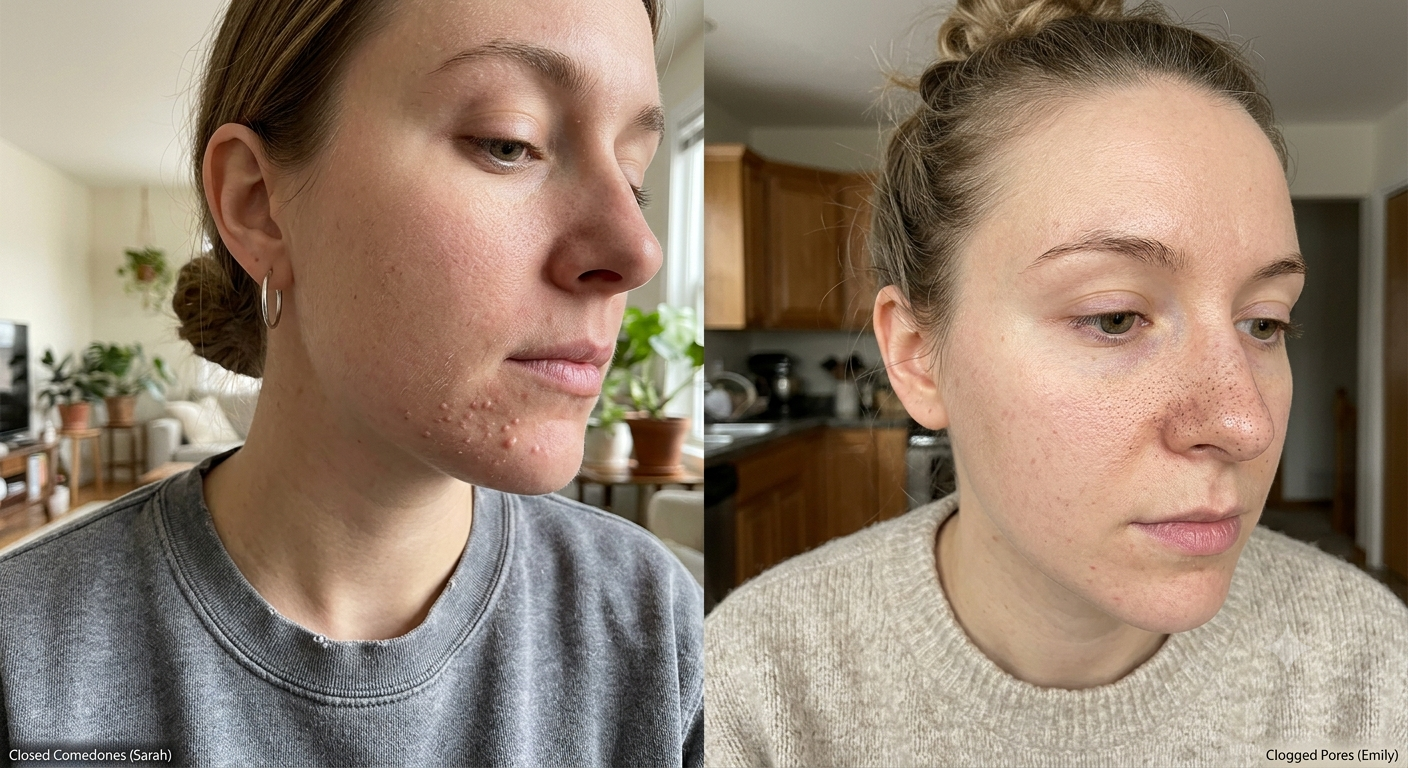
Tiny, skin-colored bumps on your chin, around your mouth, or along your jawline may be closed comedones. These bumps form when oil and dead skin cells clog hair follicles, leaving the pore opening closed.
Chin and jawline breakouts can sometimes be influenced by hormonal changes, but not every closed comedone in these areas is hormonal. Skincare products, friction, and other everyday factors may also contribute.
This guide explains what causes closed comedones on the lower face, how to identify possible triggers, and which skincare steps may help improve congestion without unnecessary irritation.
Key Takeaways
- Chin closed comedones: Often involve clogged follicles and may be influenced by oil production, skincare products, or hormonal changes.
- Hormonal factors: Chin and jawline acne can sometimes fluctuate with hormones, but location alone cannot confirm hormonal acne.
- Around the mouth: Irritation, product exposure, and other skin conditions can produce similar-looking bumps.
- Treatment options: Salicylic acid and appropriate topical retinoids may help manage comedonal acne, depending on the product and individual skin needs.
- Daily routine: Gentle cleansing, suitable moisturizing, and avoiding excessive exfoliation can support skin comfort.
- Be patient: Persistent closed comedones may require several weeks or longer to improve.
What Causes Closed Comedones on Your Chin?
Closed comedones develop when oil and dead skin cells accumulate inside hair follicles. Because the follicular opening remains closed, the trapped material appears as small, skin-colored or whitish bumps beneath the skin's surface.
The chin is a common area for acne-related congestion. Several factors may contribute to the development of closed comedones in this area.
1. Excess Oil and Dead Skin Cell Buildup
Sebum helps maintain skin moisture, but excess oil combined with dead skin cell buildup can contribute to clogged follicles. When this material accumulates, small bumps may develop beneath the skin's surface.
This can happen even if you cleanse regularly. The goal is not to remove every trace of oil, but to maintain a balanced routine that supports clean, comfortable skin.
2. Hormonal Fluctuations
Hormonal changes can influence sebum production and contribute to acne, particularly around the chin and jawline. Some people notice that lower-face breakouts become more noticeable at certain points in their menstrual cycle.
However, chin congestion is not automatically hormonal. Closed comedones can also be associated with skincare products, follicular buildup, and other everyday factors.
3. Skincare and Makeup Products
Heavy creams, makeup, sunscreen, and other skincare products may contribute to congestion in some individuals, depending on their formulation and how the skin responds.
If you notice new bumps after introducing a product, review your routine and consider simplifying it. Products labeled non-comedogenic may be worth considering, although individual skin responses can still vary.
4. Friction and Repeated Contact
Frequent touching, resting your chin on your hands, rubbing, and friction from clothing or accessories may irritate the skin and contribute to breakouts.
Try to reduce unnecessary contact with the lower face and keep items that regularly touch your chin clean.
Are Closed Comedones on the Chin Hormonal?
They can be, but not always. Hormonal fluctuations can influence oil production and contribute to acne around the chin and jawline. This is one reason some people notice recurring lower-face breakouts around their menstrual cycle or during other periods of hormonal change.
However, the location of a breakout alone cannot determine whether it is hormonal acne. Closed comedones can develop from several factors, including excess oil, dead skin cell buildup, and products that do not suit your skin.
Signs That Hormones May Be Contributing
- Breakouts repeatedly appear around the chin and jawline.
- Acne seems to fluctuate with the menstrual cycle.
- Lower-face breakouts recur over time.
- Congestion occurs alongside other acne symptoms, such as inflamed pimples.
Hormonal acne is often associated with deeper, inflamed pimples around the lower face, although comedones can also occur. These signs are not enough to confirm a hormonal cause.
If you experience persistent, painful, or recurring acne, a dermatologist can help assess the possible causes and recommend appropriate treatment options.
Closed Comedones Around the Mouth vs. Chin vs. Jawline
Although these areas are close together, bumps around the mouth, chin, and jawline can have different contributing factors. Understanding where they appear and how they behave can help you choose a more appropriate skincare approach.
Closed Comedones Around the Mouth
Small bumps around the mouth may be associated with clogged follicles, skincare or makeup residue, and friction. Toothpaste, lip products, and heavy creams may also come into contact with the surrounding skin.
However, not every small bump around the mouth is a closed comedone. Perioral dermatitis, for example, can cause clusters of small bumps around the mouth and may be accompanied by redness, burning, or irritation.
If the area is persistently irritated or the bumps are concentrated around the mouth, avoid adding multiple active ingredients without first identifying the possible cause. Consider consulting a dermatologist if symptoms persist.
Closed Comedones on the Chin
The chin can develop clogged pores due to oil production, dead skin cell buildup, and products that do not suit your skin. Hormonal fluctuations may also contribute to recurring acne in this area.
A consistent routine with suitable cleansing, targeted treatment when appropriate, and lightweight moisturizing can help support clearer-looking skin over time.
Closed Comedones on the Jawline
The jawline can experience both comedonal and inflammatory acne. Hormonal fluctuations may be one contributing factor, particularly when breakouts recur in a similar pattern.
Friction from clothing, frequent touching, and unsuitable skincare products may also contribute. Pay attention to recurring triggers instead of assuming that all jawline breakouts have the same cause.
How to Get Rid of Closed Comedones on Your Chin
Improving closed comedones involves addressing clogged follicles while maintaining a skincare routine your skin can tolerate. Rather than adding multiple intensive treatments, start with suitable cleansing, consider an appropriate acne treatment, and maintain skin hydration.
Step 1: Start With a Gentle Cleanser
Daily cleansing helps remove excess surface oil, dirt, makeup, and other residue that accumulates throughout the day. Choose a cleanser suited to your skin type that leaves your skin feeling comfortable rather than excessively dry.
For everyday cleansing, Dr. Leo Polyamino Acid Purifying Facial Cleanser is an option designed to cleanse the skin gently while helping maintain hydration.
Why consider a gentle cleanser?
- Helps remove everyday oil, dirt, and surface impurities.
- Provides a consistent foundation for your skincare routine.
- Helps cleanse without relying on aggressive scrubbing.
Remember that a gentle cleanser is a basic skincare step, not a standalone treatment for closed comedones.
Explore Dr. Leo Polyamino Acid Purifying Facial Cleanser

Step 2: Consider a Targeted Treatment for Clogged Pores
If clogged pores are your main concern, consider an ingredient specifically used for comedonal acne, such as salicylic acid or an appropriate topical retinoid.
Salicylic acid is an oil-soluble beta hydroxy acid (BHA) that helps exfoliate within pore openings and address the buildup associated with clogged pores. Topical retinoids support normal skin cell turnover and are established options for managing comedonal acne.
The appropriate choice depends on the product formulation, your skin concerns, and individual tolerance. Introduce active ingredients gradually and avoid combining several exfoliating products at once.
For persistent or recurring acne, a dermatologist can help determine whether an over-the-counter treatment or a prescription option is more suitable.
Step 3: Use a Clay Cleansing Product When Appropriate
If excess surface oil is also a concern, a clay-based cleansing product may be an optional addition to your routine.
Dr. Leo Volcano Cleansing Clay Stick combines volcanic clay, kaolin, and activated charcoal to help cleanse the skin and manage excess surface oil.
Why consider a clay cleansing product?
- Helps absorb excess surface oil.
- Helps remove everyday impurities from the skin's surface.
- Provides an additional cleansing option for oilier areas.
Clay cleansing does not directly regulate hormonal activity or guarantee that new closed comedones will not form. Follow the product directions and avoid excessive use, particularly around the mouth if your skin is sensitive.
Explore Dr. Leo Volcano Cleansing Clay Stick

Step 4: Moisturize to Support Skin Hydration
Moisturizing is important even if you have oily or acne-prone skin. Cleansing and active ingredients can sometimes leave the skin feeling dry or tight, especially when used too frequently.
Dr. Leo CICA Panthenol Jelly Moisturizer is a lightweight moisturizing option designed to help hydrate the skin, soothe visible redness, and support the skin barrier.
Why include a moisturizer?
- Helps maintain skin hydration.
- Supports skin comfort when using active ingredients.
- Helps maintain the skin barrier.
- Provides lightweight moisture without an overly heavy feel.
A moisturizer does not directly remove closed comedones or treat hormonal acne, but it can be an important part of a balanced skincare routine.
Explore Dr. Leo CICA Panthenol Jelly Moisturizer

Daily Habits to Help Reduce Lower-Face Congestion
Skincare products are only one part of managing closed comedones. Everyday habits can also influence skin comfort and exposure to potential triggers.
Keep Your Routine Simple
Using too many products at once can make it difficult to identify what your skin tolerates. Introduce new products gradually and avoid combining multiple intensive treatments without a clear reason.
Clean Items That Touch Your Face
Regularly wash pillowcases, makeup tools, and items that frequently come into contact with your chin and jawline. Avoid repeatedly touching or resting your chin on your hands.
Choose Skincare Products Carefully
Pay attention to how your skin responds to moisturizers, sunscreen, makeup, and lip products. If a product appears to coincide with new congestion, consider pausing it and reviewing your routine.
Avoid Aggressive Scrubbing
Scrubbing or squeezing closed comedones can irritate the skin and potentially worsen inflammation. Gentle, consistent care is a better approach than trying to remove every bump manually.
How Long Does It Take to Improve Closed Comedones?
Closed comedones generally do not disappear overnight. The time needed to see improvement depends on the underlying cause, treatment choice, product formulation, and individual skin response.
Some people may notice changes after several weeks of consistent care, while more persistent congestion can take longer to improve. Prescription acne treatments may also require a longer evaluation period.
Avoid increasing product frequency simply because results are not immediate. If your skin becomes persistently irritated, simplify your routine and seek professional advice when appropriate.
When Should You See a Dermatologist?
Consider consulting a dermatologist if:
- Closed comedones persist despite consistent skincare.
- Breakouts become painful, inflamed, or increasingly frequent.
- You experience recurring lower-face acne and suspect hormonal involvement.
- Bumps around your mouth are accompanied by burning, redness, or irritation.
- You are unsure whether the bumps are closed comedones or another skin condition.
A dermatologist can help identify the cause and recommend a treatment approach suited to your skin.
Final Thoughts
Closed comedones around the chin, mouth, and jawline can have several contributing factors. Hormonal fluctuations may play a role in some lower-face acne, but they are not the only possible cause.
Start by understanding your skin's triggers, choosing suitable cleansing and treatment products, and maintaining hydration. Avoid excessive exfoliation and give your routine time to work.
If congestion persists or becomes inflamed, professional guidance can help you find a more targeted treatment approach.