Pimple Spot Treatment: How to Choose and Use One
Dealing with an unexpected pimple? A pimple spot treatment can help you target individual blemishes without applying acne products all over your face. However, choosing the right formula matters. Ingredients like Salicylic Acid, Sulfur, and Niacinamide offer different benefits for blemish-prone skin.
Whether you're dealing with occasional pimples, oily skin, or recurring breakouts, understanding how spot treatments work can help you make better skincare choices. The right product should address your specific concerns while fitting comfortably into your existing routine.
In this guide, we'll explain what pimple spot treatments are, how common ingredients work, how to choose the right formula for your skin, and how to apply spot treatments correctly. We'll also explore Dr.Leo Acne Drying Lotion Plus as an option for targeted blemish care.
Key Takeaways
- Target individual blemishes: Spot treatments are designed for localized application rather than full-face use.
- Understand the ingredients: Salicylic Acid helps exfoliate inside pores, Sulfur helps absorb excess surface oil, and Niacinamide supports the skin barrier.
- Choose based on your skin needs: Consider your skin type, the type of blemishes you experience, and your tolerance for active ingredients.
- Apply correctly: Follow product instructions and avoid combining too many potentially irritating acne treatments.
- Stay consistent: A targeted treatment works best as part of a balanced skincare routine.
What Is a Pimple Spot Treatment?
A pimple spot treatment is a skincare product designed to be applied directly to individual pimples or blemishes. Unlike cleansers, moisturizers, or full-face acne treatments, spot treatments focus on specific areas that need extra attention.
These products come in different forms, including lotions, gels, creams, serums, and patches. Their formulas may contain ingredients such as Salicylic Acid, Sulfur, Benzoyl Peroxide, or Niacinamide.
The main purpose of a spot treatment is to provide targeted care for blemish-prone areas while allowing you to maintain the rest of your regular skincare routine.
For example, if you occasionally experience individual pimples on your chin or forehead, a spot treatment allows you to focus on those areas instead of applying a concentrated acne product across your entire face.
How Do Acne Spot Treatments Work?
Different spot treatments work in different ways depending on their active ingredients. Some help exfoliate dead skin cells and reduce pore buildup, while others help manage excess oil or support the skin barrier.
Understanding these differences can help you choose a product that better matches your skincare needs.
1. Exfoliating and Unclogging Pores
Ingredients such as Salicylic Acid help exfoliate dead skin cells and penetrate into oil-filled pores. This makes Salicylic Acid a popular option for people with oily skin and clogged pores.
It is particularly relevant for people concerned about blackheads, whiteheads, and pore congestion.
2. Managing Excess Surface Oil
Some spot treatments contain ingredients such as Sulfur, which can help absorb excess surface oil. These formulas are often included in skincare routines for oily and blemish-prone skin.
Sulfur is commonly found in drying lotions and other targeted acne-care products. However, some sulfur formulas may feel drying, so following the recommended application instructions is important.
3. Supporting the Skin Barrier
Not every ingredient in an acne spot treatment needs to focus on exfoliation. Niacinamide, for example, helps support the skin barrier and maintain a balanced-looking complexion.
It can complement other ingredients in a targeted skincare formula, particularly when caring for oily or blemish-prone skin.
Common Ingredients in Pimple Spot Treatments
When comparing different acne spot treatments, look beyond the product name. The ingredients and their intended functions can tell you more about how a formula fits into your routine.
Salicylic Acid
Salicylic Acid is a Beta Hydroxy Acid (BHA) commonly used in products for oily and acne-prone skin. Because it is oil-soluble, it can penetrate into pores and help exfoliate accumulated dead skin cells.
It is particularly relevant for people concerned about clogged pores, blackheads, and whiteheads. Salicylic Acid is available in different product formats, including cleansers, leave-on treatments, and targeted spot treatments.
Sulfur
Sulfur is a traditional skincare ingredient used in products for blemish-prone skin. It helps absorb excess surface oil and supports the care of oily skin.
You can find Sulfur in drying lotions, masks, and other targeted acne-care products. Because some Sulfur formulas can feel drying, it is important to follow the product directions and maintain appropriate skin hydration.
Niacinamide
Niacinamide, also known as Vitamin B3, is a versatile skincare ingredient that helps support the skin barrier and maintain a more balanced-looking complexion.
For people with oily or blemish-prone skin, Niacinamide can complement a routine that includes exfoliating or targeted acne treatments.
Benzoyl Peroxide
Benzoyl Peroxide is an acne-treatment ingredient known for its antibacterial activity against acne-associated bacteria. It is commonly used in products designed for acne-prone skin.
However, it can cause dryness, irritation, or peeling, particularly when combined with other active acne ingredients. Check product directions and introduce it carefully into your routine.
How to Choose the Right Pimple Spot Treatment
There is no single spot treatment that works the same way for everyone. The right choice depends on your skin type, concerns, ingredient preferences, and tolerance.
1. Consider Your Skin Type
- Oily skin: Look for formulas with ingredients such as Salicylic Acid or Sulfur that are suitable for your skincare needs.
- Combination skin: Consider targeted application so you can care for individual blemishes without applying potentially drying products to your entire face.
- Sensitive skin: Look for formulas with clear ingredient information and directions. Start cautiously, especially when using exfoliating ingredients.
2. Match the Ingredients to Your Skin Concerns
If clogged pores and excess oil are your main concerns, Salicylic Acid may be worth considering. If you prefer a formula containing ingredients traditionally used in oily-skin care, Sulfur is another option.
Niacinamide can also be useful as a complementary ingredient in a routine designed to support the skin barrier.
Rather than choosing a product simply because it contains several active ingredients, consider how the complete formula fits your skin's needs.
3. Choose a Formula That Fits Your Routine
Spot treatments are available in different textures and formats. Some are designed for daytime use, while others are commonly incorporated into nighttime routines.
Consider how the product should be applied, whether it needs to dry before other skincare steps, and whether its instructions fit your existing routine.
4. Pay Attention to the Application Method
Some spot treatments are applied with your fingertips, while others come with a specific applicator or require a cotton swab.
For example, two-phase drying lotions need to be used differently from conventional gels or creams. Understanding the application method helps you use the product as intended and avoid unnecessary product waste.
How to Apply Pimple Spot Treatment Correctly
Even a well-formulated spot treatment needs to be used correctly. Applying too much product or combining multiple strong active ingredients may increase the risk of irritation.
Follow these general steps when using a leave-on acne spot treatment:
- Cleanse your skin: Wash your face with a gentle cleanser to remove dirt, oil, and sunscreen.
- Dry your skin: Follow the product instructions regarding whether it should be applied to dry or slightly damp skin.
- Apply to individual blemishes: Use the recommended amount and avoid spreading a targeted product across your entire face unless its instructions allow it.
- Allow the product to absorb or dry: Follow the directions before applying other skincare products.
- Moisturize: Use a suitable moisturizer to help maintain skin hydration and support the skin barrier.
- Use sunscreen during the day: Apply broad-spectrum SPF 30 or higher as part of your morning skincare routine.
Always follow the specific instructions for your chosen product. Some treatments are not intended for use on broken skin or around the eyes.
Common Spot Treatment Mistakes to Avoid
Adding a spot treatment to your routine can be helpful, but using it incorrectly may lead to unnecessary dryness or irritation.
Applying Too Much Product
Using more product does not necessarily improve results. Apply only the recommended amount and follow the stated frequency of use.
Combining Too Many Active Ingredients
Using Salicylic Acid, Benzoyl Peroxide, retinoids, and other exfoliating ingredients together without a suitable routine can increase irritation.
Introduce new products gradually and pay attention to how your skin responds.
Skipping Moisturizer
Oily and blemish-prone skin still needs hydration. Skipping moisturizer may leave your skin feeling dry and uncomfortable, especially when using exfoliating or drying treatments.
Choose a lightweight moisturizer that feels comfortable on your skin rather than avoiding hydration altogether.
Dr.Leo CICA Panthenol Jelly Moisturizer is one option for people who prefer lightweight hydration. Its jelly texture combines CICA, Panthenol, and Hyaluronic Acid to help maintain hydration and support skin barrier comfort.
Picking or Squeezing Pimples
Picking at blemishes can increase irritation and the risk of post-acne marks or scarring. Allow your skincare routine to provide consistent care rather than repeatedly touching or squeezing affected areas.
Discover Dr.Leo Acne Drying Lotion Plus for Targeted Blemish Care
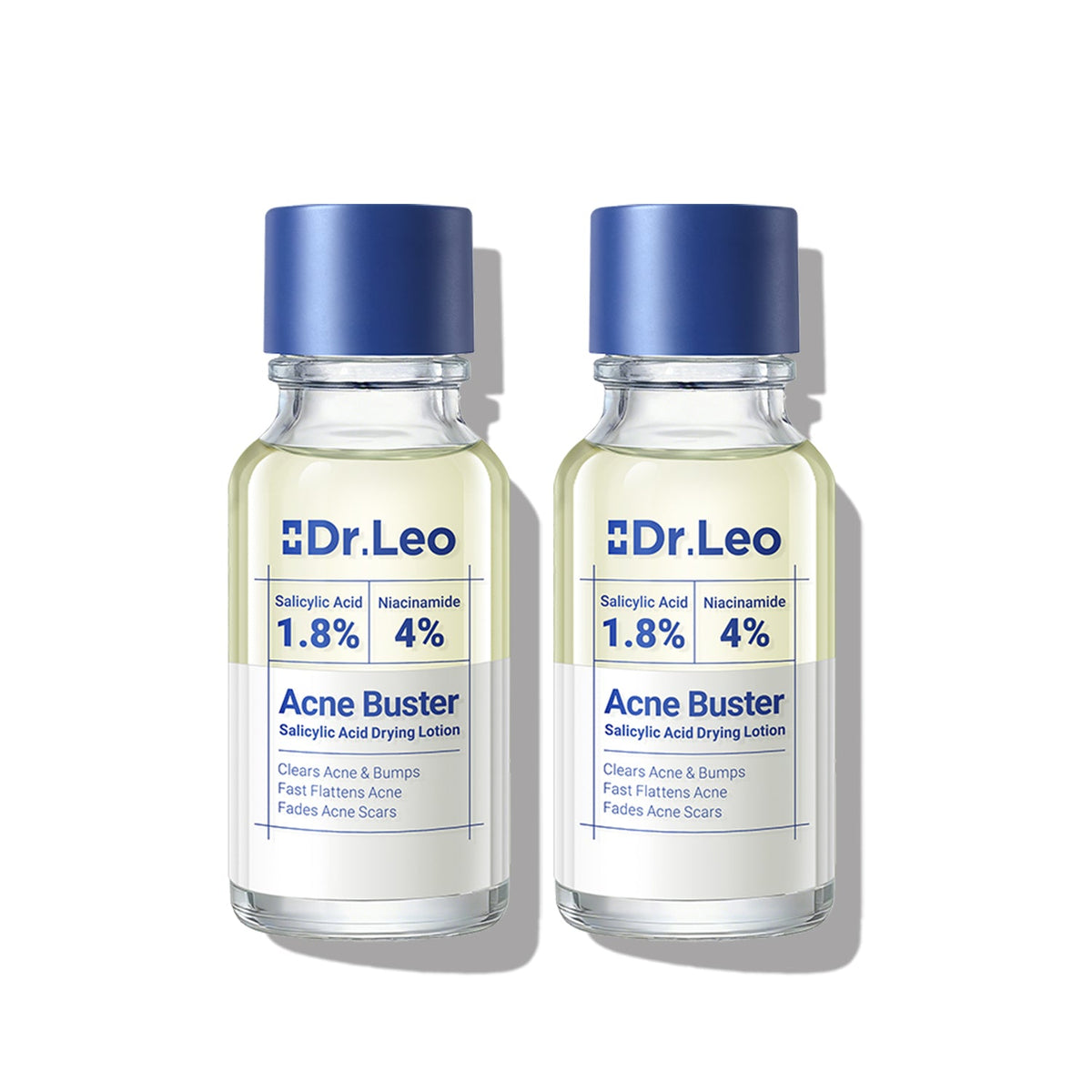
If you are looking for a targeted pimple spot treatment for oily and blemish-prone skin, Dr.Leo Acne Drying Lotion Plus combines targeted application with a multi-ingredient formula.
Its two-phase formula combines four key ingredients:
- 1.8% Encapsulated Salicylic Acid: Helps exfoliate dead skin cells and address pore buildup.
- 4% Niacinamide: Helps support the skin barrier and maintain a balanced-looking complexion.
- 10% Colloidal Sulfur: Helps absorb excess surface oil and complements blemish-prone skin care.
- 15% Zinc Oxide: Complements the powder phase with its skin-protective properties.
A Two-Phase Formula for Targeted Application
Unlike a conventional liquid lotion, Dr.Leo Acne Drying Lotion Plus features a liquid layer on top and a powder layer at the bottom.
This water-and-powder separation allows you to use a cotton swab to pick up the powder and apply it directly to individual blemishes.
To use it:
- Keep the bottle upright and allow the liquid and powder layers to separate.
- Do not shake the bottle before application.
- Dip a clean cotton swab through the liquid layer until it reaches the powder at the bottom.
- Gently dab the powder directly onto the targeted blemish.
- Allow the product to dry and follow the product directions for the recommended wearing time.
There is no need to spread the powder across your face. Its targeted application makes it a convenient addition to a skincare routine for people who prefer to care for individual blemishes rather than apply an acne treatment all over their skin.
Explore Dr.Leo Acne Drying Lotion Plus and discover its 1.8% Encapsulated Salicylic Acid formula for targeted blemish care.
Build a Balanced Skincare Routine for Blemish-Prone Skin
A spot treatment is only one part of a complete skincare routine. Cleansing, moisturizing, and daily sun protection are also important steps in caring for oily and blemish-prone skin.
Step 1: Gentle Daily Cleansing
Start with a gentle cleanser to remove excess oil, dirt, and daily impurities without unnecessarily stripping your skin.
Dr.Leo Polyamino Acid Purifying Facial Cleanser uses APG and amino acid surfactants and can be incorporated into your morning and evening cleansing routine.
Step 2: Targeted Blemish Care
Apply a suitable spot treatment directly to individual blemishes according to its instructions. Avoid combining too many active treatments at once.
Dr.Leo Acne Drying Lotion Plus is designed for this targeted application step.
Step 3: Lightweight Moisturizing
Finish with a moisturizer that helps maintain hydration and skin comfort. Oily and blemish-prone skin still needs moisture, particularly when your routine includes drying or exfoliating ingredients.
Dr.Leo CICA Panthenol Jelly Moisturizer offers a lightweight jelly texture with CICA and Panthenol for daily hydration and skin barrier care.
Step 4: Daily Sun Protection
During the morning, finish your routine with a broad-spectrum sunscreen with SPF 30 or higher. Follow the sunscreen directions and reapply as recommended.
Choose a Spot Treatment That Fits Your Skin
Finding the right pimple spot treatment is about more than selecting a product with several active ingredients. The formula, application method, and your skin's individual tolerance all matter.
Whether you experience occasional individual pimples or have ongoing oily and blemish-prone skin, focus on targeted care while maintaining a balanced skincare routine.
Dr.Leo Acne Drying Lotion Plus combines 1.8% Encapsulated Salicylic Acid, 4% Niacinamide, 10% Colloidal Sulfur, and 15% Zinc Oxide in a distinctive two-phase formula designed for direct application to individual blemishes.
Discover Dr.Leo Acne Drying Lotion Plus and explore a targeted approach to blemish-prone skin care.