Closed Comedones vs. Fungal Acne: How to Tell the Difference
If your skin feels rough, textured, or covered in tiny, stubborn bumps that just won't go away, figuring out what you're dealing with is the first step toward choosing the right treatment.
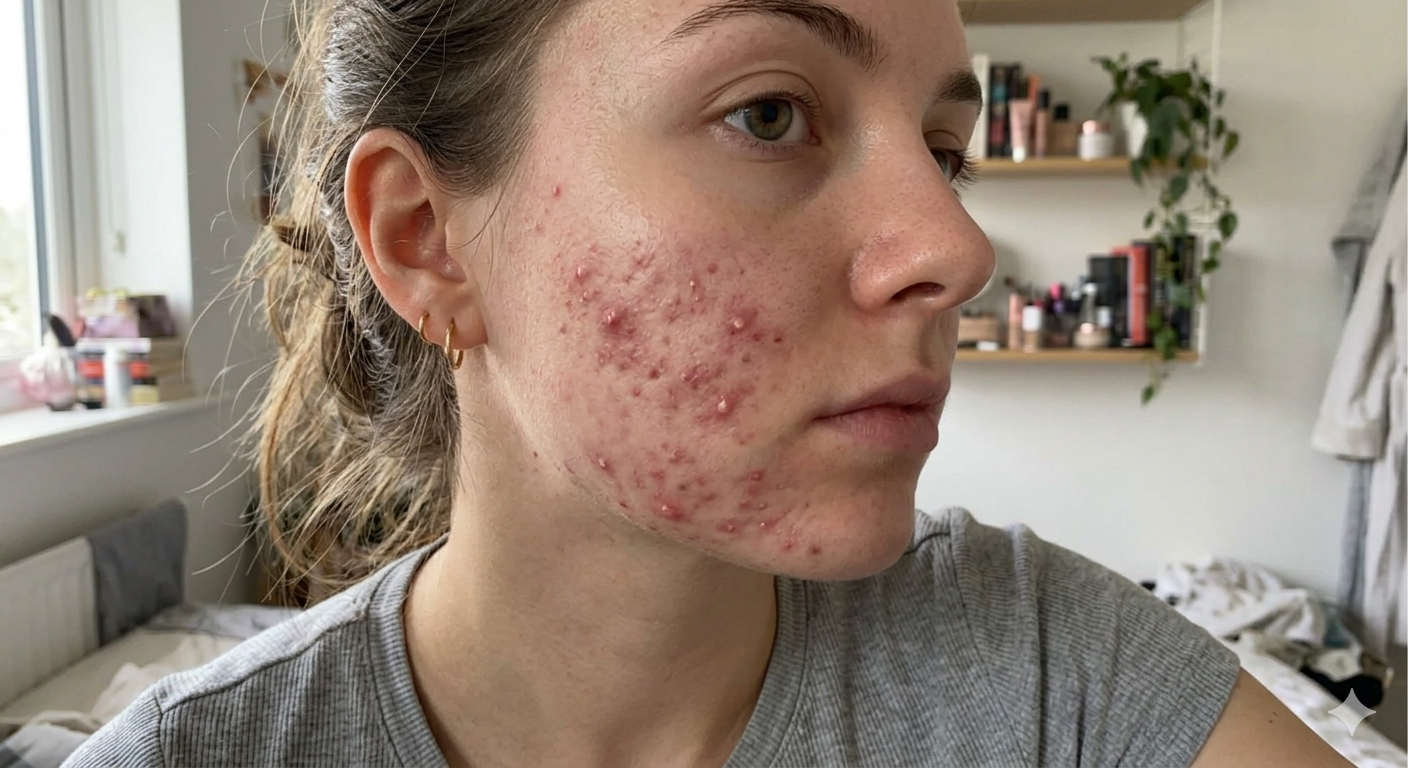
Closed comedones and what is commonly called "fungal acne" can sometimes look similar, but they are not the same condition. Closed comedones are clogged hair follicles filled with sebum and dead skin cells, while "fungal acne" usually refers to Malassezia folliculitis, a follicular condition associated with an overgrowth of Malassezia yeast.
Because the two can overlap in appearance, it's easy to reach for the wrong products. Learning the differences in itchiness, appearance, location, and how the bumps behave can help you make a more informed decision about your skincare routine.
Before you try to clear them, start by reviewing our master overview: What Do Closed Comedones Look Like? The Visual Guide to Clogged Pores.
Now, let's break down the key differences between fungal acne and closed comedones, how to recognize common signs, and what treatment approaches are typically used for each.
What Are Closed Comedones?
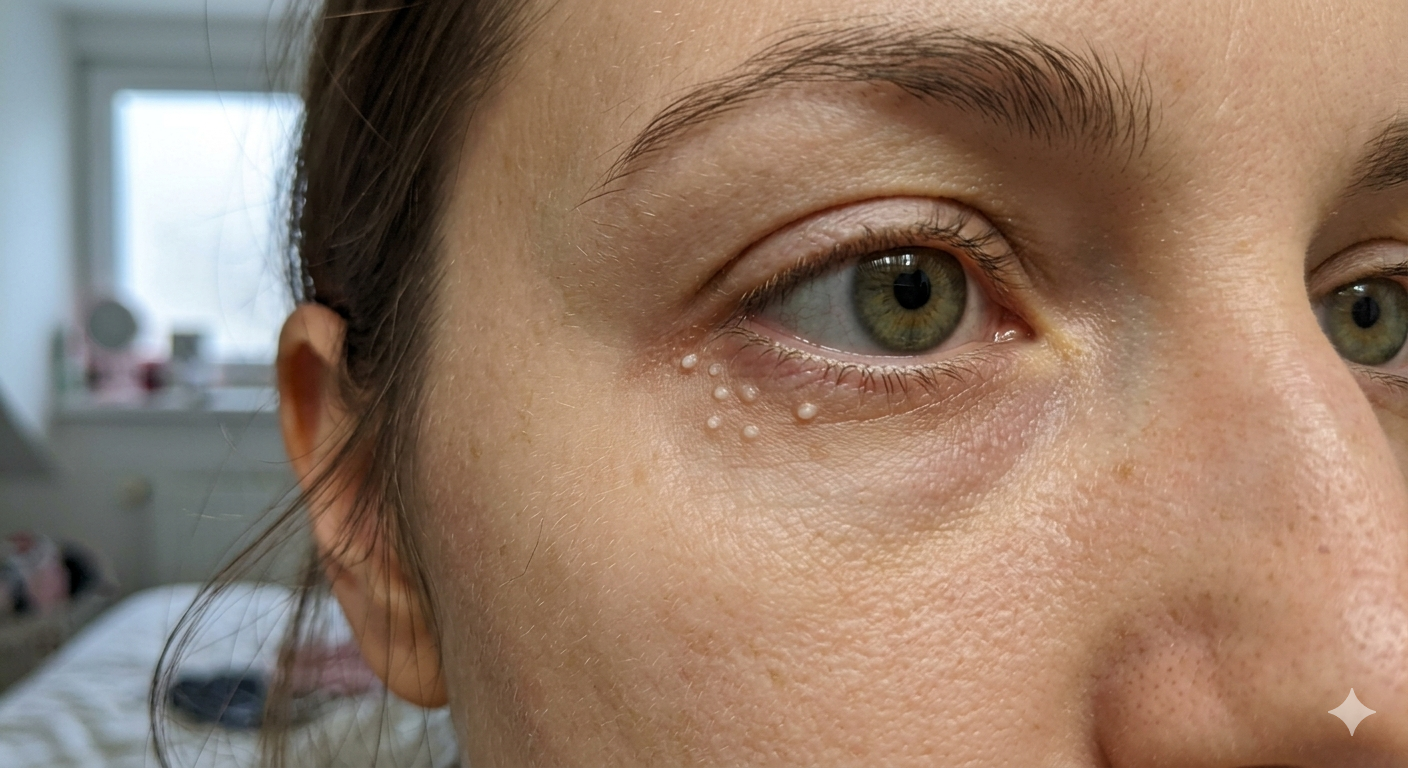
A closed comedone forms when sebum and dead skin cells build up inside a hair follicle and become trapped beneath a thin layer of skin. This creates a small, flesh-colored or skin-colored bump that does not have an open surface.
Closed comedones are a type of non-inflammatory acne lesion, although they can become inflamed if the follicle becomes irritated or the blockage worsens.
They are commonly found on areas such as the forehead, chin, and cheeks, especially where oil production is higher.
What Is Fungal Acne?
"Fungal acne" is a common skincare term for Malassezia folliculitis, a follicular condition involving Malassezia yeast. Malassezia naturally lives on the skin, but under certain conditions it can contribute to folliculitis.
Unlike closed comedones, Malassezia folliculitis typically appears as small, relatively uniform bumps or pustules and is often itchy. It commonly affects areas such as the upper back and chest, but it can also appear around the forehead and hairline.
Because Malassezia folliculitis can resemble other acne-like conditions, appearance alone may not always be enough to make a reliable diagnosis.
For a complete deep-dive into this condition, check out What Is Fungal Acne? The Ultimate Guide to Identifying Those Stubborn Bumps.

Fungal Acne vs Closed Comedones: Key Differences
| Feature | Closed Comedones | Malassezia Folliculitis |
| Itchiness | Usually not very itchy | Often noticeably itchy |
| Appearance | Can vary in size and may look skin-colored | Often small and relatively uniform |
| Comedones | Present | Typically absent |
| Common areas | Forehead, chin, cheeks | Upper back, chest, forehead or hairline |
| Triggers | Oil, dead skin buildup, pore-clogging products | Heat, humidity, sweating and other predisposing factors |
| Treatment approach | Acne-focused ingredients such as salicylic acid or retinoids may be used | Antifungal treatment may be recommended |
Are Closed Comedones Itchy?
Closed comedones are generally not intensely itchy. If your bumps are consistently itchy, especially when they become more noticeable in hot or humid conditions, it may be worth considering other causes such as Malassezia folliculitis.
However, itchiness alone cannot confirm that you have fungal acne. Several skin conditions can cause itchy, acne-like bumps, so persistent or worsening symptoms may require evaluation by a dermatologist.
How to Treat Closed Comedones
If your diagnostic checklist points toward closed comedones, standard antibacterial acne washes won't help because there is no active bacterial infection yet. Instead, you need to break down the hardened sebum glue trapping the pore shut.
1.The Gold Standard: Salicylic Acid (BHA)
Because sebum is made of oil, water-soluble acids (like glycolic acid) struggle to penetrate deeply into the clog. Salicylic acid is oil-soluble, meaning it can literally dive straight into the oily plug of a closed comedone, dissolving the dead skin and oil from the inside out.
2. Protect with Non-Comedogenic Hydration
When fighting closed comedones, using heavy, occlusive creams will only create more clogs. Always pair your active treatments with a lightweight, oil-free moisturizer labeled non-comedogenic to keep your skin barrier safe without suffocating your pores.
How Is Fungal Acne Treated?
If your bumps are more consistent with Malassezia folliculitis, the treatment approach is different from treating ordinary clogged pores.
Because Malassezia folliculitis involves yeast within the hair follicles, antifungal treatments may be recommended. Common topical options include ingredients such as ketoconazole or selenium sulfide, while some persistent or recurrent cases may require a dermatologist's evaluation and prescription treatment.
Rather than repeatedly adding acne acids or scrubs, focus on identifying the underlying cause and avoiding unnecessary irritation. If the bumps are persistent, intensely itchy, widespread, or repeatedly return, consider seeing a dermatologist for an accurate diagnosis.
Can You Have Fungal Acne and Closed Comedones at the Same Time?
Yes, different types of follicular bumps can occur at the same time. This can make self-identification more difficult, especially when one area has both clogged pores and itchy, uniform bumps.
If some bumps look like traditional closed comedones while others are unusually itchy, uniform, or concentrated around the hairline, avoid assuming that every bump has the same cause.
When symptoms persist or do not respond to your usual skincare routine, a dermatologist can help distinguish acne from folliculitis and other acne-like conditions.
When Should You See a Dermatologist?
Consider seeing a dermatologist if your bumps are:
- intensely or persistently itchy
- spreading quickly
- painful, inflamed, or producing pus
- repeatedly returning despite a consistent skincare routine
- not improving after you have changed your skincare product
Acne, Malassezia folliculitis, bacterial folliculitis, and other acne-like conditions can look similar. A dermatologist can help determine the underlying cause and recommend the appropriate treatment.
How to Treat Closed Comedones & Fungal Acne Effectively
Because both conditions are heavily linked to excess oil production and trapped debris across large areas of the face (like the entire forehead or cheeks), traditional spot treatments won't cut it. Squeezing or applying harsh spot gels will only irritate the surrounding barrier. Instead, you need a comprehensive, large-scale clearing routine.
1. Dissolve Clogs Starve Yeast with 1.8% Encapsulated BHA
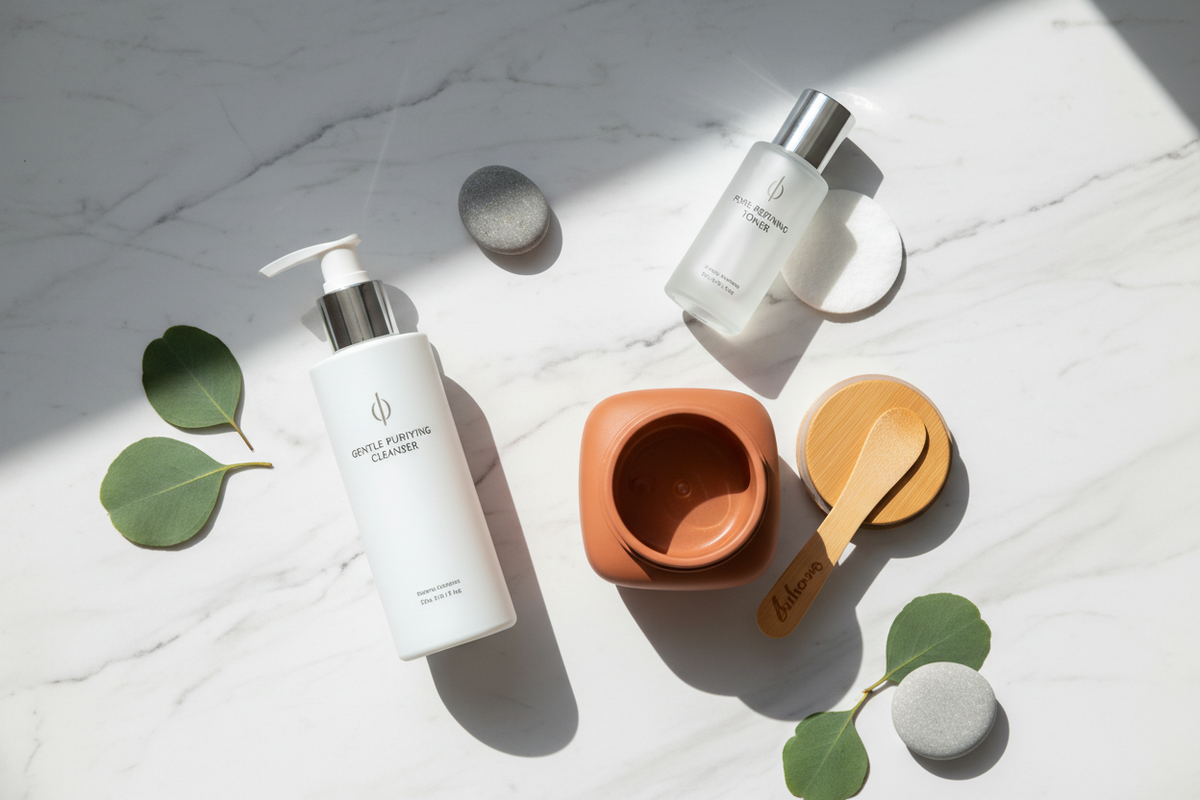
Whether it is a hardened sebum plug or a colony of oil-loving fungal yeast, the core objective is to clean out the follicle lining. Washing daily with the Dr.Leo Salicylic Acid Cleanser delivers a gentle, daily dose of oil-soluble BHA. It dives straight into the oily core of closed comedones to dissolve dead skin build-up while actively clarifying the follicle environment where fungal yeast thrives.
2. Vacuum Excess Sebum with a Targeted Clay Stick
Since fungal acne feeds on sebum and closed comedones are built from it, controlling excess facial oil is non-negotiable. Applying a specialized treatment like the Dr.Leo Volcanic Clay Cleanser Stick 2-3 times a week allows you to sweep away pool-up lipids across large textured zones. This effectively starves out the Malassezia fungus and stops new sebum plugs from hardening into whiteheads.
3. Soothe and Rehydrate Your Skin
After clarifying treatments, don't leave your skin dry or tight. Lock in lightweight hydration with the Dr.Leo CICA Panthenol Hydro-Gel Soothing Moisturizer. Its water-like microcapsule texture absorbs quickly, while high-purity Centella Asiatica, Panthenol, and Hyaluronic Acid help soothe irritation and replenish moisture without leaving skin feeling heavy or clogged.
The Ultimate Path to Smooth Skin
Misdiagnosing your skin bumps is one of the biggest roadblocks to achieving a clear complexion. By understanding the distinction between fungal acne vs closed comedones, you can stop guessing and start using targeted ingredients that actually work.
Ready to deep-dive into the ultimate routine for clearing out stubborn, trapped sebum plugs and calming fungal overgrowth without irritating your skin? Check out our master guide on How to Clear Fungal Acne: The Power of Sulfur & Pore-Clearing Acid to take back control of your pores today.