Are Your Cheek Breakouts Actually Hormonal?
If you frequently break out on your cheeks, you’ve probably been told to wash your pillowcases, wipe down your smartphone, or stop touching your face. While surface bacteria and friction can certainly cause irritation, what happens when you’ve sanitized everything and those deep, painful bumps still won’t go away?
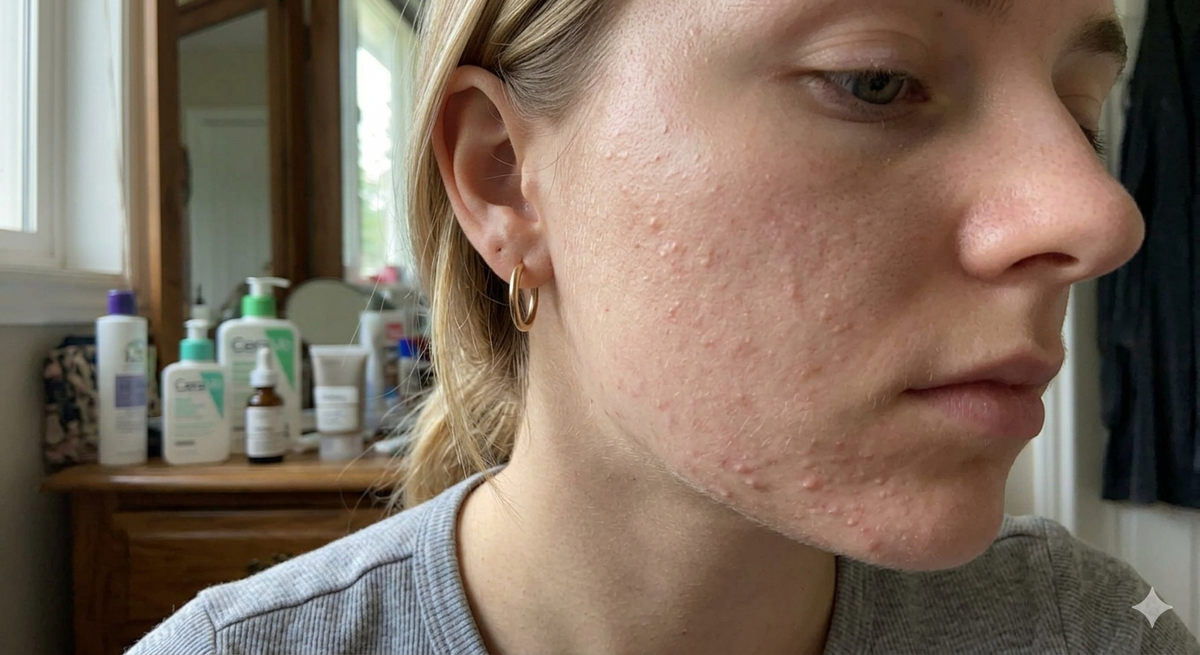
The truth is, those blemishes might not be from your environment at all. You could be dealing with hormonal breakouts on your cheeks.
While the chin and jawline are the most famous zones for adult acne, hormones don't always stay contained to the lower third of your face. To see how these boundaries shift internally, read our foundational roadmap: The Ultimate Hormonal Acne Map: Why You Break Out on Your Chin, Jawline, and Beyond. Otherwise, let’s dive into the science of why hormonal acne appears on the cheeks, how to tell it apart from other types of acne, and how to clear it for good.
Where Are Hormonal Breakouts "Supposed" to Be?
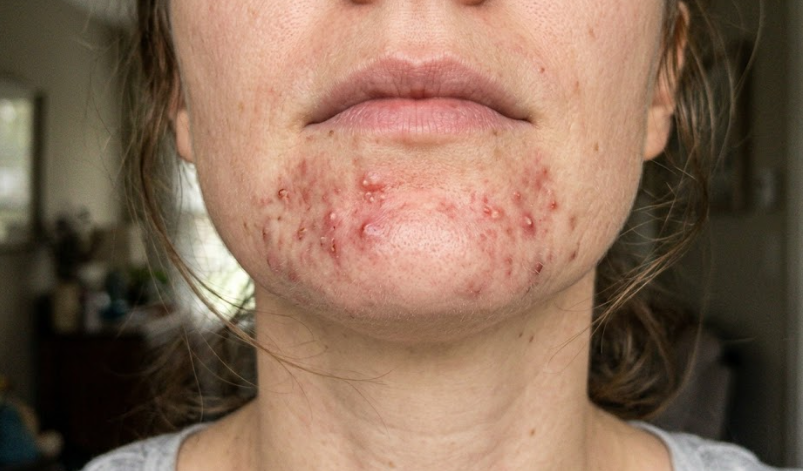
When dermatologists discuss the adult acne face map, they typically point to the "U-Zone"—the chin, jawline, and the lower perimeter of the face. This is where hormonal breakouts occur most frequently because the sebaceous (oil) glands in these areas have the highest density of androgen receptors.
However, your skin anatomy isn't divided by strict lines. For many individuals, this dense cluster of hormone receptors extends upward onto the lower and middle parts of the cheeks. When your hormones fluctuate—due to stress, your menstrual cycle, or dietary triggers—the oil glands on your cheeks respond exactly the same way as your chin: they pump out thick excess sebum, trap dead skin cells, and create deep inflammation.
The Checklist: Is It Hormonal, Bacterial, or Fungal Acne?
Because the cheeks are a crossroads for multiple skin issues, it is easy to misdiagnose your bumps. Use this quick checklist to see if your cheek acne is truly hormonal:
- The Depth Test: Hormonal cheek acne forms as deep, painful, blind cysts that feel like hard knots under the skin. If your bumps are small, itchy, and uniform, they might be Fungal Acne. If they are surface-level whiteheads, they are likely Bacterial.However, if they are small, intensely itchy, and uniform, you might be dealing with a completely different yeast issue; check our diagnostic guide on Fungal Acne vs. Regular Acne: How to Know Which One You Have to be sure.
- The Timing Test: Do these cheek bumps flare up in a predictable pattern every month, right before or during your period? If yes, it’s highly likely hormonal.
- The Treatment Test: If you’ve been blasting your cheeks with harsh surface scrubs or standard acne washes and the bumps only get redder and angrier, the root cause is internal inflammation, not surface dirt.
How to Treat Hormonal Breakouts on Your Cheeks Gently
The skin on your cheeks is significantly thinner and more prone to scarring (PIE/PIH) than the skin on your forehead or chin. Aggressive treatments will strip your moisture barrier, leading to flaky skin on top of deep cysts.
To clear stubborn cheek bumps without causing damage, adopt this targeted approach:
1. Extinguish the Fire with 10% Colloidal Sulfur
Because hormonal cheek cysts are heavily inflamed, you need a powerful but non-stripping anti-inflammatory. 10% colloidal sulfur is a clinical superstar for this zone. It draws out deep impurities and rapidly calms the throbbing redness of a cyst, flattening the bump from within while remaining gentle on the delicate cheek skin.
2. Dissolve the Internal Clog with Encapsulated Salicylic Acid
Instead of harsh liquid acids that dry out the surface of your cheeks, use encapsulated salicylic acid. This slow-release technology allows the chemical to slide gently into the pore over several hours, melting away the thick sebum plug right at the root without disrupting the surface barrier.
3. Prevent Chronic Redness with Niacinamide
Cheek breakouts are notorious for leaving dark red or purple spots that take months to fade. Integrating 4% Niacinamide into your daily routine helps rebuild the delicate cheek barrier, retains moisture, and actively stops post-acne hyperpigmentation from forming.
🛒 Clear Flawless Cheeks Overnight
Protect the delicate skin on your cheeks while targeting deep cystic breakouts with our upgraded Dr.Leo Acne Drying Lotion Plus (20 mL). Engineered to treat deep, painful congestion without stripping your skin barrier, this overnight spot treatment utilizes 10% Colloidal Sulfur to fast-flatten throbbing cheek bumps. Backed by a time-released 1.8% Encapsulated Salicylic Acid and 4% Niacinamide, it deep-cleans the lower-face hormone receptors and actively prevents stubborn post-acne dark marks within 7 days. Now available in a 2X larger size!
Stop the Guesswork on Your Face
Recognizing hormonal breakouts on your cheeks changes everything. It means you can stop over-scrubbing your face and start treating your skin with the targeted, anti-inflammatory care it actually needs.
However, your cheeks are only one part of your skin's biological roadmap. Hormonal patterns on the cheeks almost always connect back to flare-ups on your lower face.
If your breakouts are heavily concentrated around the center of your lower face, read our targeted guide on Chin Breakouts & Hormones: How to Clear Stubborn Bumps for Good. If they are tracking along your jawline or creeping lower, explore Jawline & Neck Breakouts: The Hormonal Link You Can't Ignore to keep your entire complexion completely clear.