Fungal Acne vs. Regular Acne: How to Know Which One You Have
Why Is Your Acne Treatment Making Your Skin Worse?
You’ve tried everything: salicylic acid, benzoyl peroxide, and maybe even a prescription antibiotic cream. But instead of clearing up, those tiny bumps on your forehead or back are getting redder, angrier, and spreading like wildfire.
If this sounds familiar, you might not be fighting "acne" at all. You could be dealing with Fungal Acne (formally known as Malassezia Folliculitis).
The reason your current routine is failing is simple: Regular acne is caused by bacteria, while fungal acne is caused by yeast. At Dr.Leo, we’ve seen countless users struggle because they are treating a fungal infection with antibacterial creams, which can sometimes kill off the "good" bacteria that keep yeast in check—essentially feeding the breakout.To fully understand the root cause behind this ecosystem, you can read our master guide onWhat Is Fungal Acne? The Ultimate Guide to Identifying Those Stubborn Bumps.
What Does Fungal Acne Look Like vs. Regular Acne?
Distinguishing between the two is the secret to finally getting clear skin. While they look similar from a distance, fungal acne has three "dead giveaways."
1. The "Itch" Factor (Itchy vs. Painful)
Regular pimples are usually tender or painful to the touch. Fungal acne, however, is notoriously itchy. If you feel the constant urge to scratch those small bumps, you’re likely looking at a fungal issue.
2. Uniform Bumps (The "Copy-Paste" Look)
In a regular acne breakout, you’ll see a variety of shapes and sizes: some blackheads, some large cystic stones, and some small whiteheads. Fungal acne is uniform. It looks like rows of tiny, red, "copy-pasted" bumps (Uniform bumps) that stay the same size and rarely come to a "pop-able" head.
⚠️ Before you try to squeeze them: Fungal bumps don't behave like regular pimples. Find out why you should never attempt popping fungal acne and how it can cause the yeast to spread further.

3. Common Locations
While regular acne loves the face, fungal acne thrives where heat and sweat get trapped. Look for clusters on the:
- Forehead and hairline
- Chest and shoulders
- Upper back
Note: These symptoms can present differently depending on your melanin levels. For visual examples and tailored advice, check out our guide on Fungal Acne on Black & Brown Skin.
Why Sulfur is the "Holy Grail" for Fungal Breakouts
If it’s fungal, why don't standard acne meds work? Most acne treatments focus on killing P. acnes bacteria. But fungal acne is caused by Malassezia, a yeast that actually feeds on the fatty acids found in many common skincare oils and lotions.
To kill the yeast, you need an antifungal approach. This is where Sulfur comes in.
Sulfur is a powerhouse ingredient because it is naturally fungicidal. It dries out the excess oil (the food source for the yeast) and effectively inhibits the fungal growth. When combined with the right exfoliants, it clears the "clutter" from your pores so your skin can breathe again.
Ready to Clear Your Skin for Good?
Stop guessing and start healing with a targeted formula that addresses both bacteria and stubborn bumps. Dr.Leo has developed the ultimate spot treatment to help you reclaim your complexion.
🛒 Target Stubborn Bumps Overnight

How to Care for Your Skin (The Dr.Leo Way)
- Keep it dry: Yeast loves sweat. Change out of gym clothes immediately after a workout.
- Check your ingredients: Avoid heavy oils like coconut or olive oil, which "feed" the fungus.
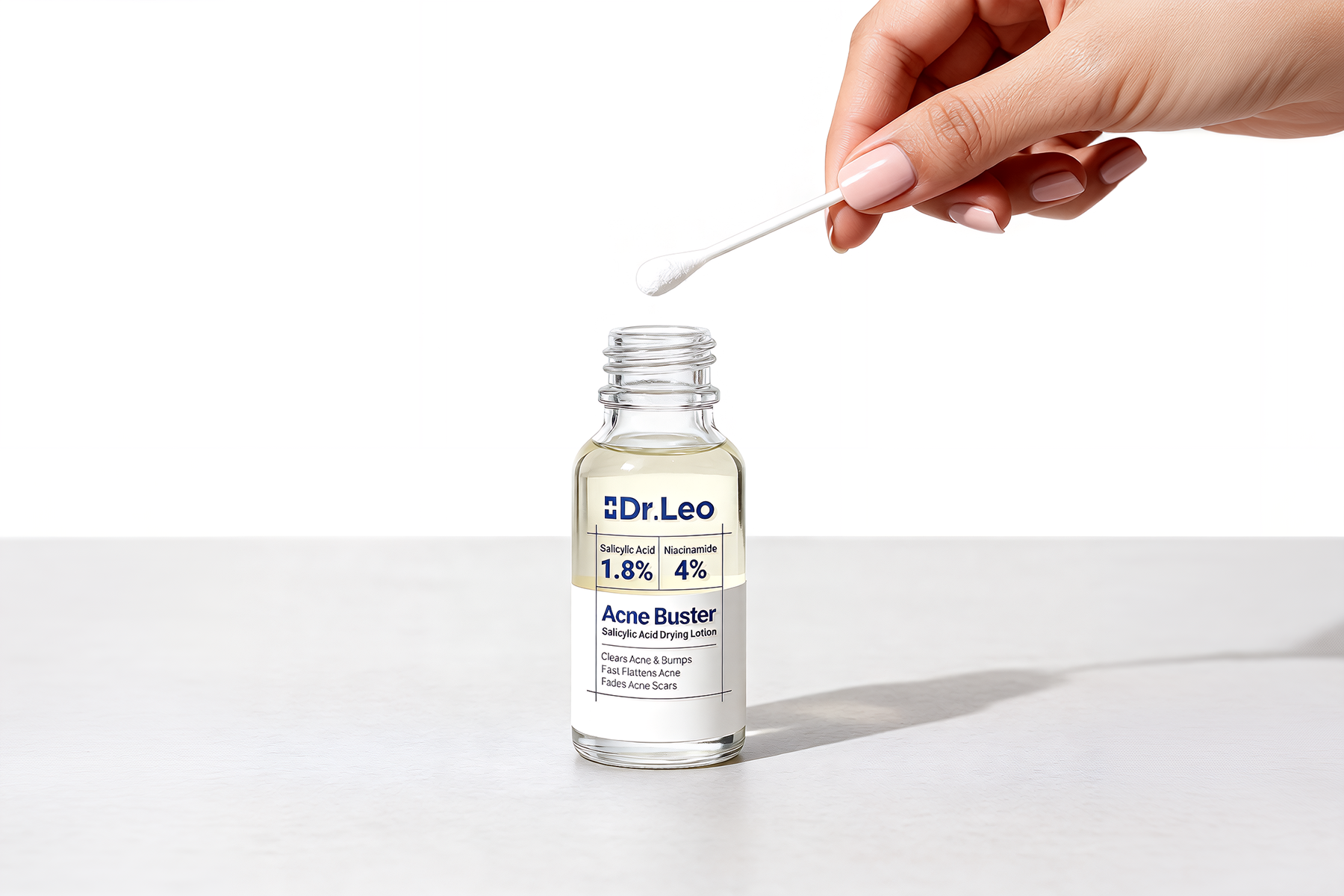
- Target the source: Use a drying treatment like the Dr.Leo Acne Drying Lotion Plus to target specific spots overnight, helping to dry out excess sebum and reduce inflammation without irritating the surrounding skin.