How to Choose the Best Cleanser for Sensitive Skin
Finding the best cleanser for sensitive skin isn't about finding the mildest product possible.
Sensitive skin still needs to be cleansed of dirt, oil, sweat, sunscreen, and daily impurities. The challenge is finding a formula that cleans effectively without leaving your skin feeling tight, dry, or uncomfortable.
This becomes even more important if your skin is also oily, acne-prone, or prone to clogged pores. You may want ingredients that address these concerns while still keeping your cleansing routine gentle.
So what should you actually look for in a facial cleanser for sensitive skin?
Let's break it down.
What Makes a Good Cleanser for Sensitive Skin?
A good sensitive skin cleanser should provide effective cleansing without unnecessarily disrupting your skin's comfort.
When choosing a formula, consider four things.
1. It Should Clean Without Leaving Your Skin Tight
A cleanser's job is to remove dirt, oil, and impurities—not to remove every trace of oil from your skin.
If your face consistently feels tight or uncomfortable immediately after washing, your cleanser may be too aggressive for your routine.
A more balanced formula can help remove daily buildup while allowing your skin to maintain a comfortable moisture balance.
2. Look for a Gentle Cleansing Approach
Sensitive skin may be more reactive to harsh or overly aggressive products.
Instead of choosing a cleanser based on how strong it feels, consider the overall formulation.
Ingredients that support a gentler cleansing experience can be particularly useful when your skin is easily irritated or becomes dry after cleansing.
3. Consider the Rest of the Formula
Don't evaluate a cleanser based on one ingredient alone.
The complete formula matters, including:
- Cleansing agents
- Active ingredients
- Hydrating or conditioning ingredients
- Plant extracts
- Fragrance and other potential irritants
The goal is to find a formula that addresses your specific concerns without unnecessarily complicating your routine.
4. Choose Something You Can Use Consistently
Your cleanser is one of the most frequently used products in your skincare routine.
That means comfort matters.
A cleanser that works well for your skin and feels comfortable enough for regular use can be more valuable than an aggressive formula that you constantly need to reduce or stop using.
Can Sensitive Skin Use Salicylic Acid?
This is one of the most common questions when choosing a cleanser for sensitive skin.
The answer isn't simply yes or no.
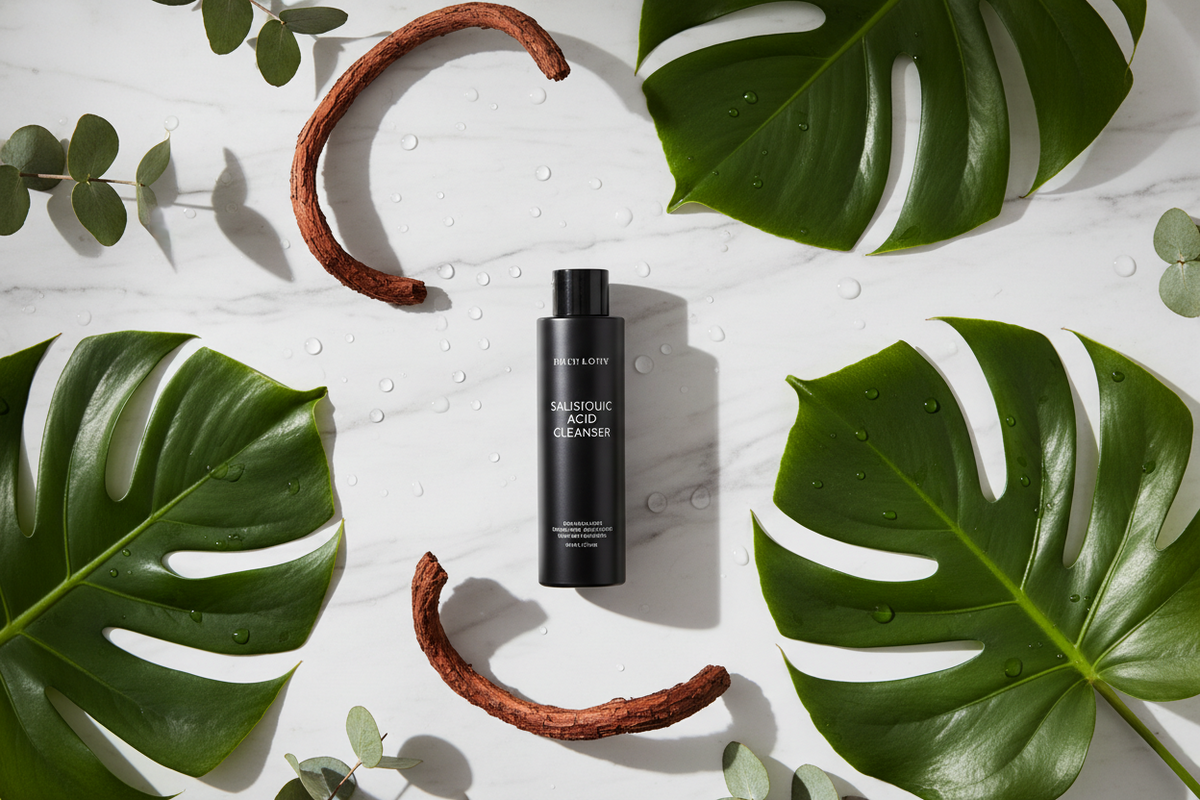
Salicylic acid is a beta hydroxy acid (BHA) commonly used to address excess oil and clogged pores. Because it is oil-soluble, it is particularly relevant for oily and congested skin.
But sensitive skin can have different levels of tolerance.
A salicylic acid cleanser is also different from a leave-on salicylic acid treatment because it is rinsed away after cleansing.
If you're interested in using salicylic acid but have sensitive skin, consider the overall formula, introduce it gradually, and pay attention to how your skin responds.
If your skin is already using other exfoliating acids or active acne treatments, consider the entire routine rather than adding multiple actives at once.
Best Cleanser for Sensitive and Acne-Prone Skin
Sensitive skin and acne-prone skin can overlap.
You may want to address clogged pores and breakouts while also avoiding a cleanser that leaves your skin feeling dry or irritated.
In this situation, look for a balanced formula that can cleanse effectively while fitting into a broader acne routine.
Salicylic acid may be useful when clogged pores are part of the problem, but the rest of the formula still matters.
Remember that a cleanser is only one part of an acne routine. If you're already using leave-on treatments, consider how each product contributes to your overall level of active ingredients.
Best Cleanser for Sensitive and Oily Skin
Sensitive skin isn't always dry.
Some people have oily and sensitive skin at the same time, which creates a different cleansing challenge.
You need to remove excess oil without using a formula that feels unnecessarily harsh.
A gentle cleanser for sensitive skin can therefore be useful even when your skin produces a significant amount of oil.
If clogged pores are also a concern, a salicylic acid cleanser may be another option to consider.
Best Gentle Cleanser for Sensitive Skin
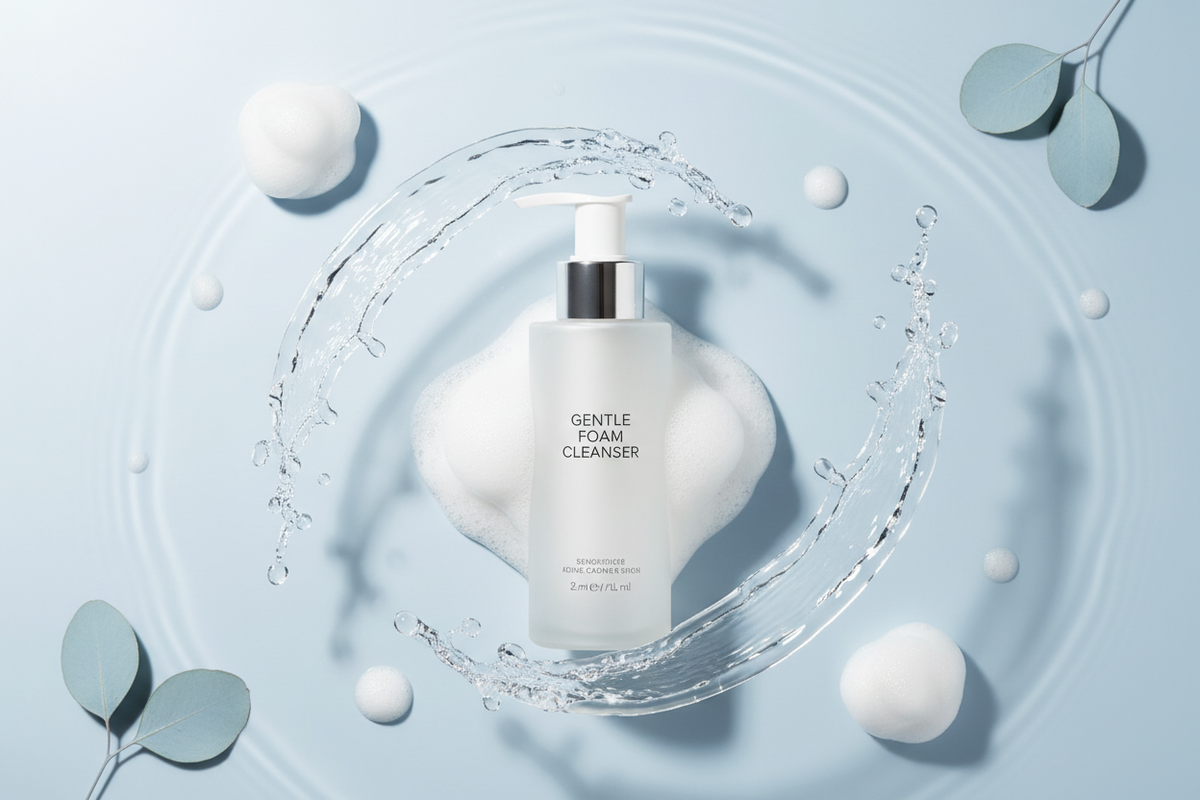
When shopping for the best gentle cleanser, don't focus only on whether the product is labeled "gentle."
Look at what the formula is designed to do.
A good gentle facial cleanser should:
- Remove daily dirt and impurities
- Cleanse excess oil without excessive stripping
- Leave the skin feeling comfortable
- Fit into a regular skincare routine
- Work alongside the rest of your products
If your skin is sensitive, a comfortable cleansing experience can be just as important as the active ingredients in the formula.
What Ingredients Should You Look for in a Sensitive Skin Cleanser?
There is no single ingredient that guarantees a cleanser will work for every sensitive skin type.
Instead, consider the overall formulation.
Amino Acids
Amino acids can be used in cleansing formulas to support a gentler cleansing experience.
A cleanser formulated with multiple amino acids may be worth considering if you're looking for effective cleansing without an overly harsh feel.
Salicylic Acid
Salicylic acid can be useful when sensitive skin is also prone to excess oil and clogged pores.
However, individual tolerance varies, so introduce active ingredients gradually and pay attention to how your skin responds.
Plant Extracts
Plant extracts are often included to provide additional supporting benefits.
As with any skincare ingredient, evaluate them as part of the complete formulation rather than assuming that one ingredient determines whether a cleanser is suitable for sensitive skin.
Moisture-Balancing Ingredients
Sensitive skin often benefits from a routine that doesn't leave it feeling excessively dry after cleansing.
Look for formulas designed to cleanse while supporting the skin's natural moisture balance.
What Ingredients Should You Avoid in a Cleanser for Sensitive Skin?
There isn't a universal list of ingredients that every person with sensitive skin must avoid.
Sensitivity varies from person to person.
Instead of automatically avoiding an entire category of ingredients, pay attention to your own skin's history and reactions.
You may also want to be cautious about formulas that are highly aggressive or leave your skin consistently tight after cleansing.
If you've identified a specific ingredient that triggers irritation for you, check the full ingredient list before purchasing a new product.
How Often Should You Wash Sensitive Skin?
Sensitive skin generally doesn't benefit from excessive cleansing.
For many people, cleansing in the morning and evening is a practical starting point, but individual needs vary.
You may also want to cleanse after heavy sweating or exercise.
If your skin becomes dry, tight, or uncomfortable, reconsider both the frequency and the formula you're using.
The goal is to keep your skin clean without making cleansing another source of irritation.
How to Build a Simple Routine for Sensitive Skin
Sensitive skin usually benefits from keeping a routine straightforward.
Morning
1. Gentle cleanser
2. Moisturizer
3. Broad-spectrum sunscreen
Evening
1. Cleanser
2. Targeted treatment if needed
3. Moisturizer
If you're using a salicylic acid cleanser, consider how it fits with the other active ingredients in your routine.
You don't need to use multiple exfoliating products to maintain clean-looking pores.
A simple routine that your skin tolerates well can be easier to maintain over time.
Our Pick: A Gentle Salicylic Acid Cleanser for Sensitive Skin
If you have sensitive skin but also deal with excess oil or clogged pores, you don't necessarily have to choose between effective cleansing and a gentle approach.
Dr.Leo's Polyamino Acid Purifying Facial Cleanser combines salicylic acid with 8 amino acids and plant extracts in a jelly-textured formula.
It is designed to remove dirt, oil, and impurities while maintaining the skin's natural moisture balance.
The formula is dermatologist-developed for sensitive skin and free from harsh chemicals, making it an option for people looking for a salicylic acid cleanser with a more gentle cleansing approach.
How to Introduce a Salicylic Acid Cleanser to Sensitive Skin
If you're new to salicylic acid, you don't necessarily need to use it aggressively from the beginning.
Start by following the product directions and paying attention to how your skin responds.
It can also help to avoid introducing several new active products at the same time.
If your routine already includes exfoliating acids, retinoids, or acne treatments, consider whether you need another active product before adding one.
If persistent irritation occurs, stop using the product and consider speaking with a dermatologist.
Sensitive Skin Cleanser vs. Regular Facial Cleanser
The main difference isn't necessarily how "strong" the cleanser is.
A cleanser designed with sensitive skin in mind typically focuses on providing effective cleansing while minimizing unnecessary irritation.
A regular facial cleanser may work perfectly well for some people, but if your skin is easily irritated, the formula's cleansing approach and overall ingredients deserve more attention.
Your skin type and concerns should ultimately determine what works best for you.
The Bottom Line
The best cleanser for sensitive skin isn't necessarily the simplest or weakest formula.
It's a cleanser that removes daily dirt, oil, and impurities while fitting comfortably into your skincare routine.
If your sensitive skin is also oily or prone to clogged pores, a salicylic acid cleanser may provide additional pore-focused care.
The key is balance: choose a formula that addresses your skin concerns without unnecessarily overloading your routine or compromising skin comfort.