Are You Making It Worse? 5 Mistakes That Cause Clogged Pores
Have you ever looked in the mirror, noticed a cluster of stubborn blackheads or unexpected breakouts, and thought, "But I wash my face every single day!"
It is incredibly frustrating. You invest time, money, and effort into your skin, yet your pores still look enlarged and congested. The truth is, many of us are accidentally sabotaging our own skin goals. Often, the very habits we adopt to fix our skin are the exact mistakes that cause clogged pores.
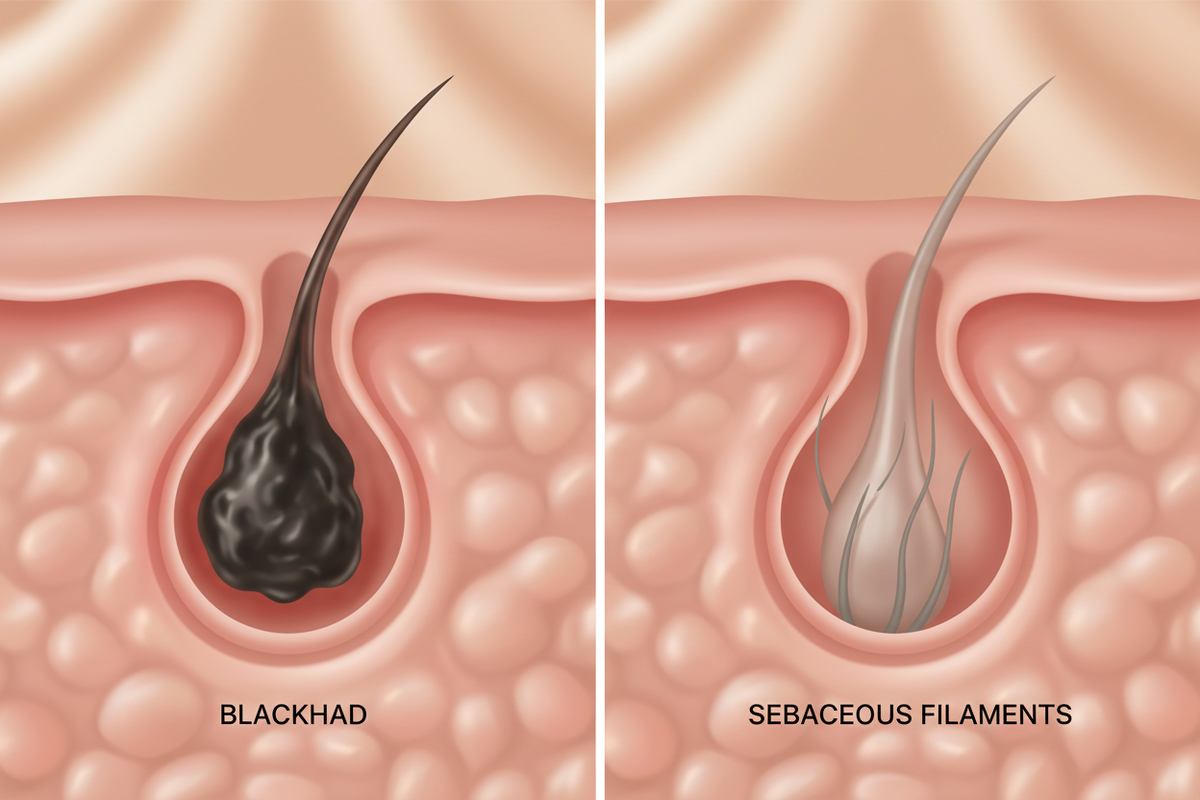
When dead skin cells, natural oils, and environmental debris get trapped inside your hair follicles, you end up with clogged pores. If you are trapped in a cycle of constant congestion, you might be making one of these five common skincare blunders. To get a baseline understanding of how these blockages form in the first place, feel free to read our foundational guide: What Are Clogged Pores? A Beginner’s Guide to Skin Congestion.
Here is what you are doing wrong—and exactly how to fix it.
1.Aggressive Scrubbing and Over-Exfoliating
When you feel texture on your face, the immediate instinct is to scrub it away. Many people reach for harsh physical scrubs or use chemical exfoliating acids multiple times a day.
This is a massive mistake. Over-exfoliating strips your skin’s natural moisture barrier and triggers a panic response underneath. Your skin tries to protect itself by sending sebum production into overdrive. The result? An influx of excess oil that mixes with loosened dead skin cells, creating the perfect storm for heavily congested pores.
The Fix: Ditch the abrasive physical scrubs. Switch to a gentle, chemical exfoliant like Salicylic Acid (BHA) just 2 to 3 times a week. BHA is oil-soluble, meaning it can actually dive deep inside the pore lining to dissolve the glue keeping the debris trapped.
2.Relying on Heavy Oils or Comedogenic Makeup
If you have oily or combination skin, your choice of daily cosmetics matters immensely. Using thick, heavy moisturizers or liquid foundations formulated with highly comedogenic (pore-clogging) ingredients creates a literal physical seal over your skin.
Throughout the day, your skin naturally sheds microscopic cells and secretes oil. If a heavy, occlusive layer is sitting on top, that mixture has nowhere to go. It pools inside the pore, hardens, and inevitably leads to blackheads and breakouts.
- The Fix: Always look for labels that explicitly say "non-comedogenic" or "oil-free". For skincare routines for oily skin, opt for lightweight, water-based gel moisturizers that hydrate without suffocating your skin texture.

3.Skipping the Double Cleanse at Night
Washing your face before bed is non-negotiable, but a quick 10-second rinse with a gentle foaming cleanser usually isn't enough to remove a full day's worth of wear.
Standard water-based cleansers are great for removing sweat and dirt, but they struggle to break down oil-based impurities. Waterproof makeup, long-wear silicone primers, and physical sunscreens are specifically designed to resist water. If you don't break them down properly, a microscopic film remains on your skin overnight, actively sealing your pores shut while you sleep.
- The Fix: Implement a proper evening double cleanse. First, use a gentle oil-based cleanser or cleansing balm to attract and dissolve the surface sebum and makeup. Follow up with your standard targeted treatment cleanser to actually clean the skin itself.
4.Popping, Squeezing, and Picking at Your Face
It is deeply satisfying to watch a clogged pore empty out, but DIY extractions almost always backfire.
When you squeeze a pore with your fingers or unsterilized metal tools, you aren't just pushing dirt out—you are also pushing a massive amount of bacteria and pressure downward into the deeper layers of the skin. This can rupture the pore wall entirely, turning a minor clog into a deeply inflamed, swollen cystic acne lesion that takes weeks to heal and leaves dark scars behind. Furthermore, physical stretching can permanently damage the elastin around the pore, making it look permanently enlarged.
- The Fix: Keep your hands off your face. If a spot is bothering you, apply a hydrocolloid pimple patch to draw out impurities safely while preventing you from picking. For stubborn, deep-set congestion, leave it to a licensed esthetician or dermatologist.
5.Overusing Pore Strips and "Peel-Off" Masks
Pore strips feel like a quick fix because they give you immediate visual feedback. You peel them off and see a forest of tiny plugs attached to the tape.
However, pore strips only pull off the very top surface layer of a blackhead. More importantly, the aggressive adhesive violently rips at the skin barrier, instantly widening the opening of the pore. Once a pore is stretched out and left completely empty without proper targeted care, it simply refills with oil faster than before, creating an endless, frustrating cycle of re-clogging.
- The Fix: Focus on long-term regulation rather than violent, temporary extractions. Consistently using low-percentage retinoids or clay masks formulated with kaolin or bentonite will naturally draw out impurities without damaging the structural integrity of your skin.
The Correct 3-Step Routine to Reset Your Pores Safely
To break the cycle of chronic skin congestion, your skincare routine needs to shift from aggressive elimination to intelligent management. Adopt this coordinated, daily three-step regimen to dissolve deep blockages and enjoy touchably soft skin:
Step 1: Melt Hardened Sebum with Dr.Leo Salicylic Acid Cleanser
Instead of tearing your barrier with harsh scrubs, wash your face daily with the Dr.Leo Salicylic Acid Cleanser. This cleanser utilizes a targeted salicylic acid formulation that passes right through surface moisture to dive into the oily core of the plug. It smoothly breaks down the sticky sebum and dead skin cells, clearing out daily congestion without causing drying, peeling, or surface irritation.
Step 2: Vacuum Impurities with Dr.Leo Volcanic Clay Cleanser Stick
Replace aggressive pore strips and harsh peel-off masks with a smart, gentle detox. Gliding the Dr.Leo Volcanic Clay Cleanser Stick 2-3 times a week across congested zones acts as a magnetic vacuum for your skin. It gently draws out deep-set debris, absorbs excess shine, and tightens the appearance of stretched openings without disrupting your moisture barrier.
Step 3: Hydrate Weightlessly with Dr.Leo CICA Panthenol Hydro-Gel Soothing Moisturizer
Never leave your skin bare or dry after cleansing, as dehydration triggers defensive, compensatory oil production that instantly re-clogs your pores. Lock in breathable hydration with the Dr.Leo CICA Panthenol Hydro-Gel Soothing Moisturizer. Its lightweight microcapsule texture transforms into water upon application, delivering high-purity centella asiatica, panthenol, and hyaluronic acid into the skin to instantly soothe redness, balance oil production, and support continuous barrier repair without blocking your pores.
Reclaim Your Smooth Skin Texture
By identifying these daily mistakes and replacing them with a gentle, barrier-first approach, you give your face the breathing room it needs to naturally clear up and stay balanced.
However, if your clogged pores have already evolved into dozens of tiny, hard, skin-toned bumps that feel like sand across your forehead or cheeks, they may have transitioned into an advanced stage of skin congestion. Cross-check your symptoms with our diagnostic guide: Closed Comedones vs. Clogged Pores: How to Identify Skin Bumps to fine-tune your path to perfectly smooth skin.