How to Clean Blackheads Without Damaging Your Skin
When blackheads become noticeable, it can be tempting to scrub harder, squeeze the pores, or use anything that promises to pull the buildup out immediately.
But blackheads are not simply dirt sitting on the surface of your skin.
They form when sebum and dead skin cells accumulate inside a hair follicle, while the follicle opening remains exposed to the surface. The material near the opening can then darken, creating the characteristic appearance of a blackhead.
This means that cleaning blackheads is not about making your skin feel as "squeaky clean" as possible.
A better approach is to remove excess oil and surface buildup, gradually reduce congestion, and avoid irritating the skin in the process.
Can You Clean Blackheads Out?
You can help reduce and manage blackhead buildup, but you cannot permanently clean your pores so that they never become clogged again.
Your skin continuously produces sebum and sheds skin cells. As a result, blackheads can gradually return even after a pore has been cleared.
The goal of blackhead care is therefore not to permanently empty every pore.
Instead, focus on:
- Removing excess oil and surface buildup
- Reducing the accumulation of dead skin cells
- Keeping pores from becoming excessively congested
- Avoiding irritation and unnecessary friction
- Maintaining a consistent skincare routine
For a deeper explanation of why blackheads form, see [What Are Blackheads? Causes, Treatment & Prevention].
What Is the Best Way to Clean Blackheads?
There is no single cleaning method that works for every blackhead.
For most people, a simple combination of gentle cleansing, pore-focused ingredients, and consistent skincare is more sustainable than aggressive extraction.
1. Start With a Gentle Cleanser
Cleansing helps remove excess sebum, sunscreen, makeup, sweat, and other surface buildup.
However, a cleanser cannot physically remove every blackhead simply by washing the skin.
Choose a cleanser that removes excess oil without leaving your skin excessively dry or tight.
If your skin is prone to blackheads and clogged pores, a salicylic acid cleanser can be one option to consider.
The Dr.Leo Salicylic Acid Cleanser combines cleansing with salicylic acid, making it suitable for a routine focused on oily or congestion-prone skin.
2. Use Salicylic Acid to Help Unclog Pores
Cleansing removes surface buildup, but blackheads develop within hair follicles.
This is where salicylic acid can play a different role.
Salicylic acid is oil-soluble and can help exfoliate within the pore environment, reducing the buildup of sebum and dead skin cells that contributes to comedones.
If you want to understand the ingredient in more detail, see Salicylic Acid for Blackheads: How It Works & How to Use It.
3. Consider Clay for Excess Oil
Clay-based products can be useful when your main concern is excess oil and surface buildup.
Clay can absorb oil from the skin's surface and may temporarily make oily areas appear cleaner and less shiny.
However, clay should not be viewed as a way to permanently remove blackheads.
It works differently from salicylic acid: clay primarily helps manage surface oil, while salicylic acid helps exfoliate within the pore environment.
For this reason, they can serve different roles in a blackhead-focused routine.
Should You Squeeze Blackheads?
It is generally better to avoid repeatedly squeezing blackheads yourself.
Squeezing can temporarily remove some of the material inside a pore, but applying excessive pressure can irritate the surrounding skin.
Repeated picking may also lead to:
- Redness
- Swelling
- Inflammation
- Skin irritation
- Post-inflammatory marks
- Damage to the surrounding skin
The bigger problem is that squeezing does not stop the follicle from producing sebum.
Even if the pore looks clearer immediately afterward, it can gradually become congested again.
If you have a particularly stubborn individual blackhead that does not respond to your normal routine, professional extraction may be a safer option than repeatedly forcing it out yourself.
Do Pore Strips Clean Blackheads?
Pore strips can temporarily remove some material from the surface of pores, which may make the skin look smoother immediately after use.
However, they do not address the underlying process that causes blackheads.
Your sebaceous glands continue producing sebum, and your skin continues shedding cells. Therefore, pore strips cannot prevent blackheads from returning.
Frequent use may also cause irritation, particularly if your skin is sensitive.
If you enjoy the immediate cosmetic effect of a pore strip, it is important to understand that this is different from long-term blackhead management.
Can Scrubbing Remove Blackheads?
Aggressive scrubbing is not an effective long-term solution for blackheads.
Because blackheads develop inside hair follicles, rubbing the surface of the skin harder does not necessarily remove the buildup inside the pore.
Over-scrubbing can also create unnecessary friction and irritation.
Instead of trying to physically scrub every blackhead away, focus on ingredients and routines that help manage pore buildup over time.
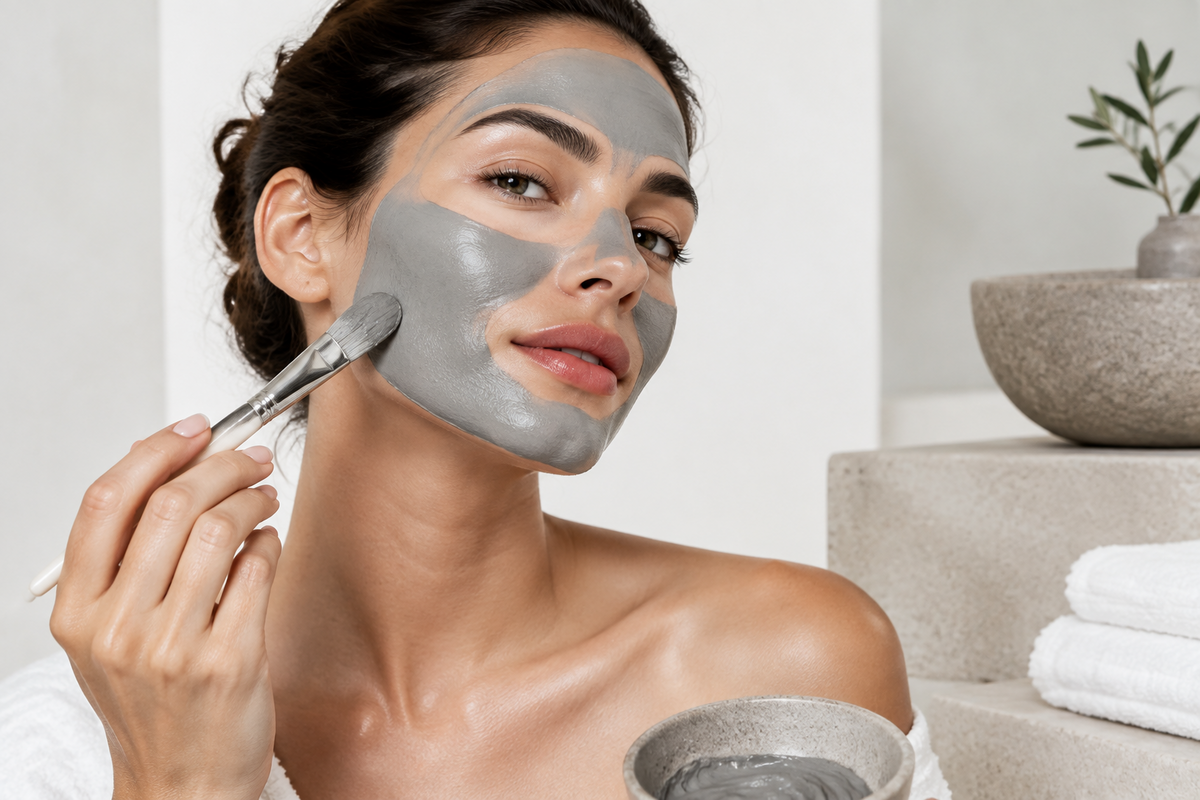
Can a Clay Mask Help Clean Blackheads?
Clay masks can be useful for skin that feels oily or congested.
Clay can help absorb excess oil and remove some surface impurities, which may temporarily improve the appearance of oily pores.
However, clay does not permanently remove blackheads or stop pores from producing sebum.
For this reason, clay works best as one part of a broader routine, rather than as the only blackhead treatment.
If you are interested in how clay fits into a blackhead routine, see Do Clay Masks Help With Blackheads?.
How to Clean Blackheads on Your Nose
The nose is one of the most common areas where people try to remove blackheads aggressively.
Before treating it, however, make sure those dark dots are actually blackheads.
Many people have sebaceous filaments on their nose. These are normal structures that help move sebum through the follicle and can look like tiny gray or yellowish dots.
If the dots are relatively uniform, evenly distributed, and quickly return after removal, they may be sebaceous filaments rather than blackheads.
Learn more in Blackheads vs. Sebaceous Filaments: How to Tell the Difference.
If you do have true blackheads on your nose, a gentle cleanser followed by an appropriate pore-focused ingredient such as salicylic acid can be a better long-term strategy than repeatedly squeezing them.
For a more specific nose routine, see How to Get Rid of Stubborn Blackheads on Your Nose & Prevent Re-clogging.
How to Clean Blackheads Without Over-Drying Your Skin
One of the most common mistakes is assuming that oily skin needs to be stripped.
When your skin feels extremely dry or tight after cleansing, that does not necessarily mean the pores are cleaner.
Instead:
Use Gentle Cleansing
Cleanse regularly to remove surface oil, sunscreen, makeup, and sweat.
Avoid repeatedly washing your face simply because your skin looks oily.
Avoid Very Hot Water
Extremely hot water can make the skin feel dry and uncomfortable.
Use lukewarm water and avoid prolonged washing.
Do Not Combine Too Many Exfoliants
Using salicylic acid together with several other strong exfoliating products can increase the chance of irritation.
More exfoliation is not automatically better.
Moisturize After Cleansing
Even oily skin benefits from appropriate hydration.
A lightweight, non-comedogenic moisturizer can help maintain skin comfort and support a consistent routine.
A Simple Blackhead-Cleaning Routine
You do not need a complicated routine to manage blackheads.
Morning
1. Gentle cleanser
Remove overnight oil and surface buildup.
2. Lightweight moisturizer
Use a formula that feels comfortable and does not leave your skin excessively greasy.
3. Sunscreen
Apply broad-spectrum sunscreen during the day.
Evening
1. Cleanse
Remove sunscreen, makeup, sweat, and surface buildup.
2. Pore-focused treatment
Use salicylic acid according to the instructions of your chosen product.
3. Moisturize
Finish with a lightweight moisturizer to support skin comfort.
Optional Step: Clay
If your skin is particularly oily, you may incorporate a clay-based product occasionally to help manage excess surface oil.
There is no need to use clay every day.
The frequency should depend on the product instructions and how your skin responds.
What About Blackheads on the Body?
Blackheads are not limited to the face.
They can also appear on areas such as:
- Back
- Chest
- Shoulders
- Thighs
- Outer ear
Body blackheads can be influenced by sweat, friction, occlusion, and product buildup in addition to sebum and dead skin cells.
The same basic principle applies: avoid aggressive scrubbing and focus on consistent cleansing and appropriate pore care.
For a complete location-based guide, see The Full-Body Blackhead Map: Why They Form Anywhere and How to Clear Them From Head to Toe.
What Should You Avoid When Cleaning Blackheads?
If your goal is clearer pores, some common approaches may do more harm than good.
Avoid Repeated Squeezing
Temporary removal does not prevent future congestion and repeated pressure can irritate the skin.
Avoid Aggressive Scrubs
More friction does not necessarily mean cleaner pores.
Avoid Overusing Pore Strips
They may provide temporary results but do not address recurring pore congestion.
Avoid Excessive Cleansing
Washing repeatedly throughout the day can leave the skin dry and irritated without preventing blackheads.
Avoid Using Multiple Strong Acids at Once
Combining several exfoliating products can increase irritation without necessarily improving results.
Avoid Trying to Remove Every Visible Pore
Not every visible dot is a blackhead.
Some are normal sebaceous filaments or simply visible pores.
Trying to make every pore completely invisible can lead to unnecessary over-treatment.
How Long Does It Take to Clean Blackheads?
Blackhead management usually takes time.
A cleanser can immediately remove surface oil and buildup, but it cannot instantly eliminate every clogged pore.
Ingredients such as salicylic acid work gradually, and the amount of time needed to see improvement depends on the severity of congestion, product formulation, frequency of use, and individual skin tolerance.
Instead of judging your routine after one or two uses, focus on whether your skin is gradually becoming less congested while remaining comfortable.
When Should You See a Dermatologist?
If blackheads are widespread, painful, severely inflamed, or leaving significant marks, they may be part of a broader acne condition or another skin issue.
You should also consider professional advice if persistent congestion does not improve despite a consistent and appropriate skincare routine.
A dermatologist can help determine whether you are dealing with blackheads, other types of acne, folliculitis, or another skin condition and recommend an appropriate treatment approach.
The Bottom Line
Cleaning blackheads is not about scrubbing your pores until every dark spot disappears.
Blackheads form inside hair follicles, so long-term management requires more than surface cleansing.
A simple approach is often enough:
Gentle Cleanse → Pore-Focused Ingredient → Hydrate → Stay Consistent
Salicylic acid can help manage the buildup inside pores, while clay can help absorb excess surface oil. Cleansing removes surface impurities, but aggressive squeezing and scrubbing are unlikely to provide a lasting solution.
Most importantly, remember that blackheads can naturally recur because your skin continues to produce sebum and shed skin cells.
The goal is not permanently empty pores.
The goal is healthier-looking, less congested skin without damaging the skin barrier.