How to Get Rid of Blackheads on Your Nose & Prevent Them
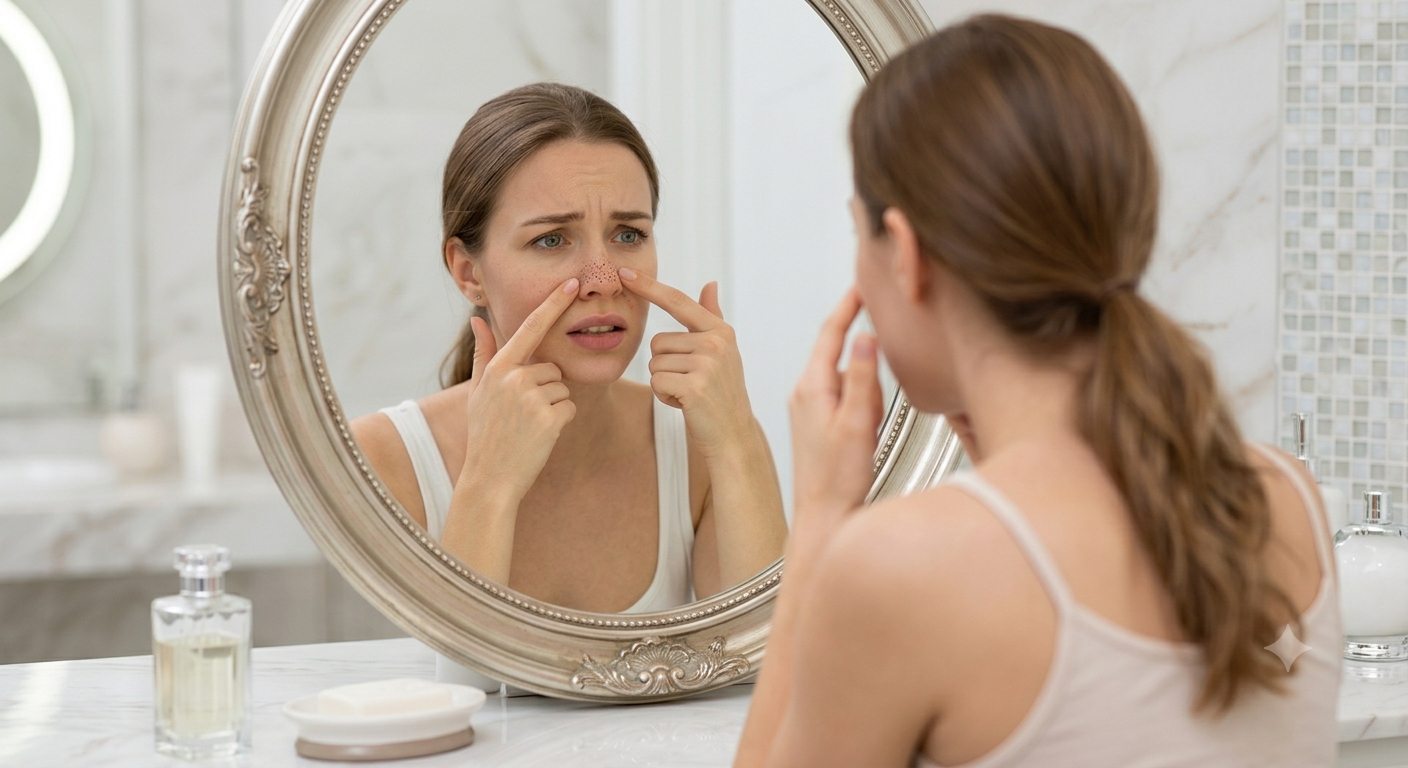
We have all been there. You look into a magnifying mirror under bright bathroom lighting and suddenly notice a cluster of dark dots across your nose. Whether you are dealing with a few big blackheads on your nose or dozens of tiny blackheads, these stubborn clogged pores can make your skin look rough and uneven.
The frustrating part is that blackheads often seem to come back shortly after you remove them. Squeezing or using pore strips may make your nose look temporarily clearer, but these methods do not address why the pores become clogged in the first place.
If you are wondering how to get rid of blackheads on your nose, the goal is not to repeatedly force the plugs out. A better approach is to reduce excess oil and dead skin buildup, gently unclog the pores, and prevent new congestion from forming. Here is how to do it without over-irritating your skin.
Why Do Blackheads Keep Coming Back on Your Nose?
Your nose is particularly prone to blackheads because it contains many sebaceous glands and can produce more oil than surrounding areas. When excess sebum mixes with dead skin cells inside a hair follicle, it can form a plug. When that plug remains open to the air, oxidation makes it appear dark.
This is why squeezing a blackhead may provide a temporary improvement without preventing the pore from becoming clogged again.

Why You Should Avoid Aggressive Extraction
Squeezing blackheads with your fingernails or repeatedly using harsh pore strips can irritate the skin, damage the protective barrier, and increase redness. Frequent picking may also leave lingering marks or inflammation.
Instead of repeatedly forcing the contents out, focus on gradually loosening and preventing the buildup inside the pore.
Wait—Are Those Actually Blackheads?
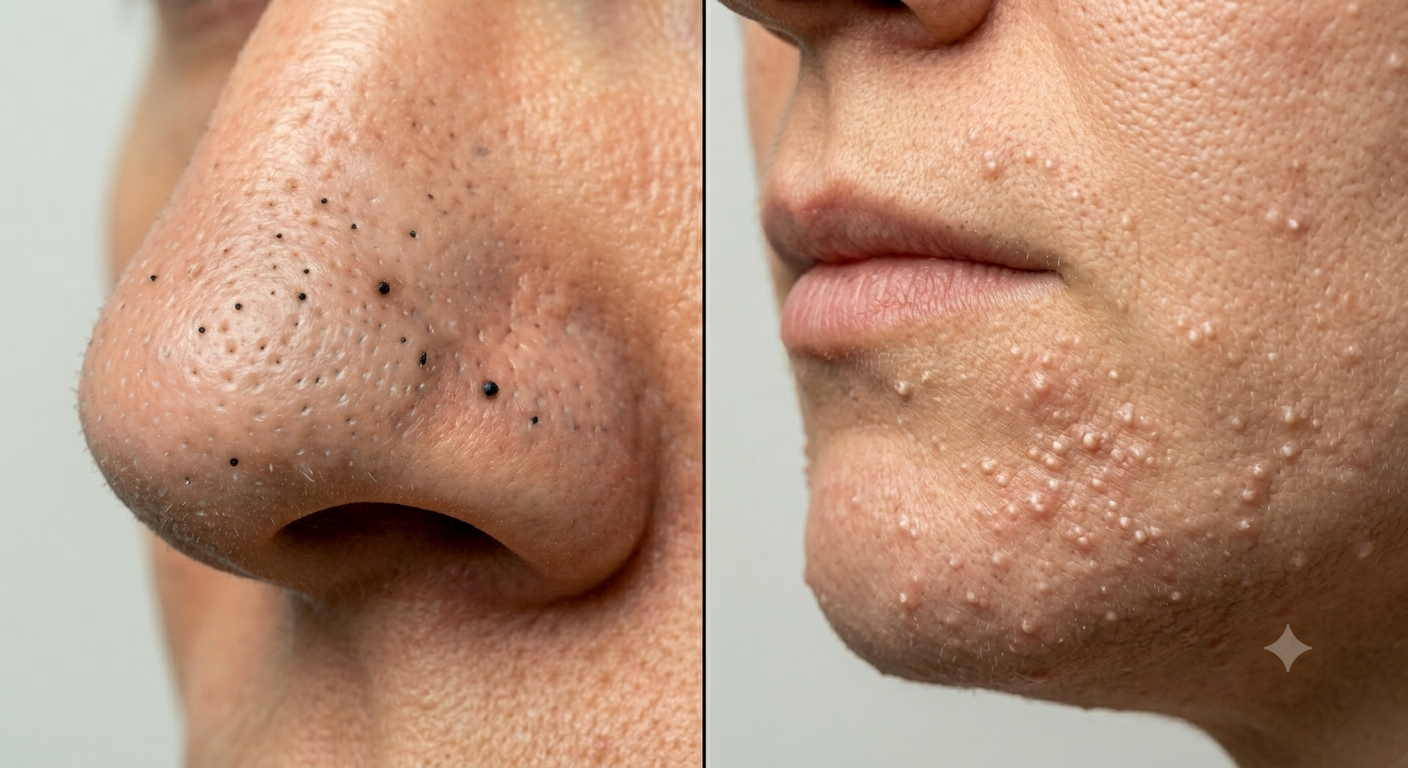
Not every dark dot on your nose is a blackhead. If the dots are small, relatively uniform, light gray or yellowish, and closely follow the pattern of your pores, they may be sebaceous filaments.
Sebaceous filaments are a normal part of the skin and help move sebum through the pores. Unlike blackheads, they cannot be permanently removed because they naturally refill as your skin produces oil.
Not sure which one you have? Read our guide: Blackheads vs. Sebaceous Filaments: Is That Actually a Blackhead on Your Nose?
How to Get Rid of Blackheads on Your Nose: A 3-Step Routine
If you want to manage stubborn nose blackheads, focus on a consistent routine rather than aggressive extraction. The goal is to keep pores clear while maintaining a healthy skin barrier.
Step 1: Soften (The Oil-Cleansing Launch)
Start with a gentle cleanser to remove excess oil, sunscreen, makeup, and daily buildup from your nose. You do not need to scrub aggressively or use a harsh cleanser to make the skin feel "squeaky clean."
Over-cleansing can leave your skin dry and irritated, making it harder to maintain a balanced routine. Focus on keeping the nose clean without repeatedly stripping the skin barrier.
Step 2: Unclog Pores with Salicylic Acid
If you are looking for an effective way to manage blackheads on your nose, salicylic acid is one of the most useful ingredients to consider.
Salicylic acid is oil-soluble, allowing it to work inside clogged pores and help loosen the mixture of excess sebum and dead skin cells that contributes to blackheads. With consistent use, it can help reduce existing congestion and prevent new plugs from building up.
Start gradually if your skin is sensitive, and avoid combining too many exfoliating products at once. The goal is to keep pores clear without causing excessive dryness or irritation.
Step 3: Hydrate and Reduce Re-Clogging
After exfoliating, use a lightweight, non-comedogenic moisturizer to help maintain the skin barrier.
Keeping your skin comfortable and hydrated can make it easier to maintain a consistent acne-care routine. Look for formulas that feel lightweight and do not leave a heavy, greasy residue on your nose.
Remember that moisturizer does not need to be skipped just because your skin is prone to blackheads. The goal is to find a formula that provides hydration without feeling overly occlusive.
How to Prevent Blackheads on Your Nose
Getting rid of existing blackheads is only part of the solution. To reduce the chance of new clogged pores appearing:
- Cleanse your face regularly, especially after sweating.
- Avoid repeatedly squeezing or picking your nose.
- Use non-comedogenic skincare and makeup when possible.
- Introduce salicylic acid gradually if your skin tolerates it.
- Avoid layering too many heavy or occlusive products on the T-zone.
- Give new acne treatments time to work instead of constantly switching products.
Most importantly, remember that blackheads naturally recur because your skin continues to produce sebum. The goal is long-term control, not permanently empty pores.
What About Big or Tiny Blackheads on Your Nose?
The size of a blackhead does not necessarily mean that it needs a more aggressive treatment.
Tiny blackheads on the nose are often associated with small amounts of oil and dead skin buildup inside the pores. They may become less noticeable with consistent cleansing and salicylic acid use.
Big blackheads on the nose can be more noticeable and may have a larger amount of material inside the follicle. However, trying to force them out with your fingernails can cause unnecessary irritation.
What Not to Do When Removing Nose Blackheads
When blackheads are highly visible, it can be tempting to remove them as quickly as possible. However, some common methods can make your skin more irritated.
Don't Squeeze Them Repeatedly
Repeated squeezing can damage the surrounding skin and increase inflammation. It can also turn a relatively simple clogged pore into an irritated blemish.
Don't Overuse Pore Strips
Pore strips can temporarily remove material from the surface of some pores, but they do not prevent the pores from producing more sebum. Frequent use may also irritate sensitive skin.
Don't Scrub Aggressively
Physical scrubs do not need to be harsh to be effective. Excessive friction can damage the skin barrier and make redness more noticeable without addressing the underlying clog.
When Should You See a Dermatologist?
If your nose congestion is painful, severely inflamed, widespread, or leaving significant marks, it may be more than simple blackheads.
Persistent bumps can sometimes be associated with acne or other skin conditions that require a different approach. A dermatologist can help identify the cause and recommend an appropriate treatment.
Professional extraction may also be an option for stubborn individual blackheads that do not respond to your regular skincare routine.
Keep Your Nose Clear Without Over-Treating It
Stubborn blackheads on your nose are easier to manage when you focus on the cause rather than repeatedly extracting the visible plugs.
A simple routine—gentle cleansing, consistent salicylic acid exfoliation, and lightweight hydration—can help reduce clogged pores while keeping your skin barrier comfortable. Avoid aggressive squeezing and give your routine enough time to work.
And remember: not every dark dot on your nose is a blackhead. If your pores contain small, uniform grayish dots that quickly return after cleansing, they may be sebaceous filaments rather than true clogs.
For a broader look at why blackheads form and how to manage them, explore our Ultimate Science-Backed Guide to Blackheads: What They Are, How They Form, and How to Stop Them