Blackheads vs. Whiteheads: What's the Difference?
Blackheads and whiteheads are both types of comedones, which means they develop when oil and dead skin cells build up inside a hair follicle.
So why does one look dark while the other appears white or flesh-colored?
The key difference is whether the opening of the follicle remains exposed to the skin's surface. A blackhead is an open comedone, while a whitehead is a closed comedone.
Understanding this difference can help you identify what you are seeing on your skin and choose a more appropriate approach to managing clogged pores.
For a complete overview of how blackheads form, see our guide: What Are Blackheads? Causes, Treatment Prevention.
What Is the Difference Between Blackheads and Whiteheads?
Blackheads and whiteheads begin with a similar process: sebum and dead skin cells accumulate inside a hair follicle.
The main difference is what happens at the opening of the follicle.
With a blackhead, the opening remains exposed to the skin's surface. With a whitehead, the opening is covered by a thin layer of skin.
This difference affects their appearance and how the material inside the pore is exposed to the environment.
Blackheads vs. Whiteheads: Key Differences
| Feature | Blackheads | Whiteheads |
| Medical term | Open comedone | Closed comedone |
| Pore opening | Remains open to the skin surface | Covered by a thin layer of skin |
| Appearance | Dark brown or black dot | White, flesh-colored, or pale bump |
| Surface texture | May appear as a visible dark pore | Usually appears as a small raised bump |
| Why it looks different | Material near the opening darkens when exposed to air | Material remains beneath the skin surface |
| Common areas | Nose, chin, forehead, and oily areas | Forehead, cheeks, chin, and other acne-prone areas |
| Main formation process | Oil and dead skin cells accumulate inside an open follicle | Oil and dead skin cells become trapped beneath a closed opening |
| Category | Non-inflammatory comedonal acne | Non-inflammatory comedonal acne |
What Is a Blackhead?
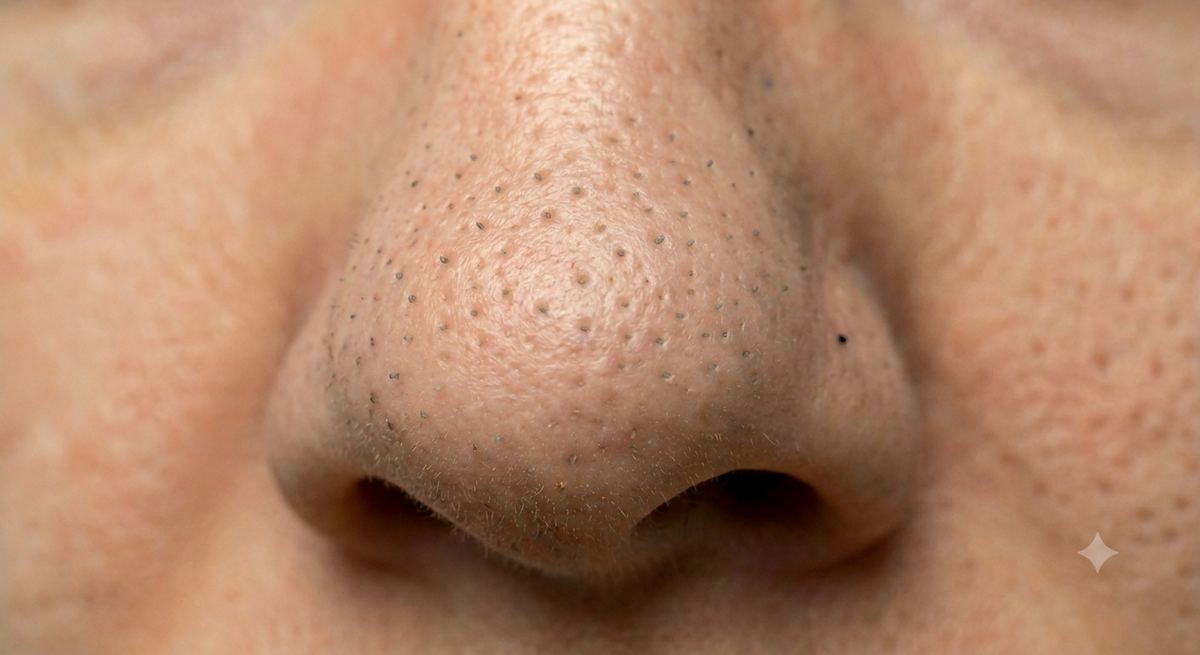
A blackhead is an open comedone.
It forms when sebum and dead skin cells accumulate inside a hair follicle while the opening remains exposed to the surface of the skin.
The material near the opening undergoes chemical changes when exposed to air, which contributes to its dark appearance. This is why blackheads appear black or dark brown rather than white.
Blackheads are especially common in oil-prone areas such as the nose, chin, and forehead.
What Is a Whitehead?
A whitehead is a closed comedone.
Like a blackhead, it begins when sebum and dead skin cells build up inside a hair follicle. However, the opening of the follicle becomes covered by a thin layer of skin.
Because the material remains beneath the surface rather than being exposed at an open pore, a whitehead usually appears as a small white, pale, or flesh-colored bump.
Whiteheads are commonly found on areas such as the forehead, cheeks, and chin and may occur alongside other forms of comedonal acne.
For a more detailed guide to identifying and managing closed comedones, see What Do Closed Comedones Look Like?
How to Tell Blackheads and Whiteheads Apart
The easiest way to tell them apart is by looking at the surface of the pore.
Blackheads Usually Look Dark
Blackheads usually appear as visible dark brown or black dots. The pore opening remains exposed to the skin's surface.
Whiteheads Usually Look Like Small Bumps
Whiteheads are more likely to appear as small white, pale, or flesh-colored bumps beneath a thin layer of skin.
Blackheads Are Open, While Whiteheads Are Closed
This is the main structural difference. Blackheads are open comedones, while whiteheads are closed comedones.
However, not every dark dot is a blackhead. On the nose, sebaceous filaments can sometimes look similar to blackheads.
How to Manage Blackheads and Whiteheads
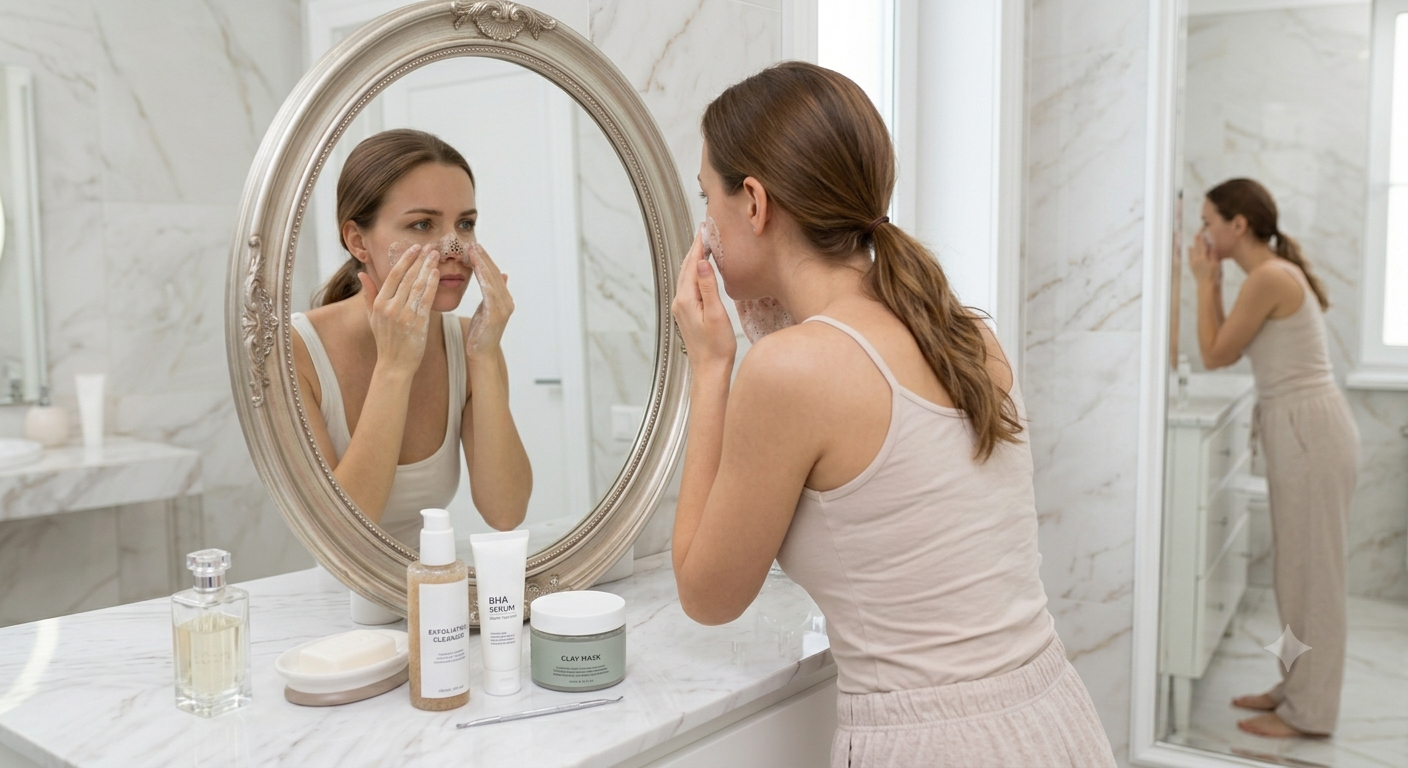
Because blackheads and whiteheads both involve a buildup of sebum and dead skin cells, some skincare approaches may be useful for managing both.
Salicylic Acid
Salicylic acid is commonly used for clogged pores because it can exfoliate within the pore environment and help reduce the buildup of oil and dead skin cells.
A salicylic acid cleanser, such as the Dr.Leo Salicylic Acid Cleanser, may be incorporated into a routine for oily or congestion-prone skin.
Retinoids
Retinoids can help support normal skin cell turnover and may be useful for reducing the formation of comedones over time.
They can also cause dryness or irritation, so they should generally be introduced gradually according to product instructions.
Avoid Over-Treating the Skin
Aggressive scrubbing, frequent squeezing, and combining too many strong exfoliating products may irritate the skin without addressing the underlying process that causes comedones.
How to Help Prevent Blackheads and Whiteheads
Blackheads and whiteheads can return because the skin continuously produces oil and sheds dead skin cells. Prevention focuses on reducing the conditions that contribute to repeated buildup.
- Cleanse consistently without over-washing.
- Introduce pore-clearing active ingredients gradually.
- Avoid repeatedly squeezing or picking at clogged pores.
- Choose skincare and makeup products that work well with your skin type.
- Maintain a consistent routine rather than frequently switching between multiple strong treatments.
The Bottom Line
Blackheads and whiteheads are closely related because both are types of comedonal acne caused by a buildup of oil and dead skin cells inside a hair follicle.
The main difference is the opening of the pore. A blackhead remains open to the surface, while a whitehead is covered by a thin layer of skin.
Knowing whether you are dealing with an open or closed comedones can make it easier to understand why it looks the way it does and choose an appropriate skincare approach.