Best Acne Kits for Sensitive Skin & Safe Spot Treatments
When a sudden breakout appears on sensitive skin, finding the right acne treatment can be challenging. You want to address the blemish quickly, but some spot treatments may leave your skin feeling dry, tight, or irritated.
If you have reactive skin, choosing the right acne products requires more than simply looking for the strongest acne-fighting ingredients. You need products that address breakouts while helping maintain hydration and skin barrier comfort.
But should you choose a targeted spot treatment for individual pimples or a complete acne skincare kit for recurring breakouts?
In this guide, we'll explain the differences between spot treatments and acne kits, which ingredients to consider for sensitive skin, and how to build a simple product combination for managing breakouts without unnecessarily irritating your skin.
Key Takeaways
- Choose according to your acne concerns: Spot treatments are designed for individual blemishes, while a complete skincare routine addresses broader daily care needs.
- Look for suitable ingredients: Salicylic acid can help address clogged pores, while panthenol and CICA support skin comfort and hydration.
- Avoid overusing active ingredients: Combining too many acne treatments may increase the risk of dryness and irritation.
- Don't neglect moisturizing: Acne-prone sensitive skin still needs hydration and barrier support.
- Follow product instructions: Proper application and frequency are important, particularly when using concentrated spot treatments.
1. Spot Treatments vs. Full Acne Kits: What Does Your Skin Need?
Before choosing the best acne products for sensitive skin, consider whether you need an occasional spot treatment or a more consistent daily skincare routine.
These two approaches serve different purposes, and the right choice depends on your breakout frequency and overall skin condition.
Targeted Spot Treatments: For Individual Breakouts
Best for: Occasional pimples, individual inflamed blemishes, and localized breakouts.
A spot treatment is designed to be applied directly to specific blemishes rather than across your entire face.
Depending on its formulation, a spot treatment may contain ingredients such as salicylic acid or sulfur to help address individual acne concerns.
For people with sensitive skin, targeted application can help avoid introducing unnecessary active ingredients to areas that do not need treatment.
However, spot treatments can still cause dryness or irritation. Always follow the product directions and consider your skin's tolerance.
Complete Acne Skincare Kits: For Recurring Breakouts
Best for: People who experience recurring breakouts, excess oil, clogged pores, or acne-prone skin that needs consistent daily care.
A complete acne skincare routine usually includes several product categories:
- Cleanser: Removes excess oil, sweat, and everyday impurities.
- Targeted Acne Treatment: Addresses individual blemishes or specific acne concerns.
- Moisturizer: Helps maintain hydration and support the skin barrier.
Using products with complementary purposes can make your routine easier to organize. However, a complete kit does not automatically guarantee compatibility or prevent irritation. Your skin's individual tolerance still matters.
If you frequently experience breakouts alongside sensitivity, a simple routine with clearly defined steps may be more practical than using numerous unrelated acne products.
2. Ingredients to Look for in Acne Products for Sensitive Skin
Choosing the right ingredients is an important part of finding a suitable gentle acne kit or spot treatment.
Rather than avoiding every strong acne ingredient, focus on the formulation, concentration, application method, and how your skin responds.
| Ingredient | Potential Benefits | Considerations for Sensitive Skin |
|---|---|---|
| Salicylic Acid (BHA) | Helps exfoliate dead skin cells and address clogged pores. | May cause dryness or irritation. Introduce gradually. |
| Sulfur | Commonly used in products formulated for blemish-prone skin. | May cause dryness or irritation in some people. |
| Niacinamide | Supports the skin barrier and helps improve the appearance of uneven skin texture. | Choose a formulation that your skin tolerates. |
| Centella Asiatica (CICA) | Helps soothe the skin and support skin comfort. | Individual reactions can vary. |
| Panthenol (Vitamin B5) | Helps moisturize and soothe the skin. | Useful in moisturizing formulations for sensitive skin. |
| Glycerin | Helps attract and retain moisture. | Commonly used in lightweight hydration products. |
Ingredients and Formulations to Approach Carefully
Some acne treatments can be more irritating depending on their concentration and formulation.
If your skin is easily irritated, pay attention to:
- High concentrations of exfoliating acids.
- Strong combinations of multiple active ingredients.
- Fragrances or essential oils that you know your skin does not tolerate.
- Products that consistently leave your skin feeling excessively dry or uncomfortable.
Benzoyl peroxide and retinoids can be effective acne treatments, but they may also cause dryness, peeling, or irritation. They are not automatically unsuitable for everyone with sensitive skin. Their use should be adjusted according to individual needs and professional guidance when appropriate.
3. How to Choose the Best Spot Treatment for Acne
If you only experience occasional breakouts, a targeted spot treatment may be a practical addition to your skincare routine.
However, not all spot treatments work in the same way. Before choosing one, consider the type of blemishes you experience and the ingredients in the formula.
Choose a Formula That Matches Your Acne Concerns
Salicylic acid is commonly used in acne treatments because it helps address clogged pores and accumulated dead skin cells.
Sulfur is another ingredient found in products designed for blemish-prone skin.
When choosing a spot treatment for sensitive skin, consider:
- The active ingredients and their concentrations.
- Whether the product is designed for localized application.
- The recommended application frequency.
- Whether your skin tolerates the formula.
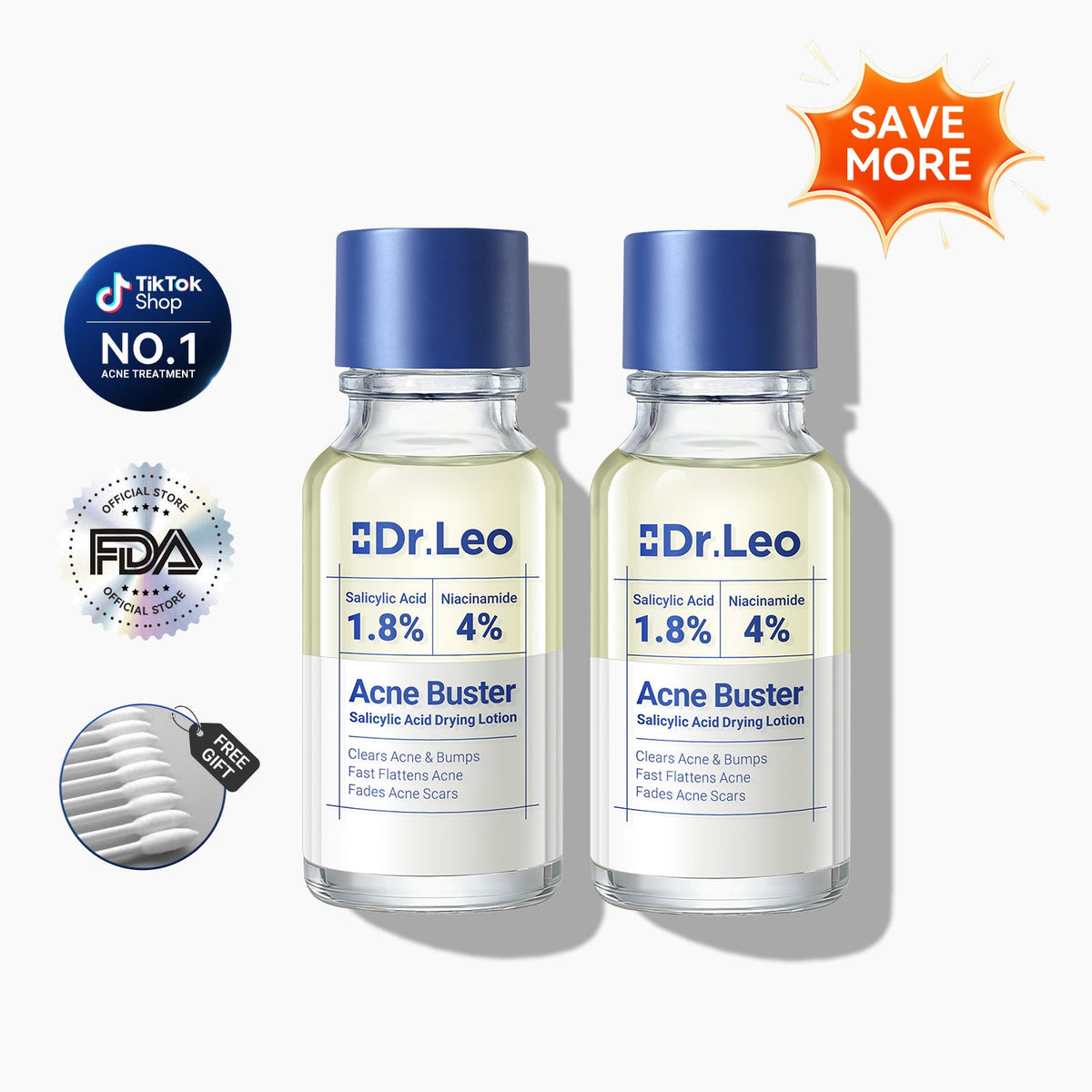
Product Recommendation: Dr.Leo Encapsulated Salicylic Acid Drying Lotion Plus
If you are looking for a targeted treatment for individual blemishes, Dr.Leo Encapsulated Salicylic Acid Drying Lotion Plus is an option to consider.
Its two-phase formula contains several ingredients commonly used in blemish-care products:
- 1.8% Salicylic Acid: An exfoliating ingredient that helps address pore congestion.
- 4% Niacinamide: Helps support the skin barrier and improve the appearance of uneven skin texture.
- 15% Zinc Oxide: Included in the powder phase of the formula.
- 10% Colloidal Sulfur: An ingredient traditionally used in products for blemish-prone skin.
The formula is designed for localized spot application rather than full-face use.
Because it contains active ingredients that may cause dryness or irritation, sensitive skin users should test their tolerance before regular use.
Follow the product instructions and use a clean cotton swab to apply the appropriate amount directly to individual blemishes. Avoid rubbing the product into surrounding clear skin.
4. How to Apply a Spot Treatment Correctly
Using a spot treatment correctly is just as important as choosing the right formula.
Step 1: Cleanse Your Skin Gently
Start with a gentle facial cleanser to remove excess oil, sweat, sunscreen, and everyday impurities.
Avoid aggressive scrubbing or repeatedly washing your face to prepare it for treatment.
Step 2: Follow the Spot Treatment Instructions
Different spot treatments have different application methods.
For two-phase products such as drying lotions, follow the specific product directions. Do not shake the bottle if the instructions require the powder to remain separated from the liquid phase.
Use a clean cotton swab and apply the product only to the intended blemish areas.
Step 3: Avoid Rubbing or Overapplying
Applying more product does not necessarily improve results.
Use the recommended amount and frequency. Avoid repeatedly layering the treatment onto the same blemish, as this may increase the risk of irritation.
Step 4: Maintain Skin Hydration
After applying your spot treatment according to its instructions, maintain the rest of your skincare routine with an appropriate moisturizer.
Choose a lightweight formula that helps maintain hydration without feeling excessively heavy.
When to Consider Hydrocolloid Pimple Patches
Hydrocolloid patches can be useful for certain surface-level pimples, particularly those with a visible whitehead.
They help absorb fluid from the treated area and provide a physical barrier that can discourage picking or touching.
However, they are not a replacement for every acne treatment and may be less useful for deep, under-the-skin blemishes.
Choose patches suitable for your skin and discontinue use if the adhesive causes irritation.
5. How to Build a Gentle Acne Care Kit for Sensitive Skin
If you experience recurring breakouts, choosing a few complementary products can help simplify your daily routine.
Rather than combining multiple strong acne treatments, start with three essential product categories.
Step 1: Gentle Daily Cleanser
Choose a facial cleanser that removes excess oil and impurities without leaving your skin feeling tight or excessively dry.
Dr.Leo Polyamino Acid Purifying Facial Cleanser can be considered as the cleansing step in a simple daily acne care routine.
Explore Dr.Leo Polyamino Acid Purifying Facial Cleanser
Step 2: Targeted Blemish Treatment
For individual breakouts, consider adding a targeted spot treatment rather than applying concentrated acne ingredients across your entire face.
Dr.Leo Encapsulated Salicylic Acid Drying Lotion Plus is designed for localized blemish care.
Use it according to its directions and pay attention to your skin's tolerance, particularly if you are prone to irritation.
Step 3: Lightweight Barrier-Supporting Moisturizer
Finish your routine with a moisturizer that provides hydration and helps maintain skin comfort.
Dr.Leo CICA Panthenol Jelly Moisturizer features a lightweight jelly texture designed to provide hydration and help soothe the skin.
It can be considered for people who prefer a lightweight moisturizer instead of a heavier cream.
Explore Dr.Leo CICA Panthenol Jelly Moisturizer
This three-product combination provides a simple cleansing, targeted treatment, and moisturizing routine. It is a suggested product combination rather than a claim that all three products form an officially marketed kit.
Final Thoughts: Choose Acne Products That Respect Sensitive Skin
Finding the best acne kits for sensitive skin is not about choosing the strongest products or using as many treatments as possible.
For occasional breakouts, a targeted spot treatment may be sufficient. If you experience recurring acne, a consistent routine with gentle cleansing, appropriate blemish care, and lightweight hydration may be a better starting point.
Pay attention to ingredient formulations, introduce new products gradually, and avoid overusing active treatments.
With a more balanced approach, you can address individual breakouts while maintaining skin comfort and supporting your natural skin barrier.
Want to learn more about acne care for sensitive skin? Explore these related guides:
- The Best Acne Treatments for Sensitive Skin: How to Clear Breakouts — Learn which ingredients and product types are worth considering for sensitive, acne-prone skin.
- 3-Step Acne Treatment for Sensitive Skin: Easy Daily Routine — Discover a simple morning and evening routine for cleansing, treating, and moisturizing.