Blackheads vs. Sebaceous Filaments: Is That Actually a Blackhead on Your Nose?
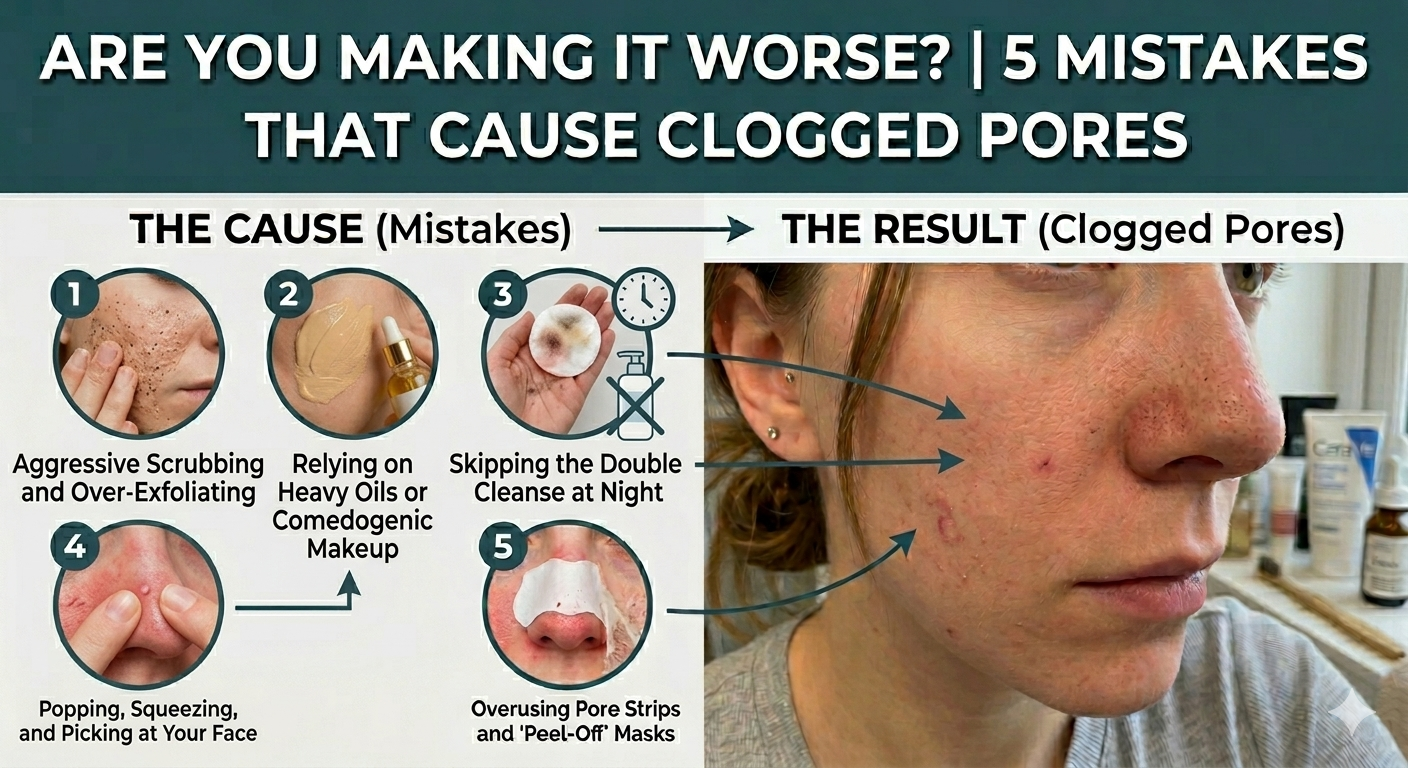
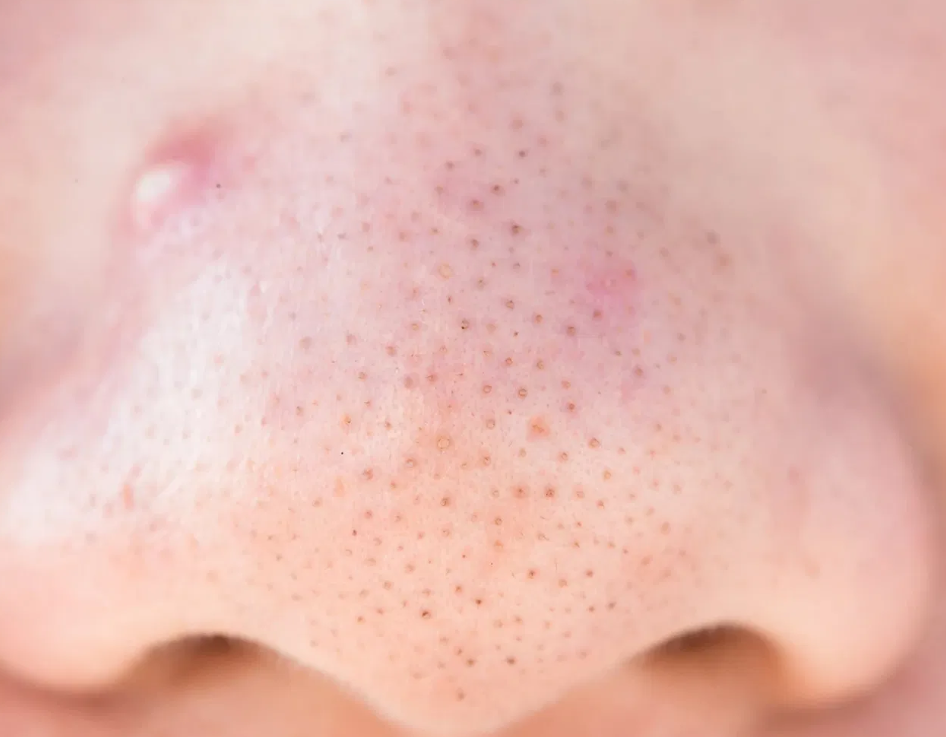
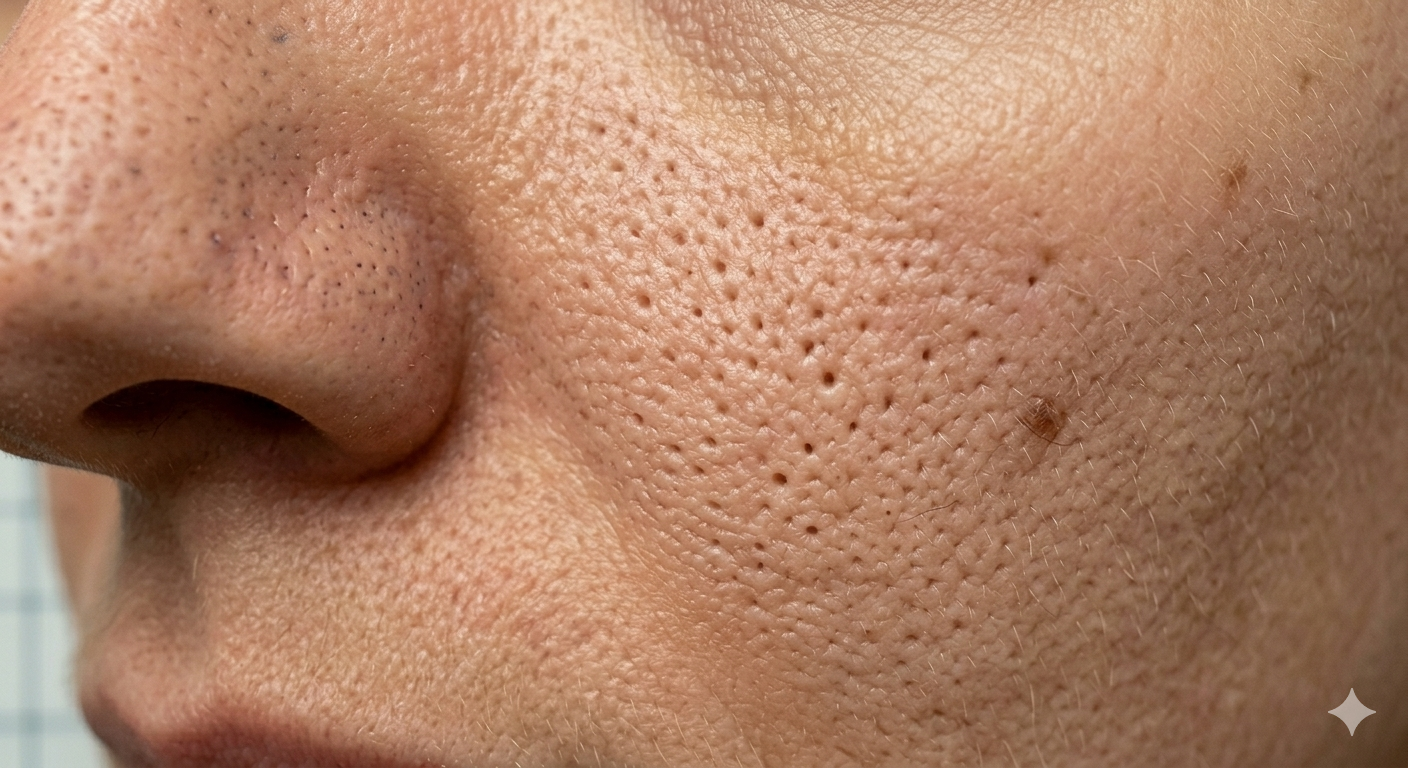
Have you ever spent fifteen minutes under a magnifying mirror staring at your nose, completely frustrated by a grid of persistent, tiny dark dots? You wash your face daily, you use nose strips, and you might even guilty-squeeze them—only to watch a tiny, yellowish-white string wiggle out. Yet, no matter how many times you clear them away, they return to the exact same spots just forty-eight hours later.
If this cycle sounds familiar, here is a liberating secret: you might be fighting an impossible war against your own anatomy.
Those tiny, repetitive dots are highly likely not blackheads. Instead, you are looking at a perfectly natural skin feature called sebaceous filaments. Misidentifying sebaceous filaments vs blackheads is one of the most common mistakes in skincare, leading people to use aggressive, damaging routines on entirely healthy pores. To understand how these openings fit into broader skin congestion, read our foundational guide: What Are Clogged Pores? A Beginner’s Guide to Skin Congestion
Let’s break down the ultimate visual checklist to tell them apart and look at how to properly treat both.
The Comparison Guide: Blackheads vs. Sebaceous Filaments
To stop treating your skin blindly, you need to understand exactly what is happening inside the pore lining. Here is a definitive look at blackheads vs sebaceous filaments across three core biological and structural dimensions:
|
Feature |
Blackheads (Open Comedones) |
Sebaceous Filaments |
|
Biological Nature |
A Dead-End Clog: A physical blockage formed when hardened sebum, dead skin cells, and debris completely trap the follicle. |
A Normal Oil Conduit: A functional, microscopic hair-like structure that acts as a highway, guiding sebum smoothly from your gland to the skin surface. |
|
Color & Appearance |
Dark Black & Random: Look like distinct, isolated dark black dots. They form randomly and vary significantly in size. |
Grey, Cream, or Light Yellow: Look like a uniform, symmetrical pattern of tiny greyish or sandy dots spread evenly across oily zones. |
|
The Touch & Texture Test |
Rough & Raised: If you slide your finger across a blackhead, you will feel a distinctly raised, hard, grainy obstacle. |
Completely Smooth: They sit flush within the pore tissue. The skin surface feels smooth or slightly soft, not rough like sandpaper. |
 The Ultimate 3-Step Routine to Manage Both Conditions Safely
Because their biological structures are completely opposite, attempting to treat sebaceous filaments with aggressive extraction will only tear your moisture barrier, causing them to refill even faster. Conversely, ignoring a true blackhead will allow it to permanently stretch out your pore elasticity.
To permanently clear true blackheads and keep your natural sebaceous filaments visually invisible, you must shift to a coordinated, daily clarifying routine that dissolves oil plugs and controls runaway grease:
Step 1: Melt Trapped Sebum Daily with Dr.Leo Salicylic Acid Cleanser
Whether you are trying to break apart the solid, hardened core of a true blackhead or trying to keep the oil inside your sebaceous filaments thin and clear so it doesn't oxidize, you need Salicylic Acid (BHA). Because Salicylic Acid is lipid-soluble, it easily slices through surface oil, glides down into the narrow pore lining, and dissolves the sebum glue from the inside out.
Washing your face daily with the Dr.Leo Salicylic Acid Cleanser utilizes a targeted salicylic acid formulation to clear out heavy build-up and sweep away dead cells without causing drying, peeling, or irritation.
Step 2: Vacuum Surface Grease with Dr.Leo Volcanic Clay Cleanser Stick
Ditch the violent physical trauma of adhesive pore strips, which permanently stretch out your pore openings. Instead, incorporate a gentle weekly deep-clean. Gliding the Dr.Leo Volcanic Clay Cleanser Stick 2-3 times a week across your nose and T-zone provides a magnetic pulling effect. It effortlessly lifts away the top oxidized layer of blackheads and absorbs the excess surface pool of sebaceous filaments, instantly refining your skin texture.
Step 3: Train Oil Glands with Dr.Leo CICA Panthenol Hydro-Gel Soothing Moisturizer
When clearing pores with active clarifying ingredients, keeping the skin well-hydrated is crucial. Stripping the skin bare or leaving it dry triggers defensive, compensatory oil production, which quickly floods your sebaceous filaments and creates new blackheads.
Lock in breathable, oil-free hydration with the Dr.Leo CICA Panthenol Hydro-Gel Soothing Moisturizer. Its lightweight microcapsule texture transforms into water upon application, delivering high-purity centella asiatica, panthenol, and small-molecule hyaluronic acid. It instantly soothes redness, balances oil production, and maintains a healthy moisture-oil balance, keeping your pores clear, calm, and visually minimized.
Reclaim Your Skin Clarity
Learning to distinguish between sebaceous filaments vs blackheads completely changes how you manage your skin texture. Stop trying to scrub away your natural anatomy, and start treating your skin with targeted, ingredient-first solutions that support your barrier while keeping your pores beautifully clear.
Remember, nose congestion is often just one facet of overall skin congestion. These open pores frequently coexist with fully sealed, flesh-colored bumps across other areas of your face.
Explore Our Core Blueprints:
- To master the comprehensive science of how open clogs form and turn dark across your skin, check out our master overview: The Ultimate Guide to Blackheads: What They Are & How to Stop Them.
- To discover how open blackheads differ fundamentally from closed, trapped whiteheads, explore Blackheads vs. Whiteheads: The Real Difference Between Open and Closed Comedones.
- To dive deep into the specific hormonal and lifestyle reasons behind runaway nose oils, read Why Do I Have So Many Blackheads? The Surprising Root Causes and How to Stop the Cycle.
- To build a flawless routine to clear trapped, hard bumps across your forehead and jawline, explore our absolute master playbook: What Do Closed Comedones Look Like? The Visual Guide to Clogged Pores.