Best Blackhead Removers for Different Skin Types: Clay Masks, Acids & More
The best blackhead remover for you depends on more than the blackheads themselves.
Your skin type matters too.
A product that works well for oily skin may feel too drying if your skin is already dry or sensitive. Likewise, someone with combination skin may not need the same treatment across their entire face.
That's why choosing a blackhead remover based on your skin's needs can be more useful than simply looking for the strongest pore-clearing product.
Whether your skin is oily, sensitive, dry, combination, or acne-prone, the goal is the same:
Manage pore-clogging buildup without unnecessarily irritating your skin.
How Should You Choose a Blackhead Remover?
Before choosing a product, consider three things:
Your skin type
Does your skin become oily quickly, feel dry after cleansing, or have both oily and dry areas?
Your main concern
Are you dealing primarily with excess oil, recurring blackheads, sensitivity, or general pore congestion?
Your skin's tolerance
Can your skin tolerate exfoliating acids and purifying treatments, or does it become irritated easily?
Once you understand these factors, it becomes easier to decide which type of blackhead remover fits your routine.
Best Blackhead Remover for Oily Skin
Oily skin tends to produce more sebum, which can contribute to clogged pores and blackheads.
If excess oil is your primary concern, look for a blackhead remover that helps absorb or manage oil without completely stripping your skin.
Clay Masks
Clay-based treatments can be a useful option for oily skin because clay helps absorb excess oil and remove surface impurities.
A targeted clay mask can be particularly useful around the:
- Nose
- Forehead
- Chin
- T-zone
Salicylic Acid
Salicylic acid offers a different approach.
As a beta hydroxy acid (BHA), it can help loosen oil and dead skin buildup inside pores.
This makes it relevant for oily skin with recurring blackheads.
What to Avoid
Even oily skin can become irritated.
Avoid assuming that stronger cleansing, frequent scrubbing, or using multiple oil-control treatments will automatically produce better results.
[Internal link: Best Blackhead Remover for Oily Skin]
Best Blackhead Remover for Sensitive Skin
Sensitive or easily irritated skin requires a more careful approach.
The goal is to manage blackheads while minimizing unnecessary friction, over-exfoliation, and excessive oil stripping.
Look for Gentle Pore Care
A suitable blackhead remover for sensitive skin should ideally be easy to incorporate into a routine without requiring aggressive extraction or scrubbing.
A clay-based treatment can be an option when excess oil and surface buildup are concerns, especially when the formula also contains soothing ingredients.
Consider Soothing Ingredients
Ingredients such as aloe vera are commonly used to help soothe and hydrate the skin.
Ectoin is another ingredient used in skincare formulations designed to support skin comfort.
What to Avoid
Be cautious with:
- Aggressive blackhead extraction
- Frequent pore strips
- Excessive scrubbing
- Too many exfoliating products
- Overusing purifying masks
If a product causes persistent burning, redness, or irritation, stop using it and simplify your routine.
[Internal link: How to Choose a Blackhead Remover for Sensitive Skin]
Best Blackhead Remover for Combination Skin
Combination skin can make blackhead care more complicated because different parts of your face may have different needs.
For example, your T-zone may become oily while your cheeks feel relatively normal or dry.
In this case, targeted treatment can be more useful than applying the same product everywhere.
Try Targeted Clay Application
A clay-based treatment can be applied primarily to areas with excess oil and congestion.
You don't necessarily need to cover your entire face.
This approach can help you manage oily areas without unnecessarily treating areas that don't need oil absorption.
Keep the Rest of Your Routine Hydrating
The drier areas of combination skin still need hydration.
After using a purifying treatment, follow with an appropriate moisturizer or hydrating product.
Best Blackhead Remover for Dry Skin
Dry skin can still develop blackheads.
Having less visible oil doesn't mean pores cannot become clogged.
However, if your skin is dry, aggressive oil removal can make your skin feel even more uncomfortable.
Focus on Gentle Pore Care
Rather than using strong purifying treatments frequently, start with:
- Gentle cleansing
- Occasional targeted pore care
- Hydration
- Avoiding aggressive extraction
A clay treatment may still be useful for specific congested areas, but applying it only where needed can be a better approach than covering the entire face.
Be Careful With Over-Exfoliation
If you already use exfoliating acids or other active ingredients, adding multiple pore treatments may increase dryness.
Introduce new products gradually and monitor how your skin responds.
Best Blackhead Remover for Acne-Prone Skin
Acne-prone skin can experience different types of breakouts, including blackheads.
If blackheads are your primary concern, look for products that help manage clogged pores and excess oil without unnecessarily irritating your skin.
Salicylic Acid
Salicylic acid is commonly used for acne-prone skin because it can help loosen oil and dead skin buildup inside pores.
Clay Treatments
Clay-based treatments can complement a routine when excess oil is a major concern.
They can help absorb surface oil and impurities without requiring manual extraction.
However, a clay mask shouldn't be considered a replacement for an acne treatment if you're dealing with persistent inflammatory acne.
If you have ongoing acne, speak with a dermatologist about a treatment plan appropriate for your skin.
Best Blackhead Remover for Stubborn Blackheads
Some blackheads seem particularly difficult to manage, especially around the nose.
It can be tempting to use stronger pressure or multiple treatments to remove them.
Instead, consider whether your routine is consistently managing:
- Excess oil
- Dead skin buildup
- Makeup residue
- Surface impurities
- Pore congestion
A combination of gentle cleansing and targeted pore care may be more sustainable than repeated extraction.
[Internal link: How to Get Rid of Stubborn Blackheads on Your Nose & Prevent Re-clogging]
Clay Mask vs. Salicylic Acid: Which Skin Types Suit Each?
Clay and salicylic acid can both be useful for blackhead-prone skin, but they work differently.
| Skin Concern | Clay-Based Treatment | Salicylic Acid |
|---|---|---|
| Excess surface oil | Useful | Useful |
| Surface impurities | Useful | Limited |
| Pore congestion | Can help manage buildup | Helps loosen pore buildup |
| Sensitive skin | Depends on formula and frequency | Requires careful introduction |
| Dry skin | Use selectively | Use cautiously |
| Oily skin | Often useful | Often useful |
| Combination skin | Good for targeted areas | Can be targeted based on tolerance |
You don't necessarily have to choose one forever.
Your routine can change as your skin's needs change.
A Blackhead Remover Designed for Oily and Combination Skin
A clay-based treatment can be especially convenient when your main concern is excess oil in specific areas.
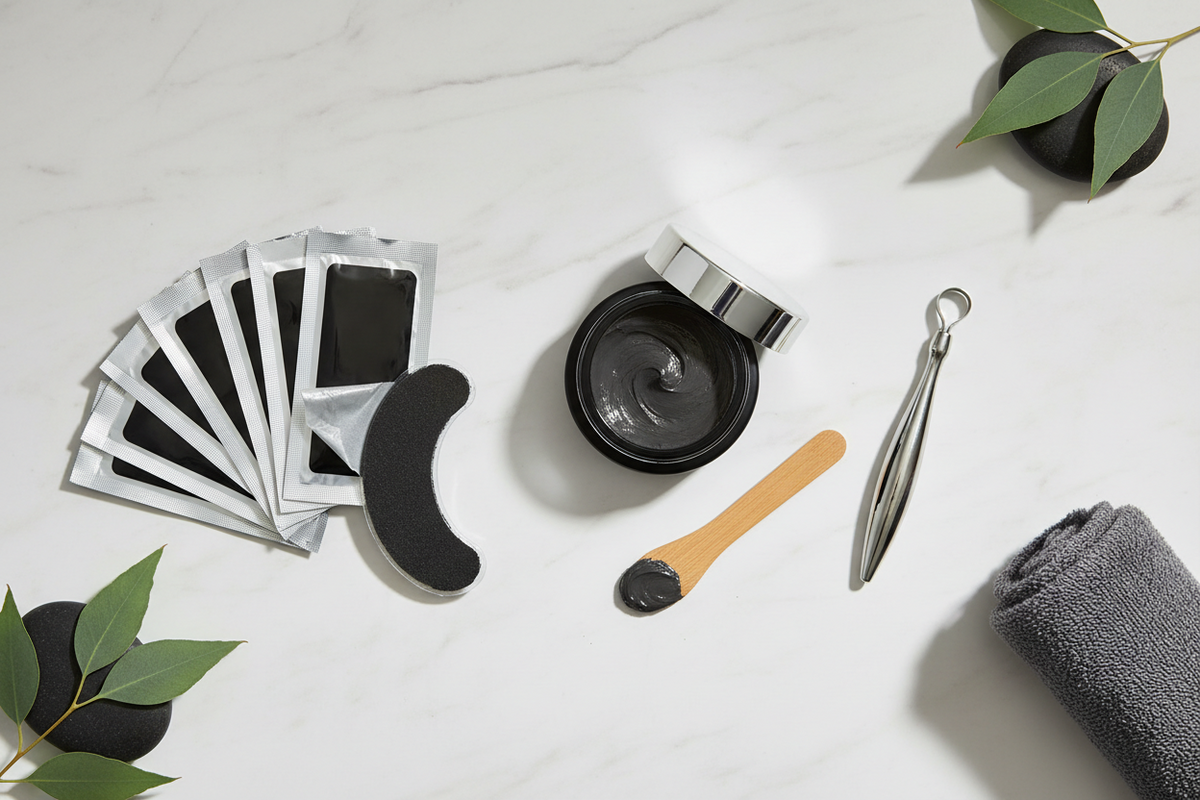
A rotating clay mask stick formulated with 16% Kaolin Clay, 4% Activated Charcoal, and Volcano Clay helps target excess oil, dirt, and makeup residue.
The stick format makes it easy to apply the product directly to areas that need treatment.
For combination skin, this means you can focus on the nose, forehead, or T-zone rather than automatically applying the product to your entire face.
The formula also contains Ectoin and 3% Aloe Vera to provide soothing and hydrating components alongside the purifying ingredients.
[Internal product link: Clay Mask Stick]
Why a Targeted Blackhead Treatment Can Be Better Than Treating Your Whole Face
One common mistake is assuming that if you have blackheads, your entire face needs a strong pore-clearing treatment.
That's not always the case.
If your T-zone is oily but your cheeks are dry, treating both areas identically may leave your cheeks unnecessarily dry.
A targeted approach allows you to adapt your routine:
Oily areas → Pore treatment
Dry or comfortable areas → Gentle cleansing + hydration
This can make your skincare routine more balanced.
How to Build a Blackhead Routine for Your Skin Type
Your routine doesn't need to include every type of blackhead remover.
Oily Skin
Cleanse → Clay or salicylic acid treatment → Hydration
Sensitive Skin
Gentle cleanse → Mild targeted pore care → Hydration
Combination Skin
Gentle cleanse → Target oily areas → Hydration
Dry Skin
Gentle cleanse → Occasional targeted treatment → Hydration
Acne-Prone Skin
Cleanse → Appropriate acne/pore treatment → Hydration
The exact frequency should depend on the individual product and your skin's tolerance.
What If Your Skin Type Changes?
Skin isn't always the same throughout the year.
Weather, hormones, skincare products, stress, and other factors can influence how oily or dry your skin feels.
You don't need to permanently label yourself as having one skin type.
Instead, pay attention to how your skin behaves and adjust your routine accordingly.
For example, you may need more oil control during hot, humid weather and more hydration during colder or drier conditions.
What Should You Avoid When Choosing a Blackhead Remover?
Regardless of your skin type, avoid assuming that irritation means a treatment is working.
Be cautious about:
Over-exfoliating
Using multiple exfoliating products can increase dryness and irritation.
Excessive extraction
Repeated squeezing can irritate the surrounding skin.
Over-cleansing
Washing your face repeatedly can leave your skin feeling tight and uncomfortable.
Using the same treatment everywhere
Targeted treatment can be more appropriate when different areas of your face have different needs.
Changing products too frequently
Give your routine enough time to evaluate how your skin responds before constantly adding new treatments.
How Long Does It Take to Improve Blackheads?
There isn't a universal timeline.
Some products can make skin feel cleaner or less oily after use, while managing recurring blackheads generally requires consistent skincare over time.
If a product promises to permanently remove blackheads after one application, be cautious about setting unrealistic expectations.
Blackhead care is an ongoing process because your skin continues to produce sebum and shed skin cells.
The Bottom Line
The best blackhead remover depends on your skin type, your main concern, and how well your skin tolerates the treatment.
- Oily skin: Look for oil-absorbing and pore-focused treatments such as clay or salicylic acid.
- Sensitive skin: Prioritize gentle formulas and avoid aggressive extraction or excessive exfoliation.
- Combination skin: Consider targeted treatment for oily areas instead of treating the entire face.
- Dry skin: Focus on gentle pore care and avoid unnecessarily stripping the skin.
- Acne-prone skin: Consider ingredients designed for clogged pores, while seeking professional advice for persistent acne.
A clay-based treatment can be a practical choice when excess oil and surface buildup are major concerns.
The goal isn't to find the strongest blackhead remover.
It's to find a treatment that addresses your specific skin concerns while remaining comfortable enough to use consistently.