Blackhead Remover: Clay Mask vs. Pore Strips vs. Extractors
When you're looking for a blackhead remover, you'll quickly find a lot of different options.
Clay masks, pore strips, blackhead extractors, salicylic acid, and purifying cleansers all claim to help with clogged pores. But they don't work in the same way—and the most aggressive option isn't necessarily the best one for your skin.
Some methods provide a quick visible result, while others are designed to manage the excess oil and buildup that contribute to recurring blackheads.
So which blackhead remover should you choose?
The answer depends on your skin type, how frequently you experience clogged pores, and whether your priority is quick removal or longer-term pore care.
How Do Blackhead Removers Work?
Blackheads, or open comedones, form when a pore becomes clogged with sebum and dead skin cells. Because the opening remains exposed to air, the material inside the pore oxidizes and appears dark.
Different blackhead removers target this problem in different ways.
Some physically lift or extract material from the pore. Others absorb excess oil, remove surface buildup, or help loosen the mixture of oil and dead skin cells.
Understanding this difference can help you choose a method that works with your skin rather than simply trying to remove blackheads as aggressively as possible.
Blackhead Remover Comparison
| Method | Main Approach | Best For | Potential Concern |
|---|---|---|---|
| Clay Mask | Absorbs excess oil and impurities | Oily, congested skin | Can feel drying if overused |
| Pore Strips | Physically lifts surface buildup | Quick temporary results | May irritate sensitive skin |
| Blackhead Extractor | Manual extraction | Individual blackheads | Pressure can cause irritation |
| Salicylic Acid | Helps loosen pore buildup | Recurring congestion | May cause dryness or irritation |
| Purifying Cleanser | Removes oil and surface residue | Daily cleansing | May not be enough for stubborn blackheads |
Let's take a closer look at each option.
1. Clay Masks for Blackheads
Clay masks are one of the simplest options for people dealing with oily or congested skin.
Clay can absorb excess oil and help remove impurities from the skin's surface. This makes clay-based treatments particularly useful for areas such as the nose, forehead, and T-zone where oil production tends to be more noticeable.
Unlike manual extraction, a clay mask doesn't require you to squeeze or press individual pores.
Pros of Clay Masks
- Help absorb excess oil
- Help remove surface impurities
- Can be used as part of a regular skincare routine
- Don't require manual extraction
- Useful for oily and combination skin
What to Keep in Mind
A clay mask isn't designed to physically pull individual blackheads out of a pore.
Its main role is to help manage oil and buildup that contribute to congestion. Results are therefore better viewed as part of ongoing pore care rather than a one-time extraction.
If your skin is sensitive, choose a formula that balances oil absorption with soothing or hydrating ingredients rather than repeatedly using harsh purifying treatments.
2. Pore Strips for Blackheads
Pore strips work differently from clay masks.
A strip adheres to the skin and can lift material from the surface when you remove it. This can create an immediate impression that your pores are cleaner.
For someone looking for a quick cosmetic result before an event, this may seem appealing.
However, pore strips don't address the underlying factors that cause recurring blackheads. Your skin will continue to produce sebum and shed dead skin cells after the strip is removed.
Pros of Pore Strips
- Quick and convenient
- Can provide a visible short-term result
- Easy to use on areas such as the nose
Potential Drawbacks
- Results are temporary
- Can be uncomfortable during removal
- May irritate easily sensitized skin
- Don't prevent future pore congestion
If your blackheads keep returning, relying exclusively on pore strips may not be the most sustainable approach.
3. Blackhead Extractors
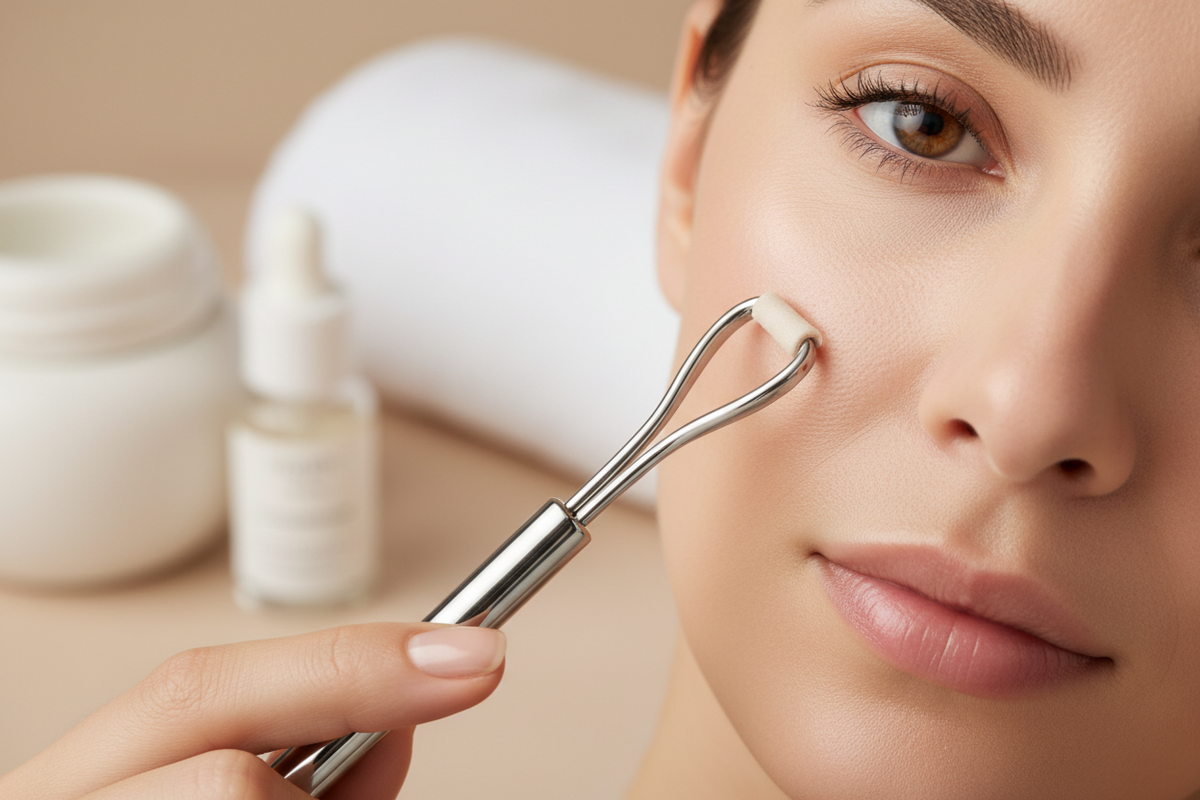
Blackhead extractors are designed for manual removal.
Unlike clay masks or pore treatments, an extractor attempts to physically remove individual plugs from the pore.
The advantage is straightforward: you can target a specific blackhead.
The problem is that technique matters.
Applying too much pressure, repeatedly working on the same area, or using an extractor incorrectly can cause redness and irritation.
Pros of Extractors
- Target individual blackheads
- Can provide immediate removal
- Useful for specific areas when used correctly
Potential Drawbacks
- Requires careful technique
- Excessive pressure can irritate the skin
- Repeated picking can damage the surrounding area
- Doesn't address the ongoing causes of clogged pores
For persistent or difficult-to-remove blackheads, professional extraction may be safer than repeatedly pressing or picking at the skin yourself.
4. Salicylic Acid for Blackheads
Salicylic acid takes a different approach.
As a beta hydroxy acid (BHA), salicylic acid can penetrate into oily pores and help loosen the mixture of oil and dead skin cells that contributes to congestion.
This makes it particularly relevant for people who experience recurring blackheads.
However, more isn't necessarily better.
Using salicylic acid too frequently—or combining several strong exfoliating products—can lead to dryness, irritation, or discomfort.
If you already use other active ingredients, introduce salicylic acid gradually and pay attention to how your skin responds.
5. Purifying Cleansers
A cleanser is an essential part of blackhead-prone skincare because it helps remove:
- Excess oil
- Makeup
- Sunscreen
- Sweat
- Surface impurities
However, a cleanser usually isn't enough by itself to deal with stubborn or recurring blackheads.
Think of cleansing as the foundation of your routine, while a targeted treatment can provide additional oil and pore care when needed.
[Internal link: Polyamino Acid Purifying Facial Cleanser — link only where the surrounding copy naturally discusses daily cleansing.]
Clay Mask vs. Pore Strips: Which Is Better?
If your main concern is excess oil and recurring congestion, a clay mask may be a more practical choice for regular pore care.
Pore strips may provide a faster visible result, but their effect is temporary.
A clay mask, on the other hand, can be incorporated into a routine designed to manage excess oil and buildup over time.
That doesn't mean clay masks are automatically better for every person. The right choice depends on your skin's needs and tolerance.
Clay Mask vs. Blackhead Extractor: Which Is Better?
These two methods have very different purposes.
A blackhead extractor focuses on physically removing an individual plug, while a clay mask focuses more on oil absorption and removing impurities.
If you frequently feel tempted to squeeze your blackheads, a clay-based treatment can offer a less hands-on alternative for managing congestion.
For a single stubborn blackhead that requires extraction, professional treatment may be preferable to aggressive DIY extraction.
What Is the Gentlest Blackhead Remover?
There isn't one blackhead remover that is universally gentle.
However, if your skin is easily irritated, you may want to avoid aggressive squeezing, excessive scrubbing, or repeatedly using strong treatments.
A clay-based treatment can be a useful option when your main concern is excess oil and surface buildup, particularly when the formula also contains soothing ingredients.
The goal should be to manage congestion without constantly stressing the skin.
A Clay Blackhead Remover Without the Mess
If you prefer clay treatments but don't enjoy applying a traditional mask with your fingers, a rotating clay mask stick provides a more convenient alternative.
A formula containing 16% Kaolin Clay, 4% Activated Charcoal, and Volcano Clay helps target excess oil, dirt, and makeup residue.
The rotating stick design allows the product to glide directly onto the skin without requiring you to scoop and spread clay with your hands.
It's particularly convenient for targeted areas such as the nose, forehead, and T-zone.
The formula also contains Ectoin and 3% Aloe Vera to help soothe and hydrate the skin, making the treatment more balanced than relying solely on oil-absorbing ingredients.
[Internal product link: Clay Mask Stick]
Which Blackhead Remover Should You Choose?
Instead of asking which blackhead remover is the strongest, consider what you're actually trying to accomplish.
Choose a clay mask if:
- Your skin is oily or combination
- You frequently experience pore congestion
- You want to manage excess oil
- You prefer a hands-off treatment
- You want a product that can fit into a regular routine
Consider pore strips if:
- You want a quick temporary visible result
- Your skin tolerates them well
- You understand that they don't prevent blackheads from returning
Consider an extractor if:
- You need to target an individual blackhead
- You understand the importance of gentle technique
- You can avoid excessive pressure or repeated picking
Consider salicylic acid if:
- You experience recurring clogged pores
- Your skin tolerates chemical exfoliation
- You want to address oil and dead skin buildup within pores
Use a cleanser regardless of your choice
A consistent cleansing routine helps remove daily oil, makeup, sunscreen, and surface impurities that can contribute to congestion.
The Best Blackhead Removal Strategy Is Usually a Routine
Blackheads rarely come from a single cause, and they can return even after successful removal.
That's why combining complementary steps can be more effective than relying on one aggressive removal method.
A simple routine might include:
Cleanse → Target excess oil and buildup → Hydrate and soothe
For oily or congested skin, a clay treatment can fit naturally into the middle of this routine.
The goal isn't to remove every blackhead immediately. It's to keep excess oil and pore-clogging buildup under control while maintaining a healthy skin barrier.