How to Choose a Blackhead Remover for Sensitive Skin
Having sensitive skin doesn't mean you have to live with clogged pores and blackheads.
The challenge is finding a blackhead remover that helps manage excess oil and buildup without leaving your skin feeling stripped, dry, or irritated.
Many popular blackhead-removal methods rely on strong physical action. Pore strips pull against the skin, extractors require pressure, and overly aggressive scrubbing can create unnecessary friction.
For sensitive skin, a better approach is often to focus on gentle, consistent pore care rather than trying to remove every blackhead as quickly as possible.
Why Can Blackhead Removal Irritate Sensitive Skin?
Blackheads form when sebum and dead skin cells accumulate inside a pore. Removing that buildup can be useful, but the method you choose matters.
Sensitive or easily irritated skin may react more strongly to:
- Excessive rubbing or scrubbing
- Aggressive manual extraction
- Frequent use of strong exfoliants
- Overuse of oil-absorbing treatments
- Multiple active treatments used together
The goal isn't to avoid blackhead treatment altogether.
Instead, choose a method that helps manage congestion while minimizing unnecessary stress on the skin.
What Should You Look for in a Blackhead Remover for Sensitive Skin?
When choosing a blackhead remover, consider more than how quickly it appears to remove visible buildup.
1. A Gentle Approach to Oil Control
Excess oil can contribute to clogged pores, but completely stripping the skin isn't the goal.
Look for treatments that help absorb or manage excess oil without requiring aggressive scrubbing or repeated physical extraction.
2. Soothing Ingredients
If your skin is easily irritated, soothing ingredients can make a pore-cleansing treatment more comfortable.
Ingredients such as aloe vera are commonly used in skincare to help soothe and hydrate the skin.
Ectoin is another ingredient used in skincare formulations designed to support skin comfort and protection.
3. Minimal Physical Friction
Sensitive skin may not respond well to repeated rubbing or aggressive extraction.
A product that can be applied smoothly without requiring vigorous massage can be a more convenient option.
4. A Routine You Can Use Consistently
Blackheads can return because sebum production and skin-cell shedding continue.
A gentle treatment that fits comfortably into your routine may be more useful than an aggressive method that leaves your skin irritated afterward.
Are Pore Strips Good for Sensitive Skin?
Pore strips can provide an immediate visible effect by physically lifting material from the skin's surface.
However, the adhesive removal process can be uncomfortable or irritating for some people, especially if their skin is already sensitive.
If your skin tends to become red or uncomfortable easily, consider a less aggressive approach to managing pore buildup.
A clay-based treatment may be a better fit when excess oil is one of your main concerns.
Are Blackhead Extractors Safe for Sensitive Skin?
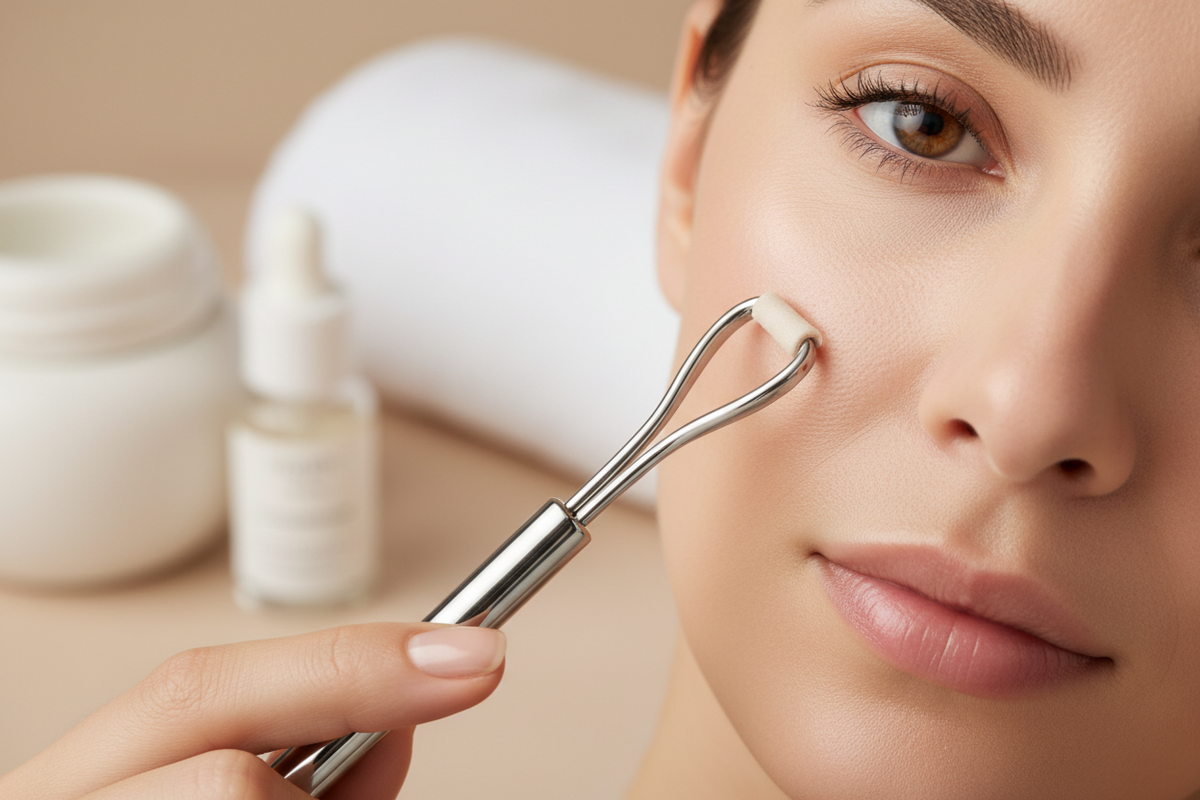
Manual extractors can target individual blackheads, but they require careful technique.
Applying too much pressure can irritate the surrounding skin. Repeatedly pressing the same area can also increase redness and discomfort.
For sensitive skin, avoid treating blackhead removal as an extraction challenge.
Instead of trying to force out every visible blackhead, focus on consistent cleansing and gentle pore care.
For stubborn blackheads that don't respond to your routine, professional extraction may be a safer option than repeated DIY pressure.
Is Salicylic Acid Suitable for Sensitive Skin?
Salicylic acid can be useful for blackhead-prone skin because it helps loosen oil and dead skin buildup inside pores.
However, sensitive skin may not tolerate frequent or high-intensity exfoliation.
If you want to introduce salicylic acid:
- Start with a lower frequency
- Avoid combining too many exfoliating products
- Monitor your skin for dryness or irritation
- Reduce use if your skin becomes uncomfortable
- Maintain a simple hydrating routine
A skincare ingredient can be effective without needing to be used every day.
Are Clay Masks Good for Sensitive Skin?
Clay masks can be useful when excess oil and surface buildup contribute to clogged pores.
However, clay itself isn't automatically suitable for every sensitive skin type.
The formula, frequency of use, and how long you leave the mask on all matter.
A more balanced clay treatment can combine oil-absorbing ingredients with soothing and hydrating ingredients instead of focusing exclusively on deep oil removal.
For sensitive skin, avoid leaving a clay mask on until it becomes excessively dry and uncomfortable.
What Makes a Clay Blackhead Remover More Suitable for Sensitive Skin?
A clay-based blackhead treatment can be designed to target oil and impurities while also supporting skin comfort.
For example, a formula containing 16% Kaolin Clay, 4% Activated Charcoal, and Volcano Clay is designed to help absorb excess oil and target dirt and makeup residue.
The formula also contains Ectoin and 3% Aloe Vera, which help provide a soothing and hydrating component alongside the purifying ingredients.
This combination can make a clay treatment a practical option for people who want to manage oily, congested areas without relying on aggressive manual extraction.
Of course, sensitive skin can react differently from person to person. Always follow the product's directions and stop using a product if it causes persistent irritation.
[Internal product link: Clay Mask Stick]
Why a Clay Mask Stick Can Be Convenient for Sensitive Skin
The application method matters too.
A traditional clay mask often requires you to scoop the product and spread it across your face with your fingers.
A rotating clay mask stick allows you to glide the product directly onto the areas that need treatment.
This makes it easy to target:
- Nose
- Forehead
- T-zone
- Other visibly congested areas
You can also avoid applying a purifying treatment to areas that don't need it.
The result is a more targeted approach to blackhead care rather than treating your entire face unnecessarily.
How to Use a Blackhead Remover on Sensitive Skin
If you're using a clay-based blackhead remover, keep the routine simple.
Step 1: Cleanse Gently
Start with a gentle cleanser to remove makeup, sunscreen, excess oil, and surface impurities.
Avoid scrubbing aggressively before applying your treatment.
[Internal link: Polyamino Acid Purifying Facial Cleanser]
Step 2: Apply Only Where Needed
Apply the clay treatment to oily or congested areas rather than automatically covering your entire face.
This can be particularly helpful if you have combination or sensitive skin.
Step 3: Follow the Recommended Application Time
Don't assume that keeping the treatment on longer will produce better results.
Follow the product instructions and remove it if your skin begins to feel uncomfortable.
Step 4: Rinse Without Scrubbing
Use lukewarm water and gently remove the treatment.
Avoid using rough cloths or exfoliating brushes to scrub away the remaining product.
Step 5: Hydrate
Finish with a gentle hydrating product to help maintain skin comfort.
How Often Should Sensitive Skin Use a Blackhead Remover?
There is no universal frequency for every sensitive skin type.
Start according to the product's recommended usage and observe how your skin responds.
If you experience:
- Tightness
- Dryness
- Redness
- Burning
- Flaking
- Increased sensitivity
reduce the frequency or stop using the treatment until your skin feels comfortable again.
The objective is long-term pore management, not maximum treatment frequency.
What Should You Avoid When Removing Blackheads?
If you have sensitive skin, be particularly careful with aggressive removal habits.
Don't squeeze repeatedly
Trying to force out every blackhead can cause unnecessary irritation.
Don't scrub harder
More friction doesn't mean cleaner pores.
Don't stack too many active treatments
Using salicylic acid, other exfoliants, strong masks, and aggressive physical treatments together can overwhelm sensitive skin.
Don't leave clay treatments on excessively long
Longer application doesn't necessarily mean better oil control.
Don't treat irritation as a sign that a product is working
Burning, persistent redness, and significant discomfort aren't goals of effective blackhead care.
A Simple Blackhead Routine for Sensitive Skin
A simple routine can be more sustainable than constantly adding new treatments.
Daily
Gentle cleanse → Hydration → Sunscreen
Targeted pore care
Clay treatment or appropriate exfoliant → Hydration
You don't need to use every blackhead treatment available.
Choose one targeted method that your skin tolerates and use it consistently.
If blackheads remain stubborn, consider adjusting your routine rather than simply increasing the intensity.
Can Sensitive Skin Still Have Oily Blackheads?
Yes.
Sensitive skin and oily skin aren't mutually exclusive.
You can have skin that produces excess sebum while also being easily irritated by aggressive skincare.
This is why blackhead care for sensitive, oily skin needs to balance two goals:
Control excess oil without unnecessarily stripping the skin.
A targeted clay treatment can help address the oil-control side, while soothing and hydrating ingredients can help support skin comfort.
When Should You See a Professional?
If your skin is persistently irritated, painful, inflamed, or experiencing widespread breakouts, a skincare professional or dermatologist can help determine the underlying issue.
Professional care can also be useful when stubborn congestion doesn't improve despite a consistent, gentle routine.
You don't need to keep escalating at-home extraction methods simply because a blackhead isn't disappearing.
The Bottom Line
The best blackhead remover for sensitive skin isn't necessarily the strongest or fastest-acting option.
Instead, look for a treatment that helps manage excess oil and buildup without relying on aggressive extraction, excessive scrubbing, or overly frequent exfoliation.
A balanced clay-based treatment can be a practical option for oily and congested areas, particularly when the formula combines oil-absorbing clays with soothing and hydrating ingredients.
Most importantly, introduce new products gradually, follow their directions, and pay attention to how your skin responds.
Blackhead care should help your skin feel cleaner—not constantly irritated.