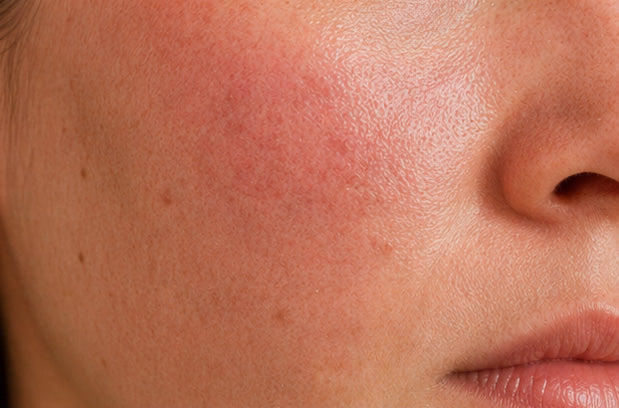
The Ultimate Acid Layering Guide: How to Clear Closed Comedones Safely
Struggling with stubborn closed comedones and wondering whether AHA or BHA is better for your skin? Choosing the right exfoliating ingredient can make a difference, but using too many active ingredients at once may lead to unnecessary irritation.
BHA (salicylic acid) is generally a more targeted option for clogged pores and comedonal acne because it is oil-soluble and helps exfoliate within pore openings. AHA (such as glycolic acid) primarily works on the skin's surface to improve dead skin cell buildup, rough texture, and dullness.
Azelaic acid and retinoids offer different benefits and may also be useful depending on your skin concerns. However, they are not interchangeable with AHA or BHA.
In this guide, we'll compare the most common skincare acids, explain which ingredients may be better suited to closed comedones, and show you how to introduce active ingredients without overwhelming your skin barrier.
Key Takeaways
- BHA for clogged pores: Salicylic acid is often a more targeted option for blackheads and closed comedones.
- AHA for surface texture: Glycolic acid helps exfoliate the skin's surface and improve roughness and dullness.
- Azelaic acid for multiple concerns: It may help with acne-related inflammation and uneven skin tone.
- Retinol for comedonal acne: Retinoids can help normalize skin cell turnover and are an established option for acne treatment.
- Don't over-layer: Introducing multiple active ingredients too quickly can increase dryness, redness, and irritation.
- Support your skin barrier: Gentle cleansing, lightweight moisturizing, and daily sunscreen are important parts of an active skincare routine.
What Is BHA? How Does It Help with Closed Comedones?
BHA stands for beta hydroxy acid. In skincare, the most widely used BHA is salicylic acid, an oil-soluble exfoliating ingredient commonly found in products formulated for oily and acne-prone skin.
Unlike water-soluble exfoliating acids that primarily work on the skin's surface, salicylic acid can interact with the oil-rich environment inside pore openings. It helps loosen the buildup of dead skin cells and sebum associated with clogged pores.
This makes BHA particularly relevant for people dealing with:
- Closed comedones and whiteheads.
- Blackheads around the nose and forehead.
- Excess surface oil.
- Congested pores and uneven skin texture.
Why Is Salicylic Acid a Popular Choice for Closed Comedones?
Closed comedones develop when sebum and dead skin cells accumulate inside hair follicles. Salicylic acid helps exfoliate within pore openings and manage the buildup associated with comedonal acne.
However, it is important to understand that salicylic acid does not instantly dissolve every closed comedone. Results depend on the product formulation, concentration, frequency of use, and individual skin response.
For persistent comedonal acne, topical retinoids may also be considered. A dermatologist can help determine which treatment is appropriate.
What Is AHA? Can Glycolic Acid Help with Closed Comedones?
AHA stands for alpha hydroxy acid. It is a group of water-soluble exfoliating ingredients that primarily work on the skin's surface by helping loosen the bonds between dead skin cells.
Common AHAs include:
- Glycolic acid: A relatively small AHA molecule commonly used to improve surface texture and dullness.
- Lactic acid: An exfoliating AHA that can also provide humectant benefits.
- Mandelic acid: An AHA with a larger molecular size than glycolic acid, often selected for gentler exfoliation approaches.
Does Glycolic Acid Get Rid of Closed Comedones?
Glycolic acid can help improve surface dead skin cell buildup, rough texture, and uneven skin appearance. This may support an overall skincare routine for congestion-prone skin.
However, glycolic acid primarily works on the skin's surface. It is not as directly targeted toward oil-filled pore congestion as salicylic acid.
If your main concern is persistent closed comedones, BHA or an appropriate topical retinoid may be a more targeted option. Glycolic acid can be considered when surface roughness and uneven texture are also concerns.
BHA vs. AHA for Closed Comedones: Which Is Better?
If you are choosing between AHA and BHA for closed comedones, the main difference is where and how they work.
BHA is oil-soluble and particularly relevant to clogged pores, while AHA primarily helps exfoliate the skin's surface.
| Feature | BHA (Salicylic Acid) | AHA (Glycolic Acid) |
|---|---|---|
| Solubility | Oil-soluble | Water-soluble |
| Main action | Exfoliates within pore openings | Exfoliates the skin's surface |
| Primary concerns | Clogged pores, blackheads, comedonal acne | Rough texture, dullness, uneven surface |
| Closed comedones | More directly targeted | May provide complementary exfoliation |
| Oily skin | Commonly used | Can also be used depending on skin tolerance |
| Potential side effects | Dryness, irritation, peeling | Dryness, irritation, increased sun sensitivity |
Which should you choose?
- If your main concern is clogged pores and closed comedones, consider starting with salicylic acid.
- If your skin feels rough or looks dull, glycolic acid may help improve surface texture.
- If you have both concerns, you may eventually consider both ingredients, but introduce them gradually rather than using multiple exfoliants aggressively.
There is no universal best acid for every skin type. The most appropriate option depends on your primary concern, skin sensitivity, and tolerance.
Salicylic Acid vs. Azelaic Acid for Closed Comedones
Another common question is whether salicylic acid or azelaic acid is better for closed comedones.
Although both ingredients are used in acne-focused skincare, they work differently and address different aspects of skin concerns.
Salicylic Acid: More Directly Targeted Toward Clogged Pores
Salicylic acid helps exfoliate within pore openings and manage the accumulation of sebum and dead skin cells associated with comedonal acne.
It is particularly relevant if your primary concerns include:
- Closed comedones and whiteheads.
- Blackheads and clogged pores.
- Excess surface oil.
Azelaic Acid: More Versatile for Acne-Related Inflammation and Uneven Skin Tone
Azelaic acid is a different type of skincare ingredient with anti-inflammatory and keratolytic properties. It is commonly used to manage acne-related inflammation and uneven skin tone.
It may be particularly useful for people who experience:
- Acne-related redness.
- Post-acne dark marks.
- Uneven skin tone.
- Acne-prone skin with multiple concerns.
| Comparison | Salicylic Acid | Azelaic Acid |
|---|---|---|
| Main focus | Clogged pores and comedones | Acne-related inflammation and uneven tone |
| Skin concerns | Blackheads, whiteheads, excess oil | Redness, acne, post-acne marks |
| Role in closed comedone care | More directly targeted | Can provide complementary benefits |
| Exfoliating classification | BHA | Neither AHA nor BHA |
If closed comedones are your main concern, salicylic acid may be a more direct starting point. If redness and post-acne marks are also important concerns, azelaic acid may offer additional benefits.
What About Retinol for Closed Comedones?
Retinol belongs to the retinoid family, not the AHA or BHA family. It works through vitamin A-related pathways that influence skin cell turnover and is commonly used in acne-focused skincare.
Topical retinoids are particularly relevant to comedonal acne because they help normalize the shedding of skin cells within hair follicles and reduce the formation of new comedones.
Retinoids may be worth discussing with a dermatologist if you experience persistent closed comedones that do not improve with basic skincare.
However, retinoids can cause dryness, peeling, redness, and irritation, especially when first introduced.
Important: Topical retinoids are generally avoided during pregnancy. If you are pregnant, planning pregnancy, or breastfeeding, consult a healthcare professional before using retinoid products.
Can You Layer AHA, BHA, and Retinol Together?
Using several active ingredients in one routine does not automatically produce better results. Combining multiple exfoliating and skin-renewal ingredients may increase the risk of irritation, particularly if your skin is not accustomed to them.
However, it is also not accurate to say that AHA, BHA, and retinoids can never be used in the same overall skincare routine. Compatibility depends on the formulations, concentrations, frequency, and individual skin tolerance.
1. BHA and AHA
BHA and AHA have complementary exfoliating properties. BHA is more directly associated with clogged pores, while AHA primarily targets surface texture.
Some products are specifically formulated with multiple exfoliating acids. However, adding several separate acid products without considering their combined strength may increase irritation.
If you are new to exfoliating acids, start with one product and evaluate your skin's response before introducing another.
2. BHA and Retinol
Salicylic acid and retinol can both be useful in acne-focused routines, but using them together may increase dryness and irritation.
For beginners, using them on separate days is a more conservative approach. Introduce each ingredient gradually rather than starting both at the same time.
3. AHA and Retinol
Glycolic acid and retinol both influence skin cell turnover through different mechanisms.
Combining them may be too aggressive for sensitive or inexperienced users. Consider alternating their use and maintaining adequate recovery periods.
How to Build a Safe Acid Layering Routine for Closed Comedones
A successful routine should focus on consistency rather than using the highest number of active ingredients.
Below are two practical approaches depending on your skin's experience with exfoliating products.
Routine A: Beginner-Friendly Routine
If you are new to chemical exfoliants or have sensitive skin, start with a simple routine built around one primary active ingredient.
Morning Routine
- Gentle cleansing: Use a cleanser suitable for your skin type.
- Moisturizing: Apply a lightweight moisturizer to maintain hydration.
- Sun protection: Finish with a broad-spectrum SPF 30 or higher sunscreen.
Evening Routine
- Cleanse: Remove sunscreen, makeup, excess oil, and daily impurities.
- Exfoliating treatment: Introduce one BHA or other suitable acne treatment according to its product directions and your skin tolerance.
- Moisturize: Apply a suitable moisturizer to support skin hydration and comfort.
Begin with a conservative frequency rather than automatically using an exfoliating treatment every night. Increase use only if your skin tolerates it and the product instructions allow it.
Routine B: A Gradual Skin Cycling Approach
If your skin already tolerates active ingredients, a rotating routine may help organize exfoliation and recovery periods.
| Night | Focus | Routine |
|---|---|---|
| Night 1 | Exfoliation | Use one suitable BHA or AHA product as directed, followed by moisturizer. |
| Night 2 | Recovery | Gentle cleansing and moisturizing. |
| Night 3 | Optional retinoid | Use a suitable retinoid only if already tolerated and appropriate for you, followed by moisturizer. |
| Night 4 | Recovery | Focus on gentle cleansing and hydration. |
This is an illustrative routine, not a mandatory four-night cycle. Some people may need more recovery days, while others may follow different schedules based on their treatment and skin tolerance.
If your skin becomes persistently red, irritated, or excessively dry, pause exfoliating products and retinoids until it recovers. Seek professional advice if symptoms continue.
How to Support Your Skin Barrier While Using Exfoliating Acids
When using BHA, AHA, or retinoids, maintaining skin hydration is just as important as choosing the right active ingredient.
Excessive exfoliation may weaken the skin's protective barrier, leading to dryness, tightness, redness, and increased sensitivity.
1. Choose a Gentle Daily Cleanser
A gentle cleanser helps remove surface oil, sunscreen, makeup, and everyday impurities without relying on aggressive scrubbing.
Dr. Leo Polyamino Acid Purifying Facial Cleanser is designed for gentle daily cleansing and can provide a basic cleansing step for oily and acne-prone skin.
It is a daily cleanser, not a substitute for a leave-on exfoliating treatment.
Explore Dr. Leo Polyamino Acid Purifying Facial Cleanser

2. Consider a Targeted Salicylic Acid Treatment
If your main concern is closed comedones and clogged pores, a product formulated with salicylic acid may be a more targeted addition to your routine.
Dr. Leo Salicylic Acid Refining Pores Toner combines salicylic acid, AHA, and lactobionic acid. Its product formulation is designed for concerns including clogged pores, closed comedones, excess sebum, and uneven skin texture.
Why consider this toner?
- Combines salicylic acid and other exfoliating ingredients.
- Targets the appearance of clogged pores and uneven skin texture.
- Includes sodium hyaluronate and other supporting ingredients.
- Provides an exfoliating skincare option for congestion-prone skin.
Because this formula contains multiple exfoliating acids, follow its product directions carefully. Do not automatically combine it with additional high-strength AHA, BHA, or retinoid products. Introduce it gradually, particularly if your skin is sensitive.
Explore Dr. Leo Salicylic Acid Refining Pores Toner

3. Use Lightweight Moisturizer to Maintain Hydration
Even if your skin is oily or acne-prone, moisturizing remains an important part of an exfoliating skincare routine.
Dr. Leo CICA Panthenol Jelly Moisturizer combines Centella Asiatica, panthenol, and hyaluronic acid to help hydrate the skin, soothe visible redness, and support the skin barrier.
Why include it in your routine?
- Helps maintain skin hydration.
- Helps soothe visible redness and skin discomfort.
- Supports the skin barrier.
- Provides lightweight moisture without an overly heavy feel.
It can be used as a daily moisturizing step, including on recovery days after exfoliating treatments.
Explore Dr. Leo CICA Panthenol Jelly Moisturizer

4. Avoid Over-Cleansing and Excessive Exfoliation
More exfoliation does not necessarily mean faster improvement. Avoid combining multiple strong exfoliating products or scrubbing your skin aggressively.
If you also have excess surface oil, a clay-based cleansing product may be an optional addition. However, it should not replace targeted exfoliating treatments for closed comedones.
Explore Dr. Leo Volcano Cleansing Clay Stick

How Long Does It Take for Acids to Improve Closed Comedones?
There is no universal timeline for improvement. Results depend on the ingredient, formulation, frequency of use, severity of congestion, and individual skin response.
Some people may notice changes in skin texture within several weeks, while persistent comedonal acne can take longer to improve.
When starting a new active ingredient, keep the following points in mind:
- Introduce one new active ingredient at a time.
- Follow the product's recommended frequency.
- Avoid increasing application frequency simply because results are not immediate.
- Monitor for persistent irritation or worsening inflammation.
- Use sunscreen consistently during the day.
Is Purging Normal When Starting Chemical Exfoliants?
Some people experience a temporary increase in acne-like lesions after starting ingredients that influence skin cell turnover. This is sometimes described as skin purging.
However, not every breakout after starting a new product is purging.
Consider the difference:
- Possible purging: Temporary changes in areas where you commonly experience acne, following the introduction of an appropriate active ingredient.
- Possible irritation: Persistent burning, itching, redness, dryness, or peeling after product application.
- Possible product-related breakout: New or worsening lesions in areas where you do not normally experience acne.
If you experience significant discomfort or persistent worsening, stop the suspected product and consult a dermatologist rather than assuming the reaction is normal.
Common Mistakes When Using AHA and BHA for Closed Comedones
1. Using Too Many Active Ingredients at Once
Combining several exfoliating acids and retinoids immediately can make it difficult to identify which ingredient is causing irritation.
Start with one active ingredient and introduce additional products only when your skin can tolerate them.
2. Assuming Stronger Exfoliation Means Better Results
Higher concentrations and more frequent application do not guarantee faster improvement. Excessive exfoliation can cause dryness and irritation.
3. Skipping Moisturizer Because Your Skin Is Oily
Oily skin still needs hydration. A suitable lightweight moisturizer can help maintain skin comfort and support the skin barrier.
4. Ignoring Sunscreen
Some exfoliating acids can increase skin sensitivity to sunlight. Use broad-spectrum SPF 30 or higher sunscreen and reapply as directed.
5. Expecting Every Closed Comedone to Disappear Overnight
Closed comedones can be persistent. Consistent, appropriate skincare is generally more useful than frequently changing products or applying multiple treatments aggressively.
Final Thoughts: Which Acid Should You Choose for Closed Comedones?
If your main concern is closed comedones and clogged pores, BHA (salicylic acid) is generally a more directly targeted exfoliating option than AHA.
AHA, particularly glycolic acid, can complement a skincare routine by improving surface texture and dead skin cell buildup. Azelaic acid may be useful for acne-related inflammation and uneven skin tone, while retinoids offer another established approach to comedonal acne.
The most important thing is to choose an ingredient based on your primary skin concern rather than using every active ingredient at once.
Build your routine around appropriate exfoliation, gentle cleansing, lightweight moisturizing, and daily sun protection. If your closed comedones are persistent or difficult to manage, consult a dermatologist about additional treatment options.