What Do Closed Comedones Look Like? Signs, Photos & How to Identify Them
Have you noticed tiny, skin-colored bumps across your forehead, cheeks, or chin that make your skin feel rough and uneven? These small bumps may be closed comedones, a common form of non-inflammatory acne.
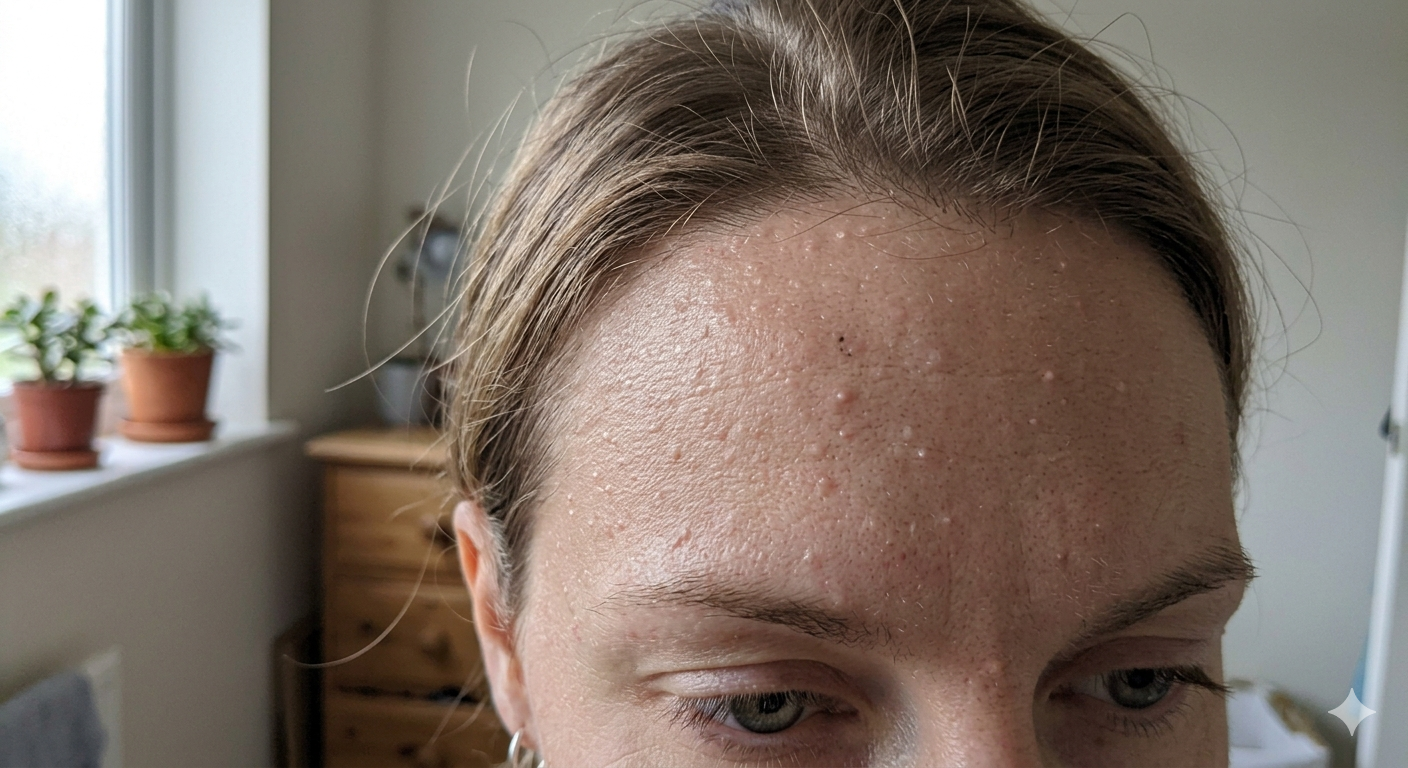
Closed comedones usually appear as small flesh-colored or whitish bumps beneath the skin's surface. Unlike blackheads, they do not have a visible dark center, and unlike inflamed pimples, they are not usually red or painful.
However, not every small bump is a closed comedone. Milia, fungal folliculitis, and other skin conditions can create similar-looking texture.
In this guide, you'll learn what closed comedones look like, where they commonly appear, how to distinguish them from other skin concerns, and what you can do to manage them.
Key Takeaways
- Appearance: Closed comedones usually look like small, flesh-colored or whitish bumps beneath the skin.
- Texture: They can make your skin feel rough or uneven, especially when you run your fingers across the affected area.
- Common locations: Forehead, cheeks, chin, and jawline.
- Not all bumps are the same: Milia and folliculitis can look similar but have different causes.
- Skincare approach: Gentle cleansing, appropriate acne treatments, and consistent moisturizing can help manage comedonal acne.
What Are Closed Comedones?
Closed comedones are a type of non-inflammatory acne lesion that forms when dead skin cells and sebum accumulate inside a hair follicle. The follicular opening becomes blocked, trapping the material beneath the skin's surface.
They are commonly known as whiteheads, although their appearance is not always pure white. Many closed comedones are skin-colored and can be difficult to notice unless you look closely or examine your skin under angled lighting.
Unlike inflammatory pimples, closed comedones typically do not have prominent redness, swelling, or tenderness. However, some may eventually develop into inflammatory acne lesions.
Several factors can contribute to their formation, including:
- Excess sebum production.
- Abnormal shedding and accumulation of dead skin cells within hair follicles.
- Hormonal changes that influence oil production.
- Use of skincare or cosmetic products that are unsuitable for your skin.
- Individual susceptibility to acne and clogged pores.
Closed comedones are not simply caused by poor hygiene. Washing your face more frequently or scrubbing harder will not necessarily prevent them.
What Do Closed Comedones Look Like? 5 Common Signs
Recognizing closed comedones starts with understanding their appearance and texture. While they can vary slightly from person to person, there are several common characteristics to look for.
1. Small, Skin-Colored or Whitish Bumps
The most recognizable feature of closed comedones is their small, raised appearance. They usually look like tiny bumps that are similar to your natural skin tone or slightly whitish.
Unlike blackheads, they do not have an obvious dark center because the follicular opening is covered by skin.
2. Rough or Uneven Skin Texture
Closed comedones can make the skin feel bumpy, even when the bumps are difficult to see in ordinary lighting.
When you gently run your fingertips over the affected area, your skin may feel uneven or slightly rough, particularly across the forehead and cheeks.
3. More Noticeable Under Side Lighting
Small closed comedones may be difficult to identify when looking straight into a mirror. However, natural side lighting or overhead lighting can make their raised texture more visible by creating small shadows.
If your skin looks smooth in one lighting condition but appears covered in tiny bumps under another, it may be worth examining the texture more closely.
4. Usually No Dark Center or Obvious Redness
Closed comedones generally do not have the dark opening associated with blackheads. They are also typically less red and swollen than inflammatory pimples.
However, if a closed comedone becomes inflamed, it may develop redness, tenderness, and swelling.
5. Makeup May Highlight Uneven Texture
Small bumps can become more noticeable when foundation or concealer settles into uneven areas of the skin.
Makeup does not necessarily cause closed comedones, but certain products may not suit acne-prone skin. If you frequently notice clogged pores after changing cosmetics, review the products you use and how your skin responds.
Where Do Closed Comedones Commonly Appear?
Closed comedones can develop anywhere with hair follicles and sebaceous glands, but some facial areas are more commonly affected.
Closed Comedones on the Forehead
Forehead closed comedones often appear as clusters of small, skin-colored bumps. The skin may feel rough or uneven, particularly near the hairline.
Hair products, sweat, excess sebum, and individual acne susceptibility may contribute to congestion in this area.
If your forehead is your main concern, read our detailed guide:
How to Get Rid of Stubborn Closed Comedones on Your Forehead
Closed Comedones on the Cheeks
Cheek closed comedones may appear as scattered or clustered small bumps that make the skin feel uneven.
Friction, skincare products, makeup, and individual skin characteristics may contribute to breakouts in this area. However, the location alone cannot establish the underlying cause.
Learn more in our guide:
Closed Comedones on Cheeks: Causes and Solutions
Closed Comedones on the Chin and Jawline
Small bumps around the chin and jawline may be closed comedones, particularly when they appear alongside other acne lesions.
Hormonal fluctuations can influence oil production and acne development, although not every breakout around the jawline is hormonal.
Explore our related guide:
Closed Comedones Around the Mouth, Chin, and Jawline
What Do Closed Comedones Look Like Before and After Treatment?
Closed comedones do not always disappear quickly, and their appearance can change as your skin responds to appropriate care.
Understanding these changes can help you monitor your skin without expecting unrealistic overnight results.
Before Treatment: Visible Bumps and Uneven Texture
Before improvement, closed comedones may appear as numerous small, skin-colored or whitish bumps. The affected area can look uneven, especially under direct or side lighting.
Some people notice that makeup emphasizes the bumps or that their skin feels rough when touched gently.
During Treatment: Gradual Changes in Skin Texture
With consistent and appropriate skincare, some people may gradually notice fewer visible bumps and a smoother skin surface.
However, improvement is not always linear. Some comedones may persist, while others may become inflamed. A temporary change in appearance does not necessarily mean the treatment is working or that the skin is purging.
After Improvement: A Smoother-Looking Skin Surface
When closed comedones improve, the skin may look more even and feel smoother. The number and visibility of small bumps may decrease.
Results vary depending on the severity of acne, the products used, consistency, and individual skin response. There is no guaranteed timeline or permanent result.
If you want to compare your progress, take photos under the same lighting, from the same angle, and without changing camera distance. This makes changes in skin texture easier to evaluate.
Are They Closed Comedones or Something Else?
Not every small bump on your face is a closed comedone. Several skin concerns can create similar-looking texture, so understanding their differences is important before choosing a treatment.
Closed Comedones vs. Blackheads
Both closed comedones and blackheads are forms of comedonal acne. The main difference is whether the follicular opening is covered or exposed.
| Feature | Closed Comedones | Blackheads |
|---|---|---|
| Appearance | Skin-colored or whitish bumps | Dark brown or black spots |
| Follicular opening | Covered | Open |
| Surface texture | Small raised bumps | Visible dark plugs |
| Common name | Whiteheads | Open comedones |
Read more about the best cleanser for blackheads if dark spots and clogged pores are your main concern.
Closed Comedones vs. Milia
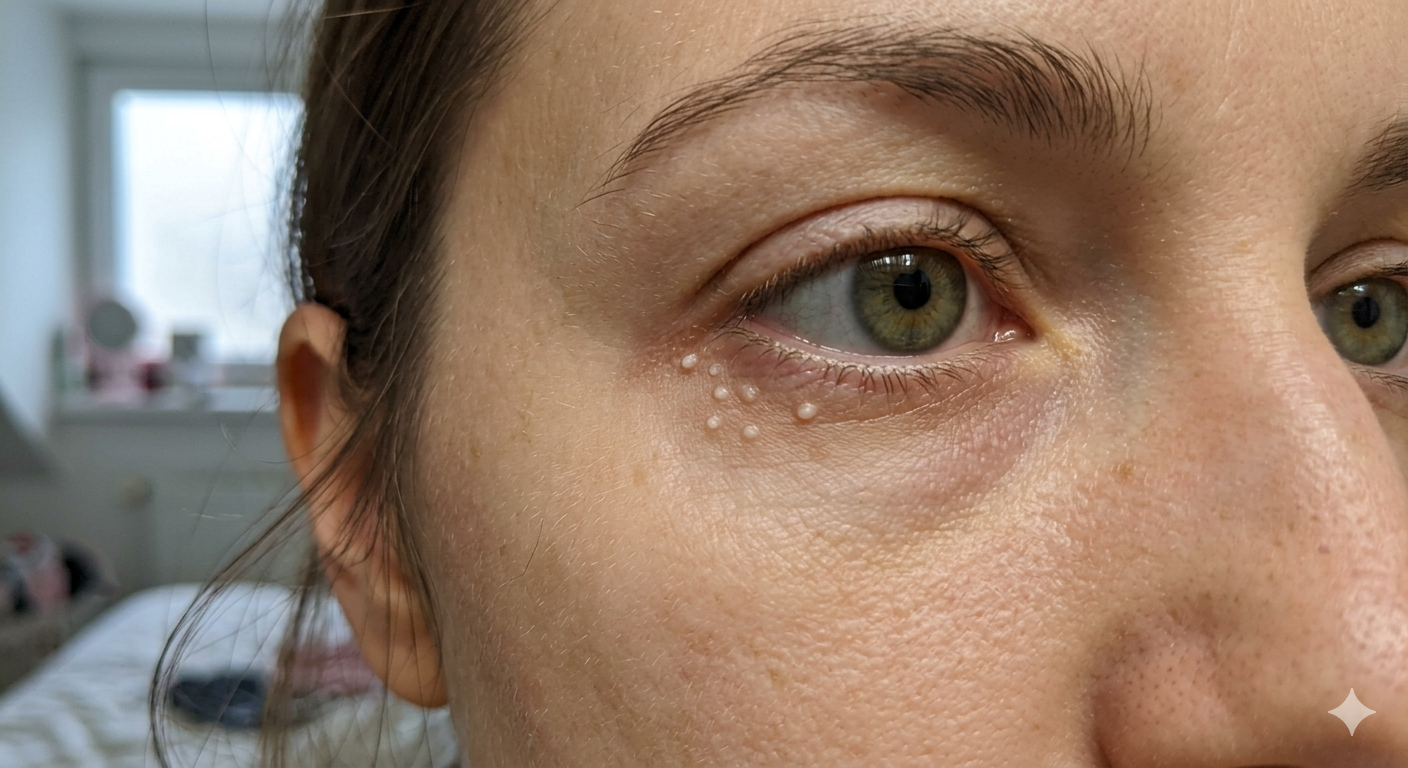
Milia are small, firm, white or yellowish cysts that contain keratin. They often appear as distinct, pearl-like bumps beneath the skin, especially around the eyes and cheeks.
Closed comedones are associated with blocked hair follicles, while milia are small keratin-filled cysts. Their appearance can overlap, so persistent or uncertain bumps may need professional assessment.
Learn more:
Milia vs. Closed Comedones: How to Tell the Difference
Closed Comedones vs. Fungal Folliculitis
Fungal folliculitis can cause clusters of small, similar-looking bumps, often accompanied by itching. It is associated with inflammation of hair follicles involving Malassezia yeast.
Closed comedones are usually not intensely itchy and tend to vary more in size and appearance. However, appearance alone cannot reliably distinguish every case.
Explore our comparison guide:
Closed Comedones vs. Fungal Acne: How to Tell the Difference
What Does It Mean When Closed Comedones Come to the Surface?
You may have heard people describe closed comedones as coming to the surface during treatment. This phrase can refer to several different changes in the skin, and it does not always mean that the pores are clearing.
1. The Bump Becomes More Visible
Some bumps may become more noticeable as their appearance changes. However, this does not necessarily indicate that the blockage has been successfully removed.
2. The Comedone May Become Inflamed
Some closed comedones can develop into inflammatory acne lesions, which may appear red, swollen, or tender.
Not every closed comedone follows this progression, and inflammation should not automatically be considered a positive sign of treatment.
3. The Bump May Gradually Become Less Noticeable
With appropriate skincare, some comedones may gradually become less visible as the follicular blockage improves.
Avoid squeezing, picking, or aggressively exfoliating bumps to force them to the surface. These actions can irritate the skin and increase the risk of inflammation and scarring.
For more information, read Why Closed Comedones Turn Into Inflamed Pimples.
How to Care for Skin with Closed Comedones
Once you have a better understanding of what closed comedones look like, the next step is choosing a skincare routine that helps manage clogged pores without unnecessarily irritating your skin.
A balanced routine generally includes appropriate acne treatments, gentle cleansing, moisturizing, and daily sun protection.
Step 1: Consider a Salicylic Acid Treatment
Salicylic acid is an oil-soluble beta hydroxy acid (BHA) commonly used in skincare for blackheads, whiteheads, and clogged pores.
It helps exfoliate within pore openings and manage the buildup of dead skin cells associated with comedonal acne.
Dr. Leo Salicylic Acid Refining Pores Toner combines salicylic acid with additional exfoliating ingredients, including AHA and lactobionic acid. It is designed for skin concerns such as clogged pores, excess sebum, and uneven texture.
Why consider this product?
- Contains salicylic acid for pore-focused exfoliating care.
- Combines multiple exfoliating ingredients in one formula.
- Can be incorporated into a routine for oily and congestion-prone skin.
Because this formula contains multiple exfoliating ingredients, follow the product directions carefully. Avoid automatically combining it with additional strong acids or retinoids, especially if you are new to active skincare.
Explore Dr. Leo Salicylic Acid Refining Pores Toner

Step 2: Use a Gentle Daily Cleanser
Daily cleansing helps remove excess surface oil, sunscreen, makeup, sweat, and everyday impurities.
However, a cleanser alone cannot guarantee the removal of established closed comedones. Avoid harsh washing or scrubbing in an attempt to physically clear the bumps.
Dr. Leo Polyamino Acid Purifying Facial Cleanser is designed for gentle daily cleansing and can provide a basic cleansing step for oily and acne-prone skin.
Why consider this cleanser?
- Helps remove everyday impurities and excess surface oil.
- Provides a gentle daily cleansing option.
- Complements a routine that includes targeted acne care.
Explore Dr. Leo Polyamino Acid Purifying Facial Cleanser

Step 3: Maintain Hydration with a Lightweight Moisturizer
Even oily and acne-prone skin needs moisture. Exfoliating ingredients may cause dryness or irritation, particularly when introduced too quickly or used too frequently.
Dr. Leo CICA Panthenol Jelly Moisturizer combines Centella Asiatica and panthenol to help hydrate the skin, soothe visible redness, and support the skin barrier.
Why include it in your routine?
- Helps maintain skin hydration.
- Helps soothe visible redness and skin discomfort.
- Supports the skin barrier.
- Provides lightweight moisture without an overly heavy feel.
Apply it after cleansing and according to your skincare routine, including on recovery days when you are not using exfoliating treatments.
Explore Dr. Leo CICA Panthenol Jelly Moisturizer

Step 4: Protect Your Skin During the Day
Sun protection is an important part of an acne-focused skincare routine, especially when using exfoliating acids.
Use a broad-spectrum sunscreen with SPF 30 or higher and reapply according to its directions. Choose a formula that feels comfortable and works well with your skin type.
Common Mistakes to Avoid When Dealing with Closed Comedones
1. Squeezing or Picking the Bumps
Closed comedones do not have an easily accessible opening like some other acne lesions. Squeezing them can damage surrounding skin and increase irritation or inflammation.
2. Over-Cleansing Your Face
Washing your face repeatedly or using harsh cleansers does not necessarily prevent clogged pores. Excessive cleansing can leave your skin dry and uncomfortable.
3. Using Too Many Exfoliating Products
Combining several acids and other active ingredients without considering their strength and frequency can increase irritation. Introduce new products gradually and monitor your skin's response.
4. Assuming Every Small Bump Is a Closed Comedone
Milia, folliculitis, and other skin conditions can resemble closed comedones. If the bumps are persistent, itchy, painful, or difficult to identify, consult a dermatologist rather than repeatedly trying different acne products.
Final Thoughts: Understanding What Closed Comedones Look Like
Closed comedones usually appear as small, skin-colored or whitish bumps beneath the skin's surface. They may make your forehead, cheeks, or chin feel rough and uneven, even when there is little visible redness or inflammation.
However, not every small bump is a closed comedone. Understanding the differences between closed comedones, blackheads, milia, and folliculitis can help you make more informed skincare decisions.
If you do have comedonal acne, focus on a balanced routine with appropriate acne treatments, gentle cleansing, lightweight moisturizing, and daily sun protection.
Consistent, suitable skincare is more helpful than aggressive scrubbing or trying to force every bump to the surface. If your skin concerns persist or become inflamed, a dermatologist can help you identify the cause and choose an appropriate treatment.