Skin Purging vs. Breakouts: Is Your Skincare Working?
You finally decided to take control of your skin texture. You did your research, put away the damaging metal extraction tools, and introduced a high-quality active ingredient like Salicylic Acid (BHA) or Retinol into your evening routine to clear out those stubborn, under-the-skin bumps. But instead of waking up with a perfectly smooth complexion, your face suddenly flares up with a wave of tiny whiteheads or minor pimples.
Your heart sinks, and a wave of panic hits. You find yourself wondering, "Is my new skincare actually working, or are these active ingredients making my closed comedones purging into a full-blown breakout nightmare?"
When starting a new active regimen, this exact intersection is where most people give up and throw their products in the trash. However, there is a massive biological difference between a temporary, necessary cellular detox and actual product-induced skin irritation. To understand how these temporary eruptions fit into broader skin congestion, read our foundational study: What Are Clogged Pores? A Beginner’s Guide to Skin Congestion
Let’s break down the science of how to tell if your skin is purging or breaking out, and look at how to navigate this transition phase safely.
The Ultimate Concept Check: Skin Does Not "Purge Toxins"
Before looking at the visual checklists, let's address a widespread internet myth. If you have ever been told by a skincare group or a brand representative that your skin is "purging heavy metals, chemicals, or internal toxins through your pores," that is completely false. Your skin does not possess a digestive system to expel metabolic waste via pimples.
However, Skin Purging is a verified medical phenomenon. It is officially known as accelerated cellular desquamation.
When you apply a chemical exfoliant like salicylic acid purging closed comedones or a cellular communicator like retinol purging closed comedones, you are dramatically speeding up your skin’s natural cellular turnover rate. Normally, a skin cell takes about 28 days to travel from the deep layers to the surface. Actives compress this timeline down to just 10 to 14 days.
Deep, Hidden Microcomedone→Actives Accelerate Turnover → Pushed to Surface Rapidly (Purge) →Clear Skin This means that all the microscopic, sticky oil plugs that were already hiding deep down inside your hair follicles are violently fast-tracked to the surface all at once. The product isn't creating new pimples; it is simply forcing your existing, hidden clogs to mature and exit your face at an accelerated speed.
The Diagnostic Blueprint: Purging vs. Breaking Out
To determine whether you should continue using your new treatment or stop immediately, analyze your new bumps across three specific dimensions:
| Dimension | Skin Purging (Keep Going!) | Bad Breakout / Reaction (Stop!) |
| The Location Test | Bumps appear only in areas where you frequently experience skin congestion (e.g., your habitual forehead or jawline zones). | Bumps materialize in completely brand-new zones where you rarely or never get pimples. |
| The Lifespan Clock | Individual spots cycle through very quickly. They appear, form a tiny head, and heal completely within 3 to 5 days without leaving deep scars. | Individual blemishes are deep, painful, throbbing, and completely stagnant, lasting for weeks without draining. |
| The Timeline Limit | The entire purging phase peaks quickly and should completely subside within 4 to 6 weeks, revealing smooth texture underneath. | The active inflammation continues past the 6-week mark, and your overall skin barrier looks increasingly red, raw, and flaky. |
How to Manage the Purging Phase Safely
If you have used the chart above and confirmed that your skin is successfully purging old debris, you must resist the urge to panic-switch products. Changing your routine mid-purge will only reset the biological clock and irritate your skin further.
Instead, implement this supportive care routine designed to pace active clearing while heavily supporting your moisture barrier so hardened plugs can slide out cleanly:
Step 1: Pace Your Clearing with Dr.Leo Salicylic Acid Cleanser
When your skin is pushing deep impurities to the surface, never squeeze, pop, or scratch a purging bump. Because the tissue is moving quickly, these small surface blemishes will dissolve on their own if left alone. Physical squeezing will only introduce external bacteria, turning a temporary purge into a permanent scar.
Continue to wash daily with the Dr.Leo Salicylic Acid Cleanser. Its targeted, lipid-soluble formulation maintains a steady, gentle flow of salicylic acid into the pore linings to keep the fast-tracked sebum fluid, preventing the moving clogs from hardening into new blockages. If your skin feels slightly overwhelmed, simply drop back your usage to 2-3 times a week, then build back up.
Step 2: Clear Rising Debris with Dr.Leo Volcanic Clay Cleanser Stick
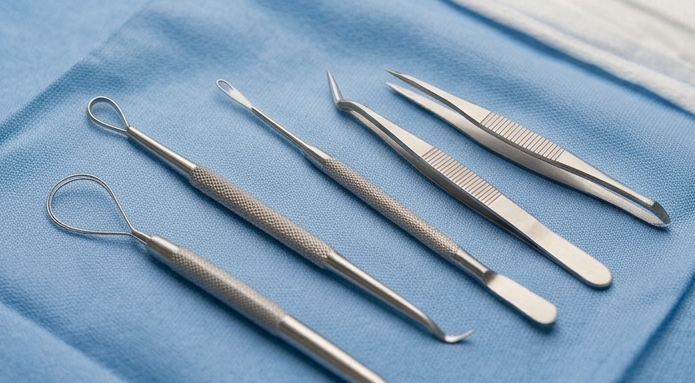
To safely clear away the accelerated dead skin cells and surface oils that accumulate during a purge, avoid harsh scrubs or manual extraction tools. To learn why these loops backfire, see our deep-dive: Comedone Extractor Tools vs. Chemical Exfoliation: Which is Safer for Closed Comedones?
Instead, glide the Dr.Leo Volcanic Clay Cleanser Stick 2-3 times a week across congested zones. This smooth clay stick provides a physical-free vacuum effect, gently lifting away surface flakes and drawing out rising impurities without disrupting the volatile skin surface.
Step 3: Flood Pores with Dr.Leo CICA Panthenol Hydro-Gel Soothing Moisturizer
Purging skin requires an optimal, moisture-rich environment to heal quickly. Dehydrating the surface of an active blemish creates a thick, crusty layer of dry skin cells that traps the rising impurities underneath even tighter, prolonging the purge and mutating quiet bumps into inflamed acne. To discover how this dangerous mutation happens, read our SOS guide: Why Your Closed Comedones Suddenly Turn into Red, Inflamed Pimples.
Lock in weightless hydration with the Dr.Leo CICA Panthenol Hydro-Gel Soothing Moisturizer. Its unique microcapsule texture transforms into water upon application, absorbing instantly without blocking pores. Packed with high-purity centella asiatica, panthenol, and small-molecule hyaluronic acid, it deeply hydrates, calms underlying irritation, and repairs the skin lipids, allowing the underlying sebum core to escape smoothly and comfortably.
Trust the Biological Process
Seeing a sudden wave of bumps can be discouraging, but knowing how to tell if skin is purging allows you to look past temporary texture and focus on long-term skin health. A purge is simply a sign that your daily clarifying products are successfully doing the heavy lifting underneath, sweeping away old blockages to pave the way for a touchably soft complexion.
Remember, skin congestion behaves differently depending on where it settles on your face. The lower face requires a highly specialized approach due to distinct hormonal shifts and lifestyle friction.
Explore Our Advanced Core Playbooks:
- To understand the complete biological danger of attempting to force under-the-skin bumps to surface manually, revisit our core section guide: The Danger of Popping Closed Comedones: Why Squeezing Backfires.
- To clear stubborn clusters concentrated specifically along your jawline and lower face, explore our targeted blueprint: Closed Comedones Around Mouth, Chin, and Jawline: The Hormone and Product Blueprint.
- To review the absolute master visual blueprint for identifying these stubborn, hidden bumps across your entire face, revisit our core master guide: What Do Closed Comedones Look Like? The Visual Guide to Clogged Pores.