The Danger of Popping Closed Comedones: Why Squeezing Backfires
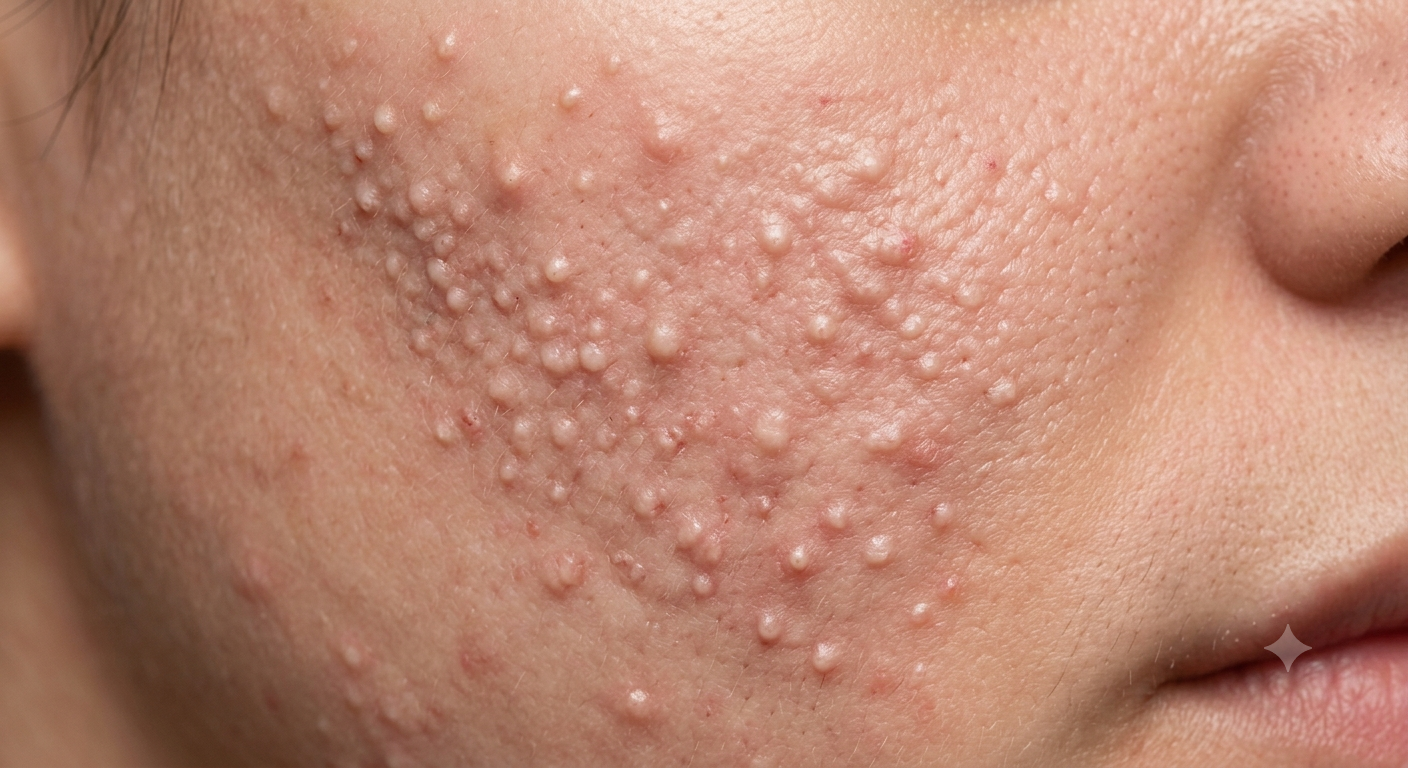
We have all been there. You are leaning over the bathroom sink, looking at your face under a bright light, and running your fingers across a cluster of stubborn, tiny bumps on your forehead or jawline. They aren’t red or painful, but they completely ruin your skin texture. The urge is almost hypnotic: you want to press your fingernails together and squeeze until the hard, trapped seed pops out.
If you are currently searching for how to pop a closed comedone safely, you are trapped in a highly common skin trap.
While closed comedones popping videos look incredibly satisfying on social media, attempting DIY extractions on these specific under-the-skin bumps is one of the most damaging things you can do to your face. Before diving into the dangers, it helps to understand how these hidden openings fit into overall facial skin congestion. Read our foundational study: What Are Clogged Pores? A Beginner’s Guide to Skin Congestion.
1. The Anatomy of a Closed Comedone: A Sealed Trap
To understand why the answer to "can you pop closed comedones?" is a resounding no, we have to examine their micro-structure.
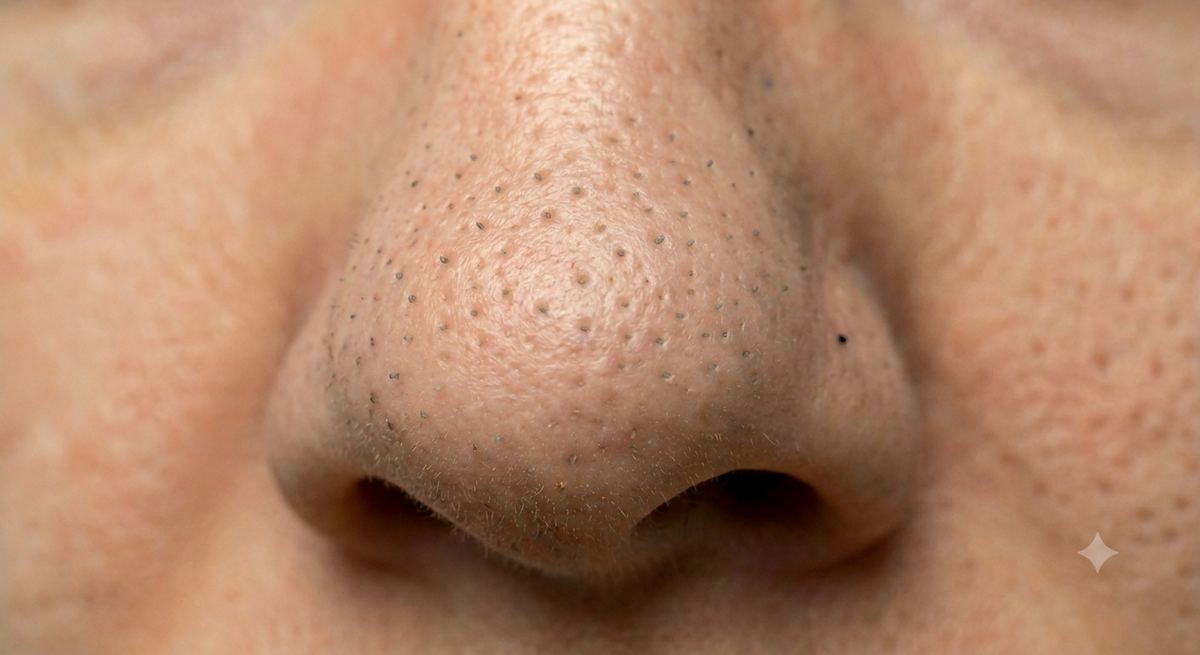
Unlike a traditional, mature whitehead or pustule that has a visible, soft yellow "head" pointing outward, a closed comedone is a completely sealed ecosystem. It forms deep within the hair follicle when sticky dead skin cells and excess sebum (oil) harden into a solid waxy plug.
The defining biological trait of a closed comedone is that a thin layer of dead skin cells has completely grown over the top of the pore opening. There is no natural exit door. Because the plug is completely cut off from the air, the oil cannot oxidize (which is why it stays flesh-colored rather than turning into a blackhead). Trying to squeeze a blemish that has a literal skin ceiling over it is fundamentally different from squeezing a standard pimple.
2. The Subcutaneous Domino Effect: What Happens When You Squeeze
When you engage in popping closed comedones, you are applying massive, localized physical pressure to a sealed capsule. Because the top door is locked shut, that pressure has nowhere to go but downward.
Pressure Pushed Downward
Instead of the hardened sebum plug neatly shooting out of the skin, the upward force of your fingers simply crushes the delicate follicle wall beneath the surface. The solid wax plug is violently forced deeper into the surrounding dermal layers of your skin.
Triggering a Subcutaneous Tsunami
Before you squeezed it, the closed comedone was entirely non-inflammatory and sterile. However, once the follicle wall ruptures underground, it releases a flood of hardened oil, dead skin cells, and microscopic bacteria directly into your live tissue. Your immune system immediately goes into a panic response. It sends white blood cells to fight the internal spill, turning a tiny, harmless flesh bump into a massive, red, throbbing, and painful cystic acne lesion overnight.
3. The Permanent Toll: Scars and Broken Elasticity
The damage of a single picking session can last for months, or even become permanent, altering your skin's structural architecture:
- Post-Inflammatory Hyperpigmentation (PIH): The intense trauma and localized inflammation caused by squeezing triggers your melanocytes (pigment-producing cells) to flood the area with melanin. Long after the bump is gone, you are left with a stubborn dark brown or red mark that takes months to fade.
- Snapped Elasticity: Your pores are supported by a tight structural web of collagen and elastin. Forcing a solid plug through a sealed opening violently tears this matrix. Once these elastic fibers snap, the pore permanently loses its snap-back ability, leaving you with a visibly enlarged, crater-like opening.
-
Atrophic "Ice-Pick" Scars: When deep tissue is destroyed by an underground rupture, your skin cannot rebuild its structural floor correctly. The tissue collapses inward, leaving permanent, pitted ice-pick or boxcar scars that cannot be erased by topical skincare.
4.The Correct 3-Step Routine to Melt the Ceilings Safely
To get rid of closed comedones permanently, you must stop using physical force and start using intelligent pore chemistry. You need a coordinated, non-stripping routine that thins out the hardened core and clears the surface door smoothly without damaging your protective barrier:
Step 1: Melt Deep Core Plugs Daily with Dr.Leo Salicylic Acid Cleanser
Because closed comedones are rooted inside a heavy plug of hardened oils, water-soluble cleansers cannot bypass the grease to reach the core. You need Salicylic Acid (BHA). Salicylic Acid is lipid-soluble, meaning it has the unique ability to easily slice through surface sebum, slide down into the narrow pore lining, and dissolve the hardened sebum glue from within.
Washing your face daily with the Dr.Leo Salicylic Acid Cleanser utilizes a targeted salicylic acid formulation to naturally thin out the trapped oil, encouraging the sealed plugs to clear out safely without any physical manipulation.
Step 2: Vacuum Surface Build-up with Dr.Leo Volcanic Clay Cleanser Stick
Instead of using sharp metallic tools or fingernails that tear at your skin tissue, safely clarify your skin architecture with a regular deep-clean. Gliding the Dr.Leo Volcanic Clay Cleanser Stick 2-3 times a week across congested areas provides a gentle magnetic pull. It lifts away the superficial layers of dead skin cells and absorbs runaway surface grease, preventing early-stage clogged pores from sealing shut into new bumps.
Step 3: Train Oil Glands &Calm Irritation with Dr.Leo CICA Panthenol Hydro-Gel Soothing Moisturizer
Active clarifying treatments must always be followed by weightless hydration. If you leave your skin dry or stripped, your oil glands will immediately panic, pumping out a massive surplus of heavy defensive sebum that floods back into your pores, rebuilding the closed comedones.
Lock in essential moisture with the Dr.Leo CICA Panthenol Hydro-Gel Soothing Moisturizer. Its lightweight microcapsule texture transforms into water upon application, absorbing instantly without adding heavy, pore-blocking waxes. Infused with high-purity centella asiatica, panthenol, and hyaluronic acid, it deeply hydrates, quickly soothes underlying redness, and signals your sebaceous glands to calm down.
Restoring Smooth Skin Architecture
Abandoning the habit of physical popping is the single most important step you can take toward achieving a touchably smooth complexion. By replacing the trauma of squeezing with a consistent, barrier-first chemical exfoliation routine, you protect your skin's deep tissue from scarring and allow clogs to clear out naturally.
Remember, skin congestion behaves differently depending on its exact location on your face. Closed comedones on your forehead require a slightly different balancing act than clogs concentrated around your lower face.
Explore Our Advanced Core Playbooks for This Section:
- To evaluate the professional tools people often use at home vs. consistent chemical management, read Comedone Extractor Tools vs. Chemical Exfoliation: Best for Closed Comedones.
- To discover the exact biological path that transforms a quiet bump into a painful breakout, explore Why Closed Comedones Turn into Inflamed Pimples & How to Fix It.
- To understand if your new routine is genuinely clearing your skin or just causing a temporary breakout, check out Skin Purging vs. Breakouts: Is Your Skincare Working?
- To clear clusters that are specifically concentrated on your lower face, explore our targeted blueprint: Closed Comedones Around Mouth, Chin, and Jawline: The Hormone and Product Blueprint.
- To review the absolute master visual blueprint for identifying these stubborn, hidden bumps across your entire face, revisit our core master guide: What Do Closed Comedones Look Like? The Visual Guide to Clogged Pores.